Hegseth did not give a reason for the commander’s departure.
Holsey’s retirement is scheduled for Dec. 12, which is 13 months after stepping into the post.
“Stephanie and I extend our deepest gratitude and appreciation for the opportunity to have served alongside our nation’s finest warfighters,” he added. “Keep Charging!”
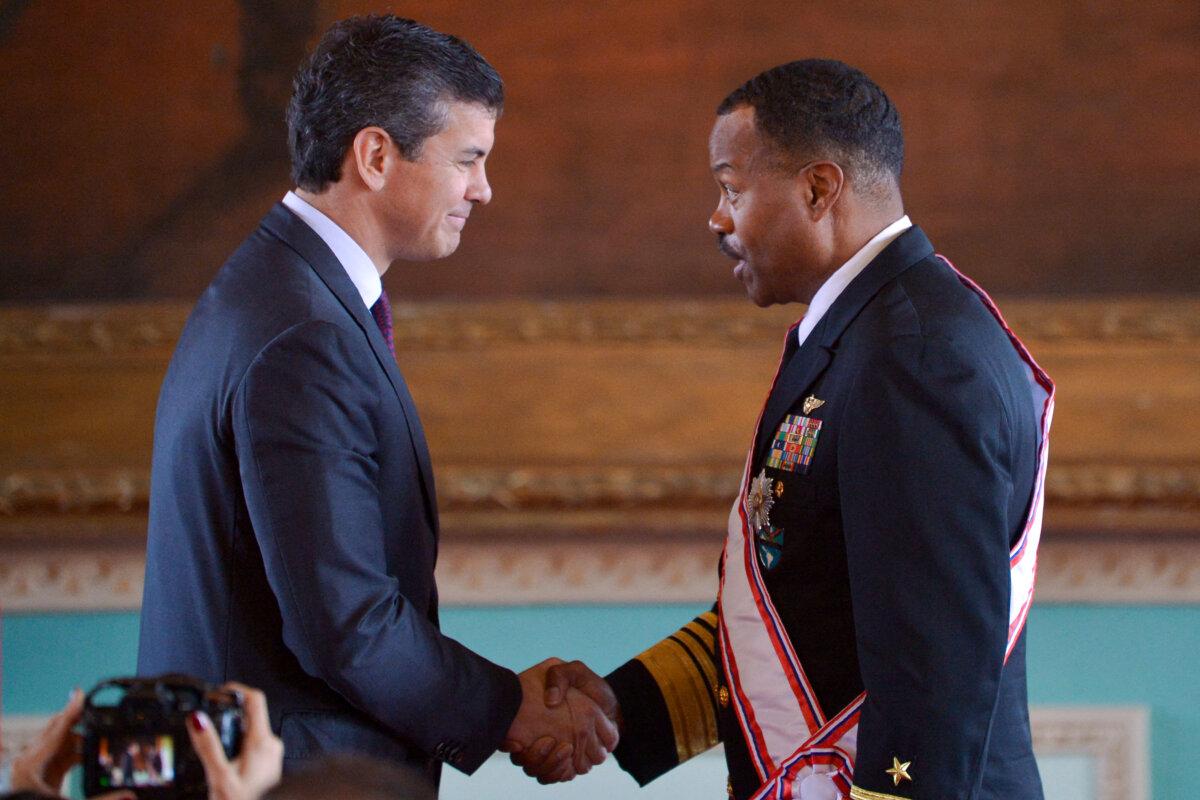
Holsey, 60, is a Georgia native who achieved the rank of four-star admiral. He served as deputy chief of Southern Command from 2023 to 2024. Before that, he was commander of the Navy Personnel Command from 2021 to 2022.
In his announcement, Hegseth extended gratitude for Holsey’s lengthy service, saying he “exemplified the highest standards of naval leadership since his commissioning through the NROTC program at Morehouse College in 1988.”
“Throughout his career—from commanding helicopter squadrons to leading Carrier Strike Group One and standing up to the International Maritime Security Construct—Admiral Holsey has demonstrated unwavering commitment to mission, people, and nation,” Hegseth stated. “His tenure as Military Deputy Commander and now Commander of United States Southern Command reflects a legacy of operational excellence and strategic vision.”
Holsey assumed command from Army Gen. Laura Richardson after she retired from her career after nearly four decades. He is the fourth commander who has retired or has been terminated after Hegseth held a meeting with hundreds of military leaders on Sept. 30.
The announcement comes as the military continues to stop maritime traffic heading to the United States carrying illegal narcotics from Latin America.
In August, the Southern Command deployed several warships to the southern Caribbean, including guided missile destroyers and an amphibious-ready group of U.S. Marines.
Trump said the vessel was affiliated with a terrorist organization and was trafficking drugs off the coast of Venezuela.
At least four other suspected drug-trafficking boats have been destroyed by lethal strikes. The first strike destroyed a boat on Sept. 2 and killed 11 people aboard, Trump said at the time.
Since then, the U.S. has ramped up pressure on Venezuelan President Nicolás Maduro, whom Trump has accused of backing cartels in the country. Maduro has denied the allegations.