The skiing industry is threatened by issues that many know little about. Rising operating costs, old and irreplaceable machinery, and changing weather patterns are hitting smaller skiing operations hard. Nearly 200 of the nation’s ski mountains rely on Hagen Schulz to stay open.
Schulz, 62, a longtime manufacturer and repairer of ski lifts, owns Partek Ski Lifts in Pine Island, New York. At Partek, he manages the building, distribution, and maintenance of Partek and Borvig chair lifts from New England to the West Coast.
Partek dominates a niche in the ski lift market: affordable lifts for small and medium-sized ski resorts. The lift industry in the United States is dominated by two European companies, Leitner-Poma and Doppelmayr, that produce luxury gondolas and lifts. These lifts are too expensive for smaller ski mountains, often costing $5 million or more.
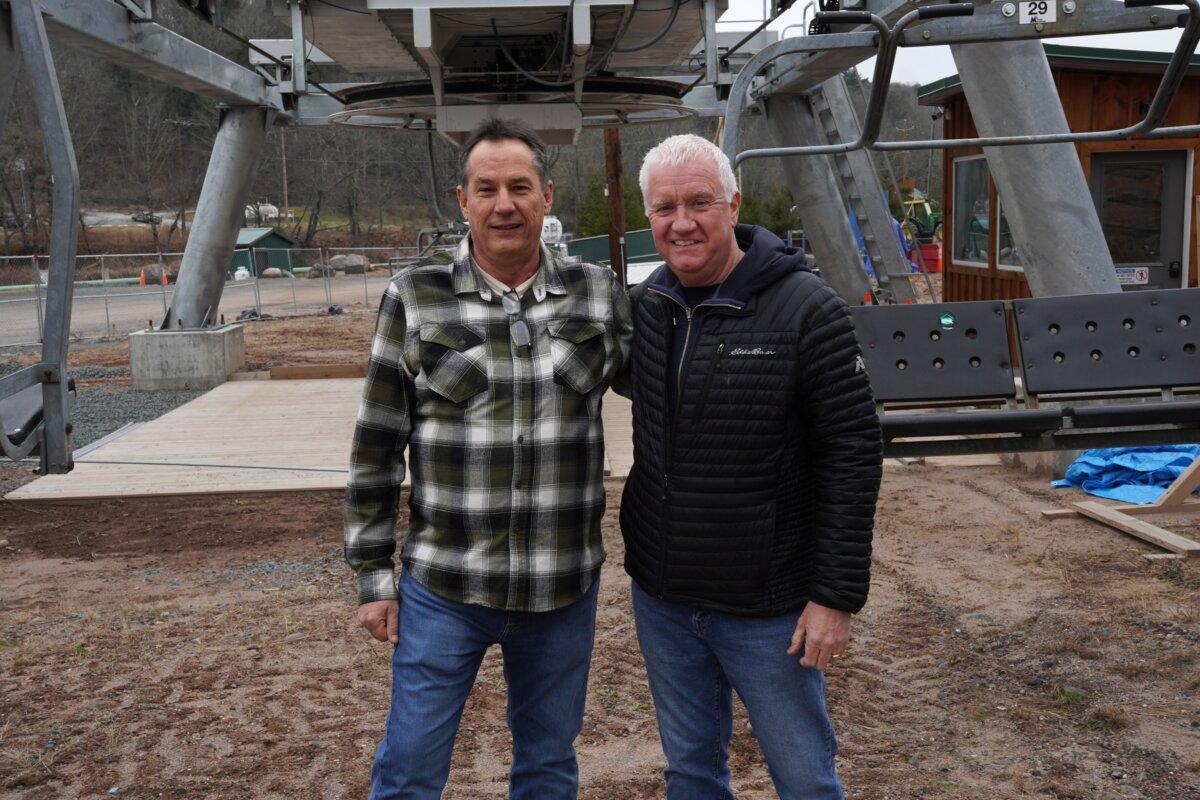
The Epoch Times spoke to Schulz and Mike Taylor, 57, at Holiday Mountain on Nov. 21. Taylor, the new owner of Holiday Mountain in Sullivan County, New York, told The Epoch Times that Schulz is vital to the small skiing industry.
“The problem is you have these huge corporations, they have the big mega mountains, and there’s also government-funded ski areas, they can afford a new $10 million chairlift,“ he said. ”But all the hundreds of little ski areas, especially [in] the Midwest and Northeast, we just simply can’t afford it. So that’s why I think he’s the most important guy, because he’s been keeping people alive.”
It’s becoming hard for small ski mountains such as Holiday Mountain to get secondhand and affordable lifts, according to Taylor. Larger mountains would rather destroy their old lifts than sell them.

“They will not sell a used lift to the small areas. They'd rather chop them up and throw them in a dumpster, because it’s less competition,” Taylor said.
Taylor also said that corporate lawyers worry about liability issues that may arise from selling a secondhand lift. If an accident were to happen on those lifts later, the fault could be traced back to the original owner and result in a lawsuit.
Schulz recently built a new lift for Holiday Mountain and has helped with advising on renovations and development there. He said he has a personal connection to his work.
“There’s days I hate it and there’s days I love it,” he said.
“What I enjoy is, for example, I have a handful of customers that are built like this gentleman here, that actually truly understand what it is that you do for a living and that I enjoy working for,” he said, referring to Taylor.
“They actually appreciate when a project is done since they see how much work goes into it. That it’s not a commodity, it’s not just something you buy off the shelf. That they actually understand that there’s a lot of love that goes into building something like this. And I always tell my customers with every one of my projects, there’s a little piece of me that went with it.”
Schulz founded Partek Ski Lifts in 1991 and built his first ski lift in 1996. His father’s stepfather founded a ski lift company called Borvig in 1962. Schulz’s father joined the Borvig company as well. Partek provides support for both Partek and Borvig lifts.
About 90 percent of Partek’s customers are in the Northeast and Midwest, according to Schulz. The company also has lifts in California and the Carolinas. Schulz estimates that he has a customer base of 170 to 200 ski areas in total, 40 to 50 of which are within two hours of his base in Pine Bush.
The Partek shop sits on 14 acres of land and encompasses four buildings used for production and storage. Much of the work is outsourced, going to local and reliable vendors and suppliers whenever possible. Schulz’s business uses only domestic steel, as it is more reliable than foreign imports, in his experience.
The globalization of supply lines has hindered lift production greatly, Schulz said. Production used to take about half a year, but now the time required has been stretched to a year. Ordered parts that used to arrive in six to eight weeks are now arriving in 20 to 30 weeks. Recent tariffs have also hampered product shipments.
Schulz said he isn’t planning on retiring from the business anytime soon. If he had been given the opportunity to retire 20 years ago, he would have, he said, but his lifts, and the friends he made with those lifts, are too important for him to give up.
“If I had the money, I would build these for free for people,” he said.
Schulz said he wants to bring in a new generation of young people and impart his knowledge to them, but he said he’s had difficulty finding interest.
“Today, there’s too many other distractions,“ he said. ”People are not willing to risk capital. They’re not willing to risk their time and that you could potentially fail. I spent 20 years struggling to stay in business. It wasn’t an overnight success.”
The dedication of Schulz to the ski lift industry, through thick and thin, has kept many small ski slopes alive in a time of increasing centralization of the industry. Millions of Americans have access to a close-to-home ski mountain thanks to Partek Ski Lifts and its legacy.