A cattle industry group is speaking out against the federal government’s decision to reopen the southwest border to Mexican cattle imports, saying the risk is too high in light of the New World screwworm outbreak.
Bill Bullard, the Montana-based group’s chief executive officer, said on X that it was “Big Ag’s” desire for a cheap supply of beef from Mexico that was behind the push to reopen cattle imports.
“We must sever our nation’s dependency on foreign supply chains for our food, and by prioritizing the health of our U.S. cattle herd, the marketplace will help us rebuild and strengthen our domestic beef supply chain,” Bullard said.
New Mexico is slated to reopen imports at Columbus on July 14 and Santa Teresa on July 21, while Texas is scheduled to reopen at Del Rio on Aug. 18 and Laredo on Sept. 15.
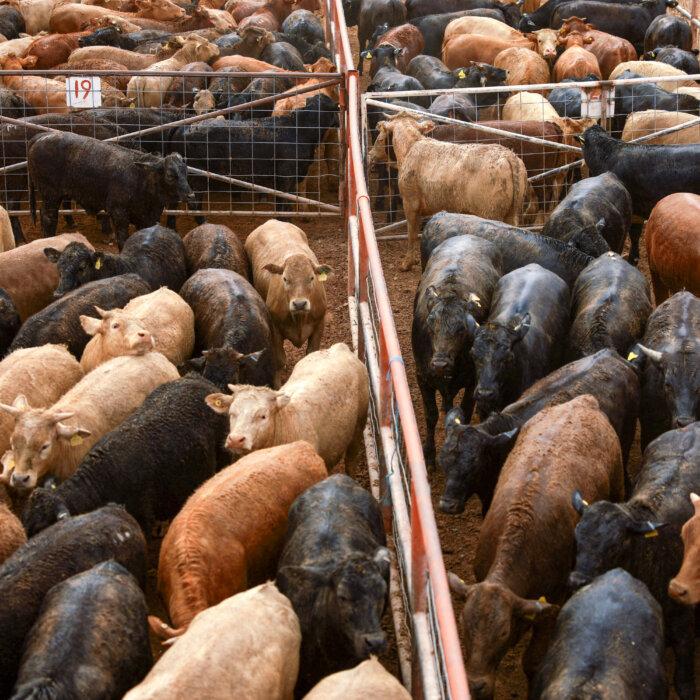

Dr. Michael Vickers, a longtime veterinarian who served on the Texas Animal Health Commission, called the screwworm invasion that moved up from Central America to Mexico a catastrophic threat to the U.S. food supply.
“If these screwworms get into South Texas and other states, it could be a devastating biosecurity issue affecting our food supply,” Vickers told The Epoch Times.
Screwworm infestations begin when a female fly lays eggs on a wound or the mucus membranes of mammals, including humans.
Eggs hatch into larvae, or maggots, that burrow into the flesh of animals and eat them alive.
If screwworms infect U.S. cattle, all countries will impose a quarantine, dealing a major blow to the U.S. beef industry, Vickers said.
“We won’t be able to sell them, creating a huge economic setback.”
Vickers recalled that, during a screwworm outbreak in Texas in 1973, one of his clients “lost over 500 newborn calves in a matter of a couple of weeks.”
U.S. agriculture officials suspended imports in May as the screwworm infestations in Mexico spread northward.
“These quick actions by the Trump Administration have improved the conditions to allow the phased reopening of select ports on the Southern Border to livestock trade,” Rollins stated.
“We are continuing our posture of increased vigilance and will not rest until we are sure this devastating pest will not harm American ranchers.”
Others in the cattle industry applauded the reopening, including Texas Department of Agriculture Commissioner Sid Miller.
“Agricultural producers and our rural economies depend on this cross-border commerce, and reopening our ports with strong, science-based protocols in place is the right decision,” he said.
“Hats off to Secretary Rollins for getting this done for our ranchers across the nation.”
In November, the United States restricted Mexican cattle shipments after the pest’s detection, but lifted the ban in February after protocols were established to evaluate animals before allowing entry into the country.
However, the U.S. Department of Agriculture announced another suspension in May after an “unacceptable northward advancement” of the screwworm.