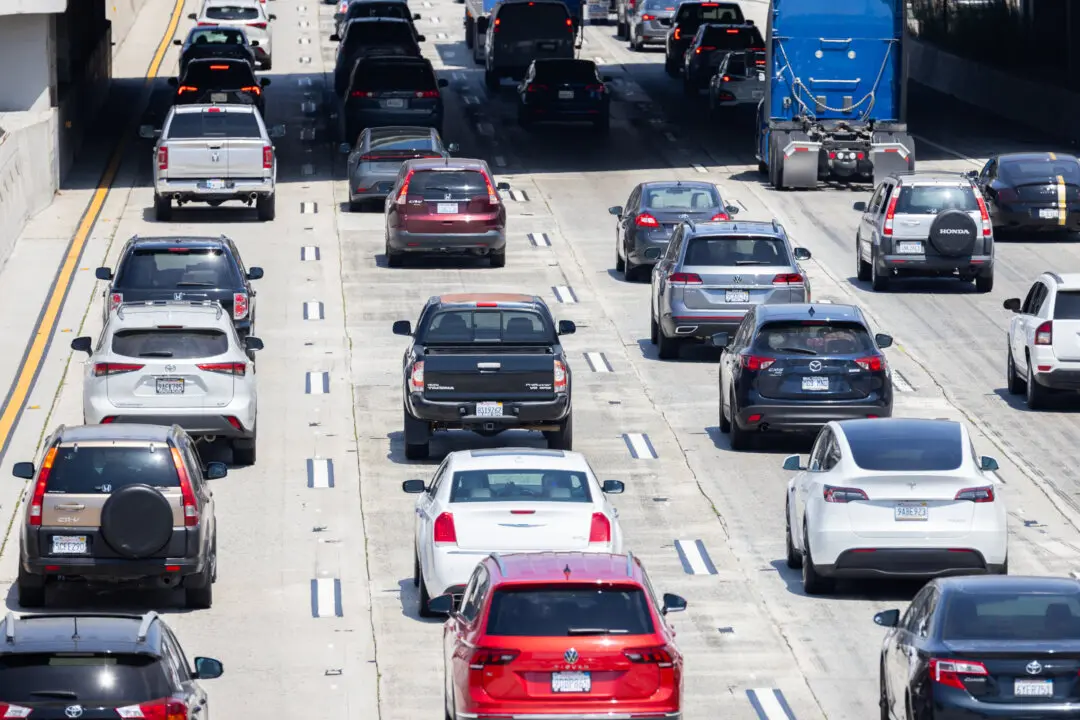
Gasoline prices at the pump declined slightly over the past week, falling from $4.15 per gallon to $4.07 on Friday as oil prices dropped amid a ceasefire in Iran, according to data from the American Automobile Association (AAA).
“After last week’s announcement of a two-week ceasefire between the U.S. and Iran, the price for a barrel of crude oil has continued to trade below $100,” AAA said in an April 16 statement.
“However, maritime traffic transiting the Strait of Hormuz remains subdued as regional tensions persist and negotiations continue.”
Meanwhile, despite the weekly drop, gasoline prices are currently higher than the $3.79 per barrel a month ago. In three states, gas prices exceed $5 per barrel: Washington, Hawaii, and California.
A gallon of gas costs $5.85 in California, $4.09 in Florida, $4.11 in New York, and $3.71 in Texas. In two states, prices were lower than $3.50 per gallon—Kansas and Oklahoma.

$150 Crude Oil
In an April 16 post, ING Bank said that despite significant tightening in the oil market due to shipping disruptions, investors in the futures market seem to be responding to how the war could evolve in the near term and are hoping for a quick resolution.The bank estimated that around 13 million barrels per day of oil from the Persian Gulf region have been disrupted by the Hormuz blockade.
As such, there is a need for “demand destruction,” it said, which is evident in parts of Asia, where various governments have announced measures to reduce energy consumption.
“For now, our base case is that energy flows will start to make a gradual recovery through the second quarter. However, flows will remain below pre-war levels until at least year-end. This would see Brent averaging $96/bbl over 2Q26 and $89/bbl over the full year 2026,” ING said. Bbl refers to a barrel of oil.
“A more extreme scenario would be where Persian Gulf flows remain mostly cut off, while escalation sees extensive infrastructure damage, and risks to Red Sea oil flows also grow, which could see Brent trading over $150/bbl.”
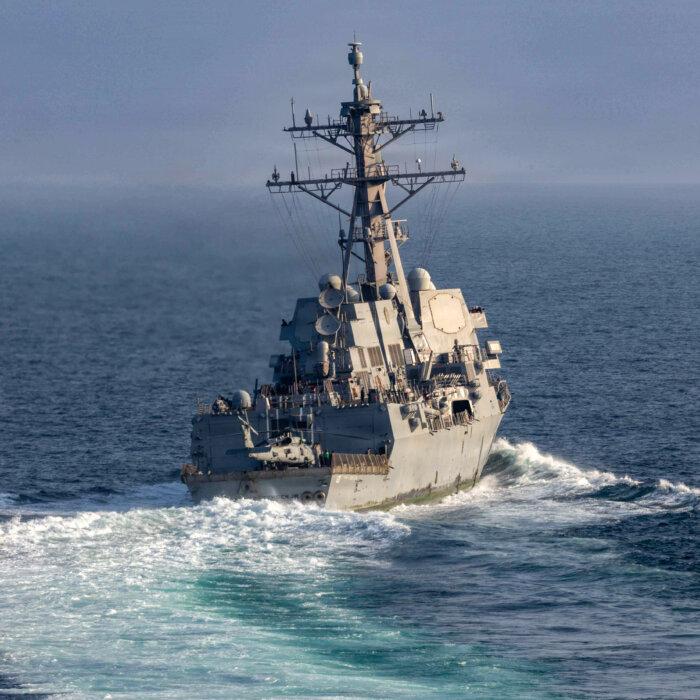
At the press conference, War Secretary Pete Hegseth asked Iranian officials to come to an agreement with the United States to end the war.
“We are locked and loaded on your critical dual-use infrastructure, on your remaining power generation, and on your energy industry. We'd rather not have to do it,” Hegseth said.
A lack of a deal may lead to the resumption of war, pushing oil prices even further from current levels.
“It’s looking very good that we’re going to make a deal with Iran, and it’s going to be a good deal. It’s going to be a deal with no nuclear weapons,” Trump said.
“I’m optimistic that during the summer, we will see gas with a three in front of us sooner rather than later,” Bessent
Bessent said prices at the pump will steadily decline once the tensions in the Middle East cool down and the Strait of Hormuz is fully reopened.