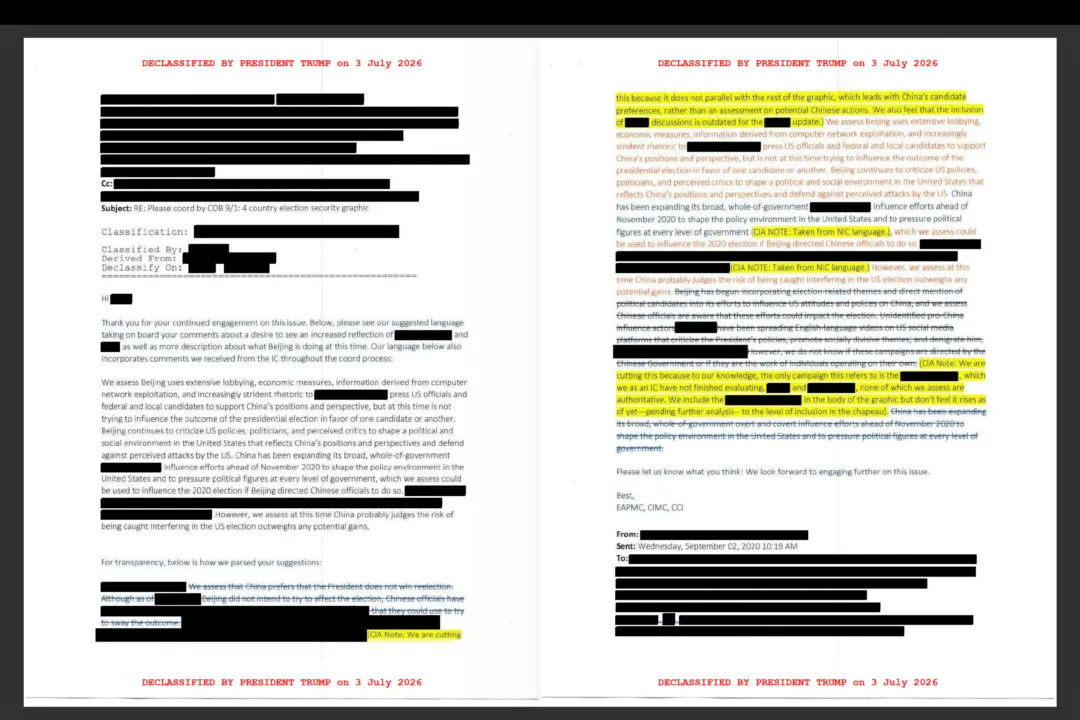
WASHINGTON—More than 243,000 pages of files related to the 1968 killing of civil rights icon Martin Luther King Jr. were declassified and released on July 21 by Director of National Intelligence Tulsi Gabbard.
The release follows President Donald Trump’s January executive order mandating the release of documents, long sealed by intelligence agencies, related to the assassinations of King, President John F. Kennedy, and his brother, Sen. Robert F. Kennedy.
Records about the other two killings were released earlier this year.
“Under President Trump’s leadership, we are ensuring that no stone is left unturned in our mission to deliver complete transparency on this pivotal and tragic event in our nation’s history.
“I extend my deepest appreciation to the King family for their support.”

Relatives of the civil rights leader were given two weeks to review the information before it was released, according to a statement from the National Archives.
King’s niece expressed gratitude to the president and Attorney General Pam Bondi for the roles they played in securing the release.
Included in the trove of documents are details about the FBI’s look into King’s murder, highlighting potential leads, investigative progress, and interviews with witnesses.
Thousands of memos, internal communications, and photographs are listed online at the National Archives website.
The Epoch Times is reviewing the 6,301 files released on July 21.
Redactions are sprinkled throughout the documents, preventing researchers from uncovering certain details in dozens of documents that originated from the FBI and the CIA, among other organizations.
Newly released CIA files reveal the agency’s efforts to track James Earl Ray, who was convicted of killing King, overseas as he fled authorities.
Secretary of State Marco Rubio, who is also the nation’s acting archivist, said that the National Archives processed the records “at an unprecedented speed.”
“Today’s record release marks a historic step in the Trump administration’s ongoing commitment to transparency and accountability,” he said in a statement.
“Preserving, protecting, and releasing the records of the U.S. government is at the core of NARA’s mission.”
Archivists are working to identify other files across agencies and will continue to upload documents as they become available, according to the agency’s website.