GM was encouraging customers to sign up for its OnStar connected vehicle service and the OnStar Smart Driver feature through a “misleading enrollment process,” the FTC said at the time.
During enrollment, the company did not “clearly disclose” that collected information—including data regarding speeding, late-night driving, and instances of hard braking—would be sold to third parties such as consumer reporting agencies, the commission said.
This information was used by reporting agencies to compile credit reports that were subsequently utilized by insurance companies to set rates and deny insurance, the commission said. The FTC said that tracking and collecting geolocation data was an invasion of privacy.


In addition, for the next 20 years of the order, GM is required to obtain “affirmative express consent from consumers prior to collecting, using, or sharing connected vehicle data” except under certain circumstances, such as providing location data to emergency first responders, the FTC said.
During that period, GM must ensure that U.S. customers can request a copy of their data, ask for their data to be deleted, and opt out of geolocation and driver behavior data collection.
“The Federal Trade Commission has formally approved the agreement reached last year with General Motors to address concerns,” a GM spokesperson told The Epoch Times on Jan. 15.
“As vehicle connectivity becomes increasingly integral to the driving experience, GM remains committed to protecting customer privacy, maintaining trust, and ensuring customers have a clear understanding of our practices.”
“Last year, we discontinued Smart Driver across all GM vehicles, unenrolled all customers, and ended our third-party telematics relationships with LexisNexis and Verisk,” GM said at the time.
“The FTC consent order includes new measures that go above and beyond existing law, while capturing steps we’ve already taken to establish choices for customer data collection and communications about how the information is used.”
Vehicle Data Collection
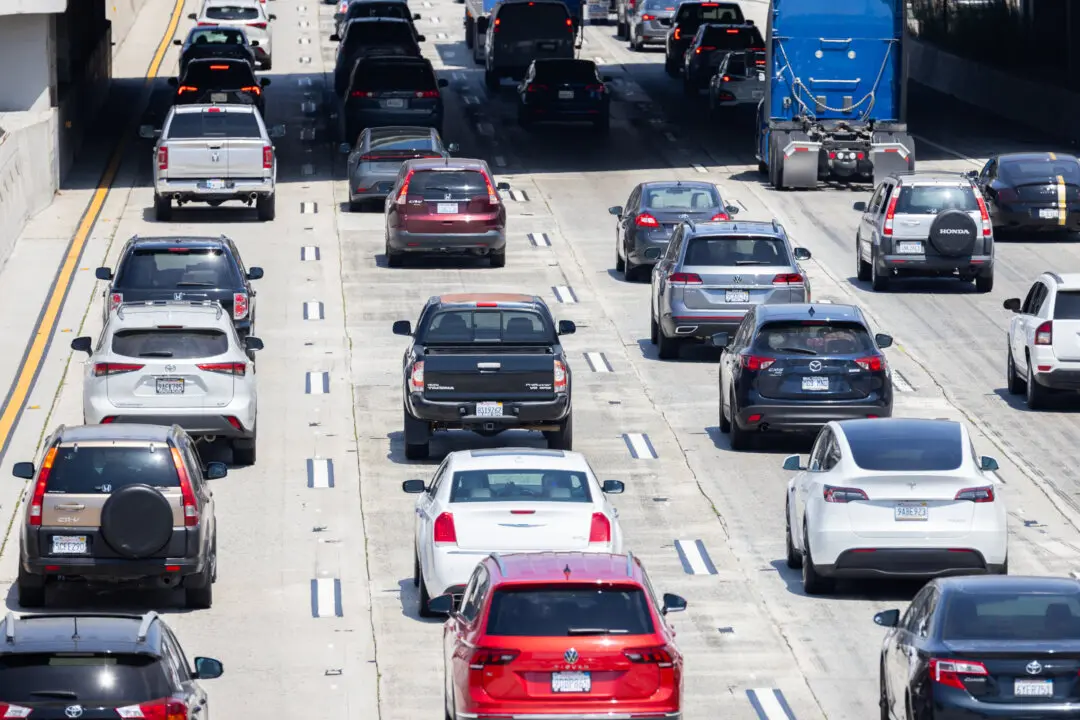
Multiple other car companies admit to collecting driver data as part of their privacy policies.Driver behavior information includes “vehicle speed, vehicle acceleration and deceleration, pedal positions, engine speed, direction and time of travel, steering angle, yaw rate, vehicle control, and Honda Sensing or Acura Watch system settings and usage,” it said.
“Chinese vehicles, which are dirt cheap thanks to state subsidies, could collect full motion video of sensitive sites, 3-D mapping, and geolocation of individual drivers—all of which could be sent back to Beijing,” Slotkin said.