On Sept. 25, grand jurors returned an indictment on two counts against former FBI Director James Comey, accusing him of making a false statement before Congress and obstruction in a criminal case.
The former FBI chief has declared his innocence in response to the indictment.
Why Is Comey Being Charged?
Comey is being charged in relation to testimony he gave to the Senate Judiciary Committee on Sept. 30, 2020.During that hearing, according to the indictment, Comey told the panel that he “had not ‘authorized someone else at the FBI to be an anonymous source in news reports’ regarding an FBI investigation concerning PERSON 1.”

The Department of Justice (DOJ) alleges Comey knew that to be untrue.
During one section of the September 2020 hearing, aligning with the information in the indictment, Comey was being questioned by Sen. Ted Cruz (R-Texas) regarding politically sensitive investigations he oversaw during his tenure as FBI director.
Those included an investigation into former Secretary of State Hillary Clinton’s use of a private email server and an investigation into allegations of collusion between then-candidate Donald Trump’s campaign and Russia.
Cruz asked Comey about previous testimony he had given to Senate Judiciary Committee Chairman Chuck Grassley (R-Iowa).
Comey had told Grassley that he had never acted as an anonymous source or authorized anyone else to do so regarding either the Clinton or Trump investigations.
What Are the Charges?
Comey faces two charges related to the Sept. 30, 2020, testimony.The first count is being filed under 18 U.S. Code § 1001, which allows the government to bring charges against any individual who “makes any materially false, fictitious, or fraudulent statement or representation” to officers of the executive, legislative, or judicial branch.
In this case, Comey is being charged with allegedly making false statements to the legislative branch, as the DOJ alleges he had commissioned a third person to act as an anonymous source regarding the high-profile investigations.
The second count is being filed under 18 U.S. Code § 1505, an obstruction statute, and also relates to Comey’s testimony to the Senate.
That section of the indictment alleges Comey “corruptly [endeavored] to influence, obstruct and impede the due and proper exercise of the power of inquiry under which an investigation was being had before the Senate Judiciary Committee by making false and misleading statements before that committee.”
Grand Jurors Reject One Count
One count brought against Comey by the government was rejected by jurors.That count alleged that Comey “falsely [stated] to a U.S. Senator during a Senate Judiciary Committee hearing that he … did not remember ‘being taught’ of PERSON I’s ‘approval of a plan concerning’ PERSON 2 and the 2016 U.S. Presidential election.”
The charge was likely a reference to an assessment from the CIA that revealed that Clinton had greenlit a plan to discredit Trump by tying him to Russia.
Comey Says He’s Innocent
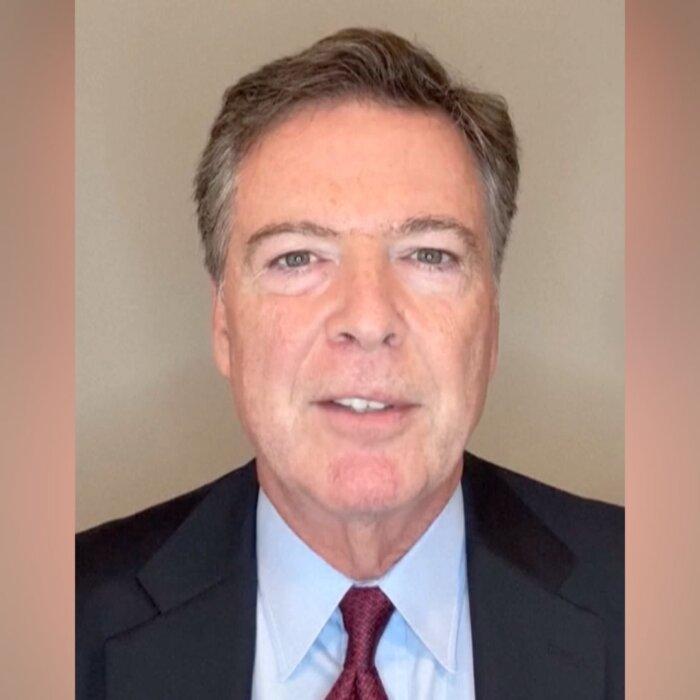
In a video posted to Instagram, Comey responded to the indictment, claiming his innocence and suggesting that he was prepared to address the allegations in court. Comey told viewers that he is “not afraid.”“My heart is broken for the Department of Justice, but I have great confidence in the federal judicial system, and I’m innocent,” Comey said.
‘No One Is Above the Law’: Admin Officials
Administration officials said the indictment demonstrated that “no one is above the law.”“JUSTICE IN AMERICA! One of the worst human beings this Country has ever been exposed to is James Comey, the former Corrupt Head of the FBI,” Trump wrote.
“Today he was indicted by a Grand Jury on two felony counts for various illegal and unlawful acts. He has been so bad for our Country, for so long, and is now at the beginning of being held responsible for his crimes against our Nation.”
He said political weaponization was most “blatant … during the Russiagate hoax, a disgraceful chapter in history we continue to investigate and expose.”
“Everyone, especially those in positions of power, will be held to account—no matter their perch,” Patel concluded. “No one is above the law.”