A former DEA agent and his Florida associate were arrested last week in New York and charged with conspiring to assist a Mexican cartel by laundering money and facilitating cocaine trafficking.
Paul Campo, 61, of Oakton, Virginia, and Robert Sensi, 75, of Boca Raton, Florida, face charges of narcoterrorism conspiracy, cocaine distribution conspiracy, providing material support to a foreign terrorist organization, and money laundering conspiracy, the Justice Department said in a statement.
The two men conspired to assist Cartel de Jalisco Nueva Generacion, or CJNG, “one of the most notorious Mexican cartels that is responsible for countless deaths through violence and drug trafficking in the United States and Mexico,” said U.S. Attorney Jay Clayton for the Southern District of New York.The group commands a significant portion of the illegal drug trade, trafficking cocaine, methamphetamine, fentanyl, and other drugs into the United States, prosecutors said. It was designated a foreign terrorist organization by the Trump administration in February under the Immigration and Nationality Act.
Prosecutors allege that Campo and Sensi laundered hundreds of thousands of dollars they thought were CJNG proceeds, while agreeing to launder millions more and facilitate cocaine trafficking in New York City.
“By participating in this scheme, Campo betrayed the mission he was entrusted with pursuing for his 25-year career with the DEA,” Clayton said. “CJNG is a violent and corrupting criminal enterprise that New Yorkers want broken.”
Campo worked for the DEA for about 25 years, beginning as a special agent in New York and climbing the ranks to deputy chief of the Office of Financial Operations, the statement said. He retired in 2016.
Starting at the end of 2024, Sensi met with a confidential source working with law enforcement who posed as a CJNG member. Sensi allegedly said he had a contact formerly in charge of DEA financial operations who could assist in laundering drug money and acquiring agency details on informants and probes.
Campo and Sensi later met with the source, allegedly agreeing to launder funds by exchanging cash for cryptocurrency and real estate investments. Prosecutors alleged that they offered advice on fentanyl manufacturing and talked about purchasing commercial drones, as well as military weapons, including rifles, grenade launchers, and rocket-propelled grenades for the cartel.
The pair frequently cited Campo’s past law enforcement employment in financial probes and cartel operations, the statement said.
In one discussion, the source told Campo that drones were being used to deliver explosives, commenting, “What we do with the drones, we put explosives and we just send it over there, boom.”
In another instance, the source asked Sensi about a drone’s capacity for carrying C-4 explosives, and Sensi allegedly answered it could hold about 6 kilograms, enough to “blow up the whole [expletive] ... I don’t want to say.”
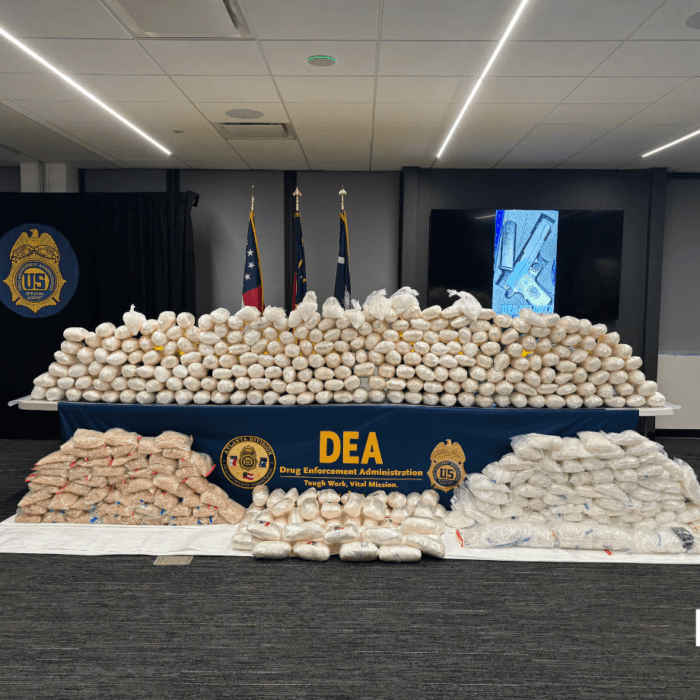
The duo allegedly agreed to launder $12 million in supposed CJNG drug earnings, converted about $750,000 in cash to cryptocurrency, and set up payment for 220 kilograms of cocaine worth about $5 million with the expectation of profits.
Sensi and Campo did not return a request for comment. Sensi’s attorney, Amanda Kramer, had said that Sensi should be free while he awaits trial, arguing that multiple health problems would prevent him from fleeing.
Campo’s attorney, Mark Gombiner, described the indictment as “somewhat sensationalized and somewhat incoherent” and said neither Campo nor Sensi had agreed to look into obtaining weapons for the cartel.
Both lawyers entered not guilty pleas on their clients’ behalf. The judge ordered them held without bail.
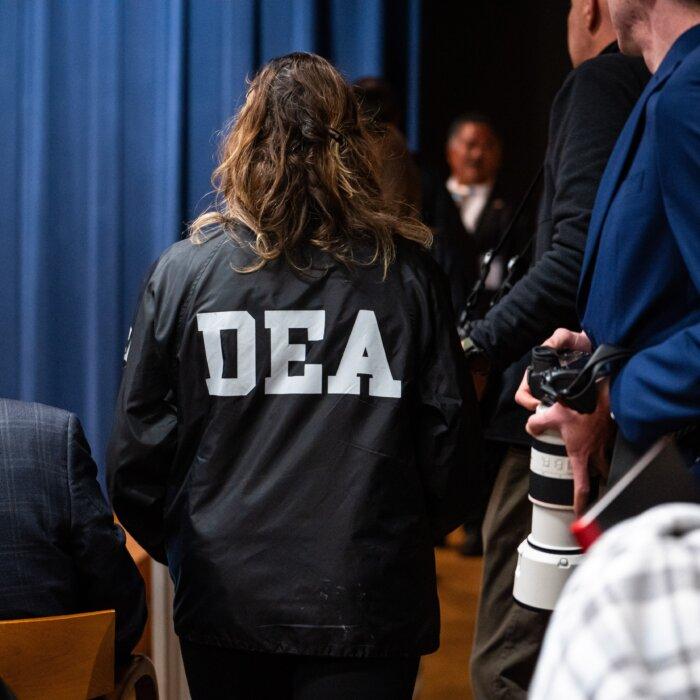
DEA Administrator Terrance C. Cole said the indictment sends a message that those who betray the trust of the public will face consequences.
“The alleged conduct occurred after [Campo] left DEA and was unrelated to his official duties here, but any former agent who chooses to engage in criminal activity dishonors the men and women who serve with integrity and undermines the public’s confidence in law enforcement,” Cole said.
The narcoterrorism conspiracy charge carries a mandatory minimum of 20 years and up to life in prison. The cocaine conspiracy charge holds a 10-year minimum and life maximum, while material support to a terrorist group has a 20-year maximum, the same as the money laundering conspiracy.