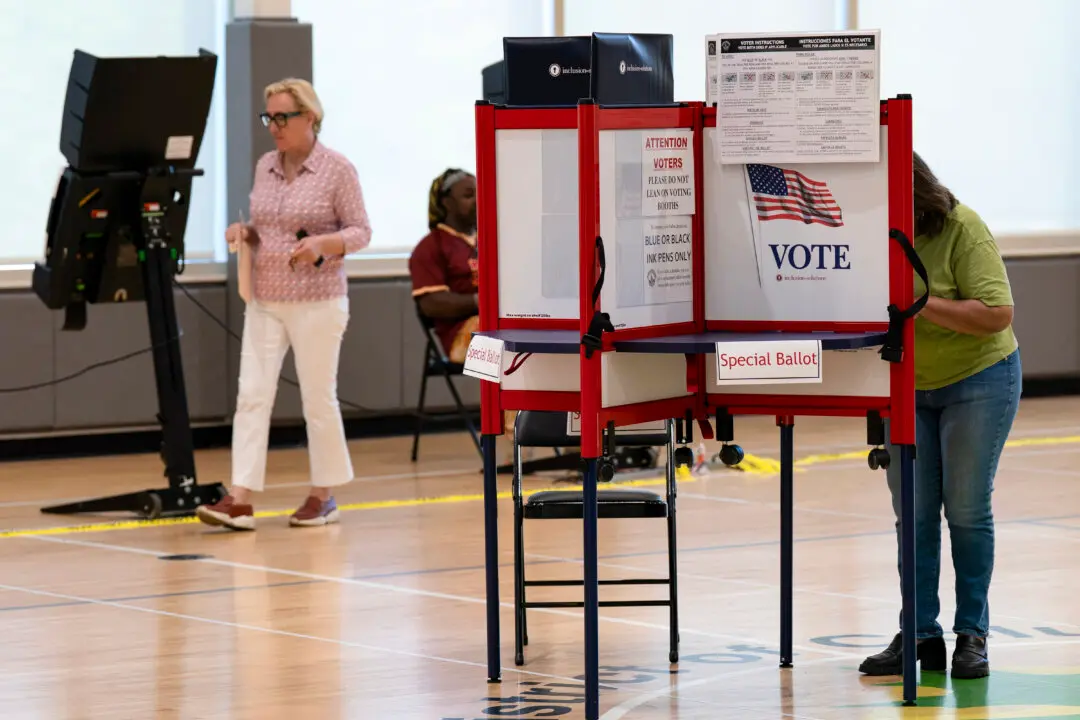
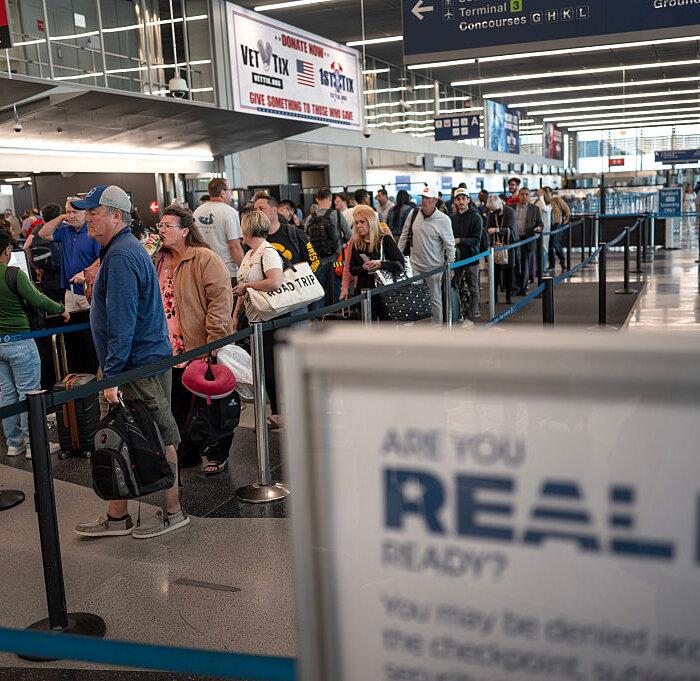
The Transportation Safety Administration (TSA) has hailed the first months requiring REAL ID for domestic air travel a great success.
Almost 94 percent of air travelers presented a REAL ID, “or another acceptable form of ID” to board commercial airliners since May 7, according to an email from the TSA.
Meanwhile, some politicians and privacy advocates say that REAL ID and similar programs allow the federal government unprecedented access to personal data without enough information on how that data will be secured or used.
The six-page law requires that states verify a person’s identity by requiring a birth certificate, proof of a Social Security Account, proof of residency, and one other photo ID.
States must keep digital and physical copies of all information gathered. The law includes a requirement to “Subject each person applying for a driver’s license or identification card to mandatory facial image capture.”
Data Security Concerns
Some are skeptical that REAL ID will keep personal information and biometric data secure.Rep. Thomas Massie (R-Ky.) and other critics have alleged that REAL ID creates a de facto federal database by giving the federal government access to each state’s driver’s license database. They alleged that this makes REAL ID an unconstitutional national ID that could be used to track individuals and infringe on their constitutional rights.
Massie also said that the REAL ID Act received no public hearings before it was passed as part of a larger defense spending bill in 2005.
Ian Grossman, president and CEO of the American Association of Motor Vehicle Administrators, said that “the federal government actually does not have access to that data.”
The State-to-State Verification System requires each state to agree to limit who has access to data and why, he told The Epoch Times. This system enables each state to confirm that a person only has one state-issued driver’s license, which is a main requirement for the REAL ID program.
“The federal government’s role... is to affirm that the states are using the service to be compliant with the [REAL ID] rule. There is no usage of the service by the federal government,” Grossman told The Epoch Times. He believes the privacy concerns are overblown.
Laurel Libby, a Republican state representative from Auburn, Maine, remains skeptical. She said the fact that it took 20 years to implement REAL ID indicates that stopping terrorism was not the system’s true objective.
“It exposes Americans to a greater danger of identity theft and fraud, and it turns an ordinary driver’s license into a domestic passport,” Libby told The Epoch Times.
“We already have the ability, via passports, to travel domestically and abroad. So, there’s no need to bring in a new mechanism with new risks.”
In its current iteration, the REAL ID plan recognizes other forms of identification for commercial air travel. These include a passport, military identification, and an Enhanced Driver’s License.

Twila Brase, co-founder and president of the Citizens’ Council for Health Freedom, is especially concerned over language she says gives the secretary of homeland security unilateral authority to extend the reach of REAL ID.
The law states, “The term ‘official purpose’ includes ... accessing Federal facilities, boarding federally regulated commercial aircraft, entering nuclear power plants, and any other purposes that the Secretary shall determine.”
Brase is concerned about the possibility of alternative ID documents being removed from the list once most Americans are using the REAL ID. Then, she said, the secretary of homeland security could potentially expand the list of activities requiring a REAL ID, such as purchasing firearms, opening bank accounts, and receiving medical care.
Some said they are getting a REAL ID only because it was necessary for air travel, which Brase said was the only thing most people knew about the law.
Jay Mays, a refinery operator from Stillwater, Oklahoma, said he got a REAL ID for that reason.
Mays told The Epoch Times he didn’t want to get a REAL ID and believes the new system will benefit only politicians and bureaucrats, but his family was planning a vacation.
“Because my wife [was] saying ‘We’re getting on this plane, we’re going on this trip,’ I was like, ‘Alright, I’ll do it.' I gave in, but I don’t like the idea of it. I just don’t trust the government,” Mays said.

As Patrick and Emily Webster of Myrtle Beach, South Carolina, waited for a connecting flight at Miami International Airport, they said they switched to REAL ID about six years ago because they were told they wouldn’t be able to travel without it.
“I was like, well, might as well just go ahead and get it done with,” Patrick said.
They saw one aspect of the law at work when they returned to the ship from an outing on a recent cruise vacation. They expected to show their passports to reboard the ship. Instead, biometric data gathered under the REAL ID law identified them.
TSA Responds
In response to the privacy concerns, the TSA said in a statement emailed to The Epoch Times that the federal government doesn’t store the information tied to REAL IDs.“REAL ID cards are state-issued identification cards, and the REAL ID program does not create a federal database of driver license information,” the TSA stated.
“Real IDs make identification harder to forge, thwarting criminals and terrorists. DHS will continue to collaborate with state, local, and airport authorities to inform the public, facilitate compliance, curb wait times, and prevent fraud.”
Grossman, whose organization helped design and coordinate the system of state databases critical to the REAL ID system, says the linchpin of REAL ID is the State-to-State Verification System, which is not new technology. The system already existed to ensure that Commercial Driver’s License holders—such as truck and bus drivers—only had one such license as required by federal law, he said.
“We said, ‘Well, we can extend that concept, that functionality from just commercial drivers to all drivers, to make sure that an individual in the United States can only have one driver’s license at one time,’” Grossman said.
State-Level Efforts to Opt Out of REAL ID
Libby and some other state-level politicians are calling for their states to backtrack on the REAL ID system.In 2023, Libby introduced a resolution in the Maine Legislature calling for the repeal of REAL ID. The resolution failed on a party-line vote.
Michigan state Rep. James DeSana, a Republican, sponsored two bills to prevent Michigan’s secretary of state from issuing REAL ID-compliant IDs and driver’s licenses. The bills, HB 4473 and HB 4474, have been sent to the Government Affairs Committee.
In Minnesota, state Rep. Shane Mekeland and Sen. Eric Lucero, both Republicans, sponsored HB 3284 and SF 3492, respectively. Mekeland’s bill was referred to the House Transportation Finance and Policy Committee. Lucero’s legislation was sent to the Senate Transportation Committee.

Pennsylvania state Rep. Stephenie Scialabba, a Republican, sponsored HB 1356, which would prohibit REAL ID requirements for state and local governments.
Draft legislation is on hold in Montana, and state representatives in two other states have expressed objections to the REAL ID requirements.
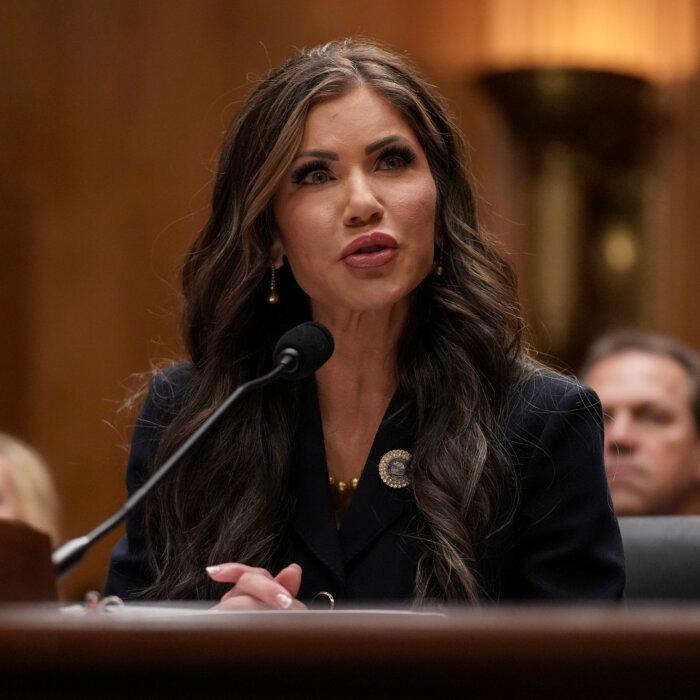
In Kentucky, 28 legislators signed a letter to DHS Secretary Kristi Noem requesting an extension of the deadline for implementing the law.
Oklahoma state Sen. Kendal Sacchieri, a Republican, introduced a resolution affirming the state’s right to opt out of the REAL ID system. Sacchieri said she will be working with other legislators in the next legislative session on a bill to codify the right to opt out.
“Hopefully. We‘ll be doing an interim study this fall ... and then we’ll have good legislation going forward for next year,” Sacchieri told The Epoch Times.
Brase said her group is working with legislators in Tennessee, South Dakota, and Iowa to draft REAL ID repeal bills.