All newly issued, renewed, or replaced Florida licenses and state ID cards must indicate citizenship status, the state announced on social media June 9.
Any licenses or cards issued to noncitizens will feature the letters “NC” for “not a citizen,” according to the state.
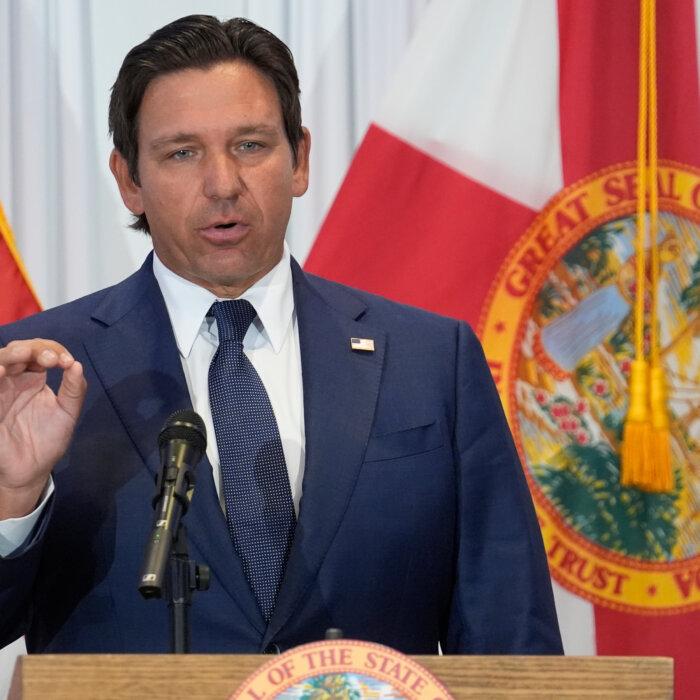
The legislation was signed into law by Gov. Ron DeSantis April 1 as part of an effort to secure elections.
“Safeguarding the electoral process to improve oversight and prevent unlawful influence has been a top priority for my administration since my first days in office,” DeSantis said in April.
The law aims to ensure only citizens can vote in Florida elections.
After the 2020 election cycle, Florida enacted sweeping reforms to enhance election security, including requiring annual voter roll maintenance, strengthening identification requirements for vote-by-mail ballots, restricting third-party ballot harvesting, banning unsolicited mass mail ballot applications, and prohibiting private funding in election administration.
The state’s REAL ID data requires verification of U.S. citizenship for new and updated voter registrations.
Florida’s Highway Safety and Motor Vehicles Department requires applicants to bring with them documents to prove citizenship when applying for new or renewed licenses and state ID cards.
Current driver’s license and state IDs will remain valid until their expiration date. Once a noncitizen becomes a citizen, the state will issue a free replacement card.
Florida state Democrats opposed the law, dubbing it the “Show Your Papers Act.”
The Florida law was influenced by the federal SAVE America Act, which has stalled in the U.S. Senate.
Senate Majority Leader John Thune is cosponsor of the bill and sees it as an important piece of legislation but has not found enough support to pass it. Thune has also tried to break the legislation up by passing voter ID and other pieces, but those have also failed to pass.

California’s elections last week have once again turned national attention to mail-in ballots and voter ID regulations in the SAVE Act. In an interview June 9, Thune told CNBC host Joe Kernen that proving citizenship to be able to register to vote, which is included in the federal SAVE Act, could help protect elections.
“Part of the SAVE America Act is not just ID, or show ID to vote, because a driver’s license … could do that, but also showing actual citizenship to be able to register to vote [and] to get on the rolls in the first place,” Thune said. “Those are both safeguards that would help safeguard our elections in this country.”
An attempt to pass a version of the SAVE America Act by attaching it as an amendment to the Republican budget reconciliation bill on June 4 fell short.
The Senate also had extended debate when the SAVE Act was on the floor and took votes on voter ID and other pieces of the legislation. All of the pieces failed to pass.

The version that failed last week was different from the original legislation that passed the U.S. House on Feb. 11. The Senate version, introduced by Sen. Lindsey Graham (R-S.C.), failed in a 48–50 vote. It would have required people to show documented proof of citizenship when registering to vote and identification when voting.
Sens. Lisa Murkowski (R-Alaska), Mitch McConnel (R-Ky.), Susan Collins (R-Maine), and Thom Tillis (R-N.C.,) voted against the latest version.
Collins said she supported the SAVE America Act passed by the House.
“The law is clear that in this country only American citizens are eligible to vote in federal elections,” Collins said. “In addition, having people provide an ID at the polls, just as they have to do before boarding an airplane, checking into a hotel, or buying an alcoholic beverage, is a simple reform that will improve the security of our federal elections and will help give people more confidence in the results.”