School choice in the Sunshine State got a major boost this week after the Florida Board of Education approved a set of rules guaranteeing charter schools the same maintenance, transportation, and food services as traditional public schools, in addition to allowing them to operate in empty spaces within existing schools.
Charter schools operate with taxpayer dollars and still follow state and federal conditions for public funding, but they operate independently of local school districts.
They cannot charge tuition, must accept students based on a lottery if interest exceeds available slots, and can be closed quickly for poor performance.
Many charter schools or networks were formed by parents or teachers who were dissatisfied with their neighborhood schools.
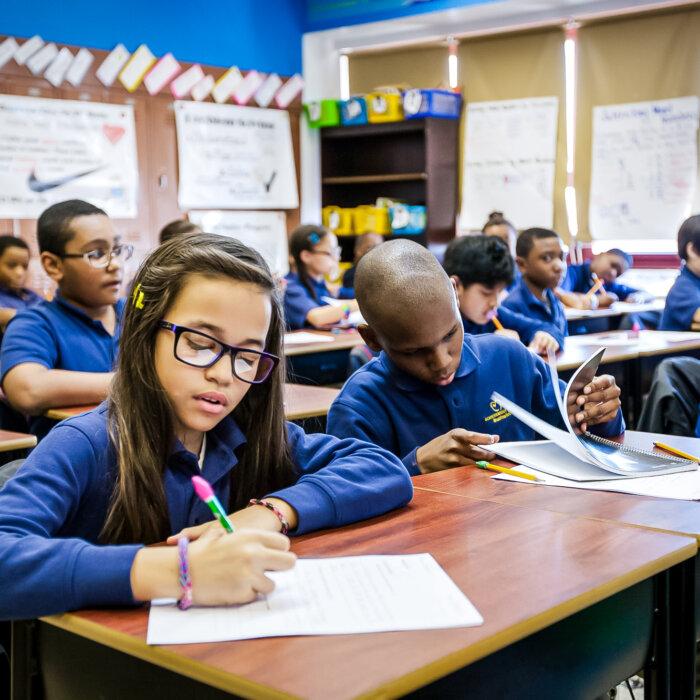

Statewide, charter schools currently serve about 400,000 students, DeSantis said.
He said he anticipates that Success Academy will eventually open multiple sites in the county by using available buildings that formerly housed schools or other institutions, as well as empty spaces within public schools.
He also said he believes that Success Academy will take over some failing schools.
“[Founder Eva Moskowitz is] not going down there to do just one school,” DeSantis said.
In 2024, Success Academy students in New York City, most of them low-income minorities, passed state assessments at a rate of 83 percent in English language arts and 96 percent in math, compared with the passing rates in New York City Public Schools of 49 percent and 53 percent, respectively.
“I’ve been fighting in a blue state,” Moskowitz said on Sept. 25. “I’m not used to being welcome. I’m not used to people liking high standards.”
The Florida Education Association teachers union opposed the state’s school choice initiatives.
“Do you think all schools receiving public funds should be held to the same standards?” the post reads.