Highlighted by parades and backyard barbecues, Labor Day marks the unofficial end of summer in a leisurely and restful way for many Americans, but the origins of the national holiday reflect a darker time for workers and include unrest over oppressive working conditions and a strike that turned violent.
Amid the Industrial Revolution in the late 19th century, workers toiled for at least 12 hours a day, six days a week in factories, mines, railroads, and mills.
Appealing for shorter work weeks and better working conditions, the labor movement arose and escalated in the 1860s and 1870s.
Signed into law by President Grover Cleveland on June 28, 1894, the first Labor Day was celebrated on the first Monday in September that year following decades of conflict as American industry accelerated.
Labor Day Origins
As with Independence Day, Labor Day is a time when many small towns and big cities alike host celebratory parades. In the late 19th century, activists from the Central Labor Union and the Knights of Labor spearheaded what is known as the first Labor Day event when about 10,000 workers marched through the streets of New York City on Sept. 5, 1882.
Between 1887 and 1894, Labor Day became an official holiday in several states. The day varied between the first day of September, the first Monday of September, and the first Saturday of September.
Oregon was the first state to designate a Labor Day holiday in 1887. Colorado, Massachusetts, New Jersey, and New York followed the next year.
In 1893, U.S. Sen. James Kyle of South Dakota introduced a bill to declare Labor Day a federal holiday. The bill languished without discussion in the Senate until June 26, 1894. Cleveland then signed the legislation, and response to the new holiday was positive.
A Holiday Created Amid Strife
Another labor-centered holiday, May Day, was created in the aftermath of the Haymarket Riot on May 1, 1886. Workers flooded Chicago’s streets to demand an eight-hour workday. Scuffles between police and workers ensued over several days. Police ordered the crowd to disperse, and a bomb detonated on May 4.At an international gathering of socialists in Paris in 1889, May Day was declared as a holiday honoring workers’ rights. Cleveland feared that May Day would become “a memorial to the Haymarket radicals.” He encouraged state legislatures to celebrate a labor-centric holiday in September instead and eventually signed the federal holiday at the same time tension arose in a company town outside of Chicago.
Employees of the railway sleeping car titan George Pullman went on strike on May 11, 1893.
Pullman, Illinois, was founded by Pullman in 1880 and designed to serve as a utopian community for workers.
Residents worked for the Pullman Palace Car Company. Their paychecks were drawn from the Pullman bank and their rent was set by Pullman and automatically deducted from their paychecks.
In 1893, there was a nationwide economic depression. Orders for railroad sleeping cars declined. Pullman laid off hundreds of employees. Workers who remained saw their wages cut while rents remained consistent.
Employees walked out, demanding higher pay and lower rents.
Led by Eugene V. Debs, who later ran for president in 1920, the American Railway Union aided the striking workers. Railroad employees across the country boycotted trains carrying Pullman cars. Burning, pillaging, and rioting of railroad cars followed. Mobs of nonunion workers participated.
Faced with a national crisis, Cleveland declared the strike a federal crime and sent federal troops to end the unrest on July 3, days after signing the Labor Day legislation.
Troops fired into a crowd of protesters on July 7, killing as many as 12 people.
The strike ended on Aug. 3, 1894.
The Tradition of Barbecues
The tradition of backyard chefs preparing cookouts for their family and friends has defined Labor Day weekend since its inception.When labor conditions improved in the 20th century, Moss said the focus of holiday barbecues started to reflect the evolution of the holiday itself as a celebration among family and friends in backyards to mark the unofficial end of summer.
“It still has a lot of that same communal sense, gathering around the grill, eating together,” he wrote.
Among the first celebrations traced to what is now known as Labor Day include the Volunteers Firemen’s Associations’ annual picnic and barbecue at Brommer’s Union Park at the southern tip of the Bronx borough of New York City on Sept. 3, 1888. It was an existing event that was moved to early September to commemorate the labor movement.
A 1,200-pound ox was roasted that day, Moss wrote.
When Labor Day was declared a federal holiday in 1894, workers in Chattanooga, Tennessee, celebrated. The governor, mayor, and other dignitaries delivered remarks at a city park after a parade of floats constructed by labor unions.
The Father of Labor Day
Kyle, the senator who introduced the bill to enshrine Labor Day as a federal holiday, is regarded as the father of the formal celebration.Born at his family’s farm in Cedarville, Ohio, in 1854, Kyle’s family moved to Illinois when he was 11. He eventually made his way to South Dakota and entered politics in 1890 shortly after his new home became a state.
First elected to the state senate, he soon became a U.S. senator.
During his time in office, Kyle was chairman of the Great Industrial Commission, which was tasked with investigating questions regarding immigration, labor, agriculture, manufacturing, and business.
Kyle was also chairman of the Education and Labor Committee and introduced the bill that Cleveland signed into law establishing Labor Day.
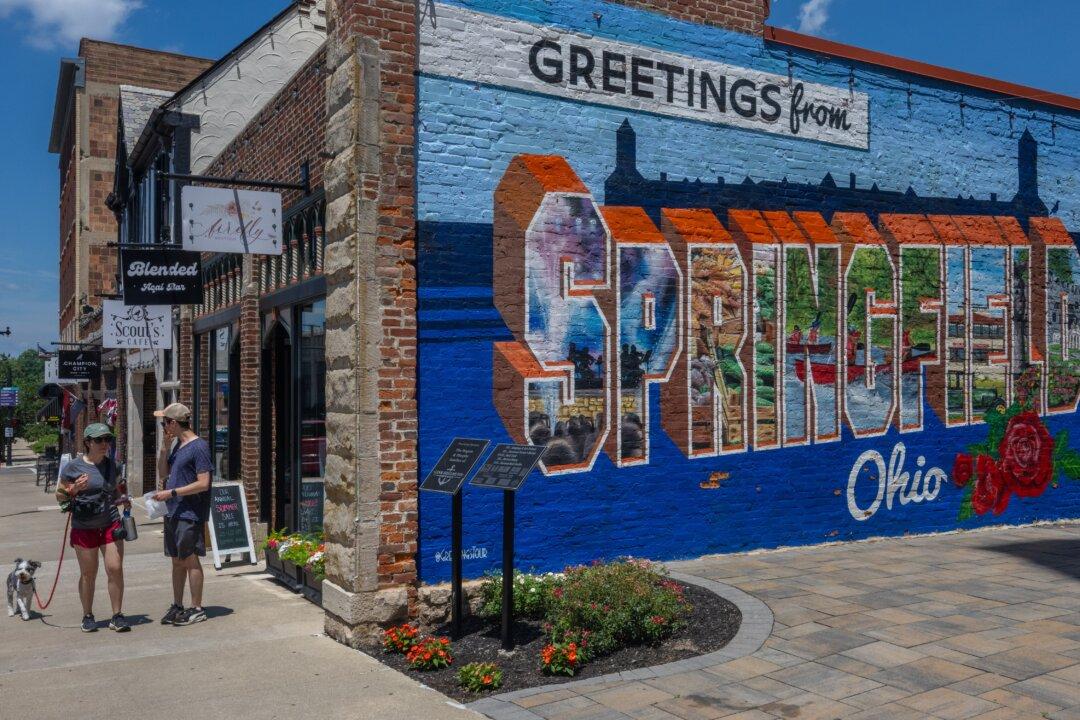
Cedarville calls itself “the home of Labor Day.” Signs at the entry points of the rural village recognize Kyle as “the father of Labor Day.”
Grover Cleveland
Cleveland is the only president to leave the White House and return for a second, nonconsecutive term, a feat that former President Donald Trump is currently trying to accomplish.First elected president in 1884, Cleveland won the popular vote in 1888 but was defeated by Republican Benjamin Harrison in the general election. He and his wife moved to New York, where he became a father and told a colleague that he “had entered the real world” for the first time.
Life as a private citizen proved unfulfilling for Cleveland. He saw an opportunity to defeat Harrison in a rematch because the president had grown unpopular with many Americans. Cleveland won his party’s nomination and defeated Harrison in the rematch.
After Cleveland signed the legislation that established a national Labor Day holiday and summoned troops to Chicago to enforce the injunction against a railroad workers strike, he said, “If it takes the entire Army and Navy of the United States to deliver a postcard in Chicago, that card will be delivered.”
He faced backlash for his treatment of the railroad workers, and his policies amid a depression during his term were mostly unpopular.