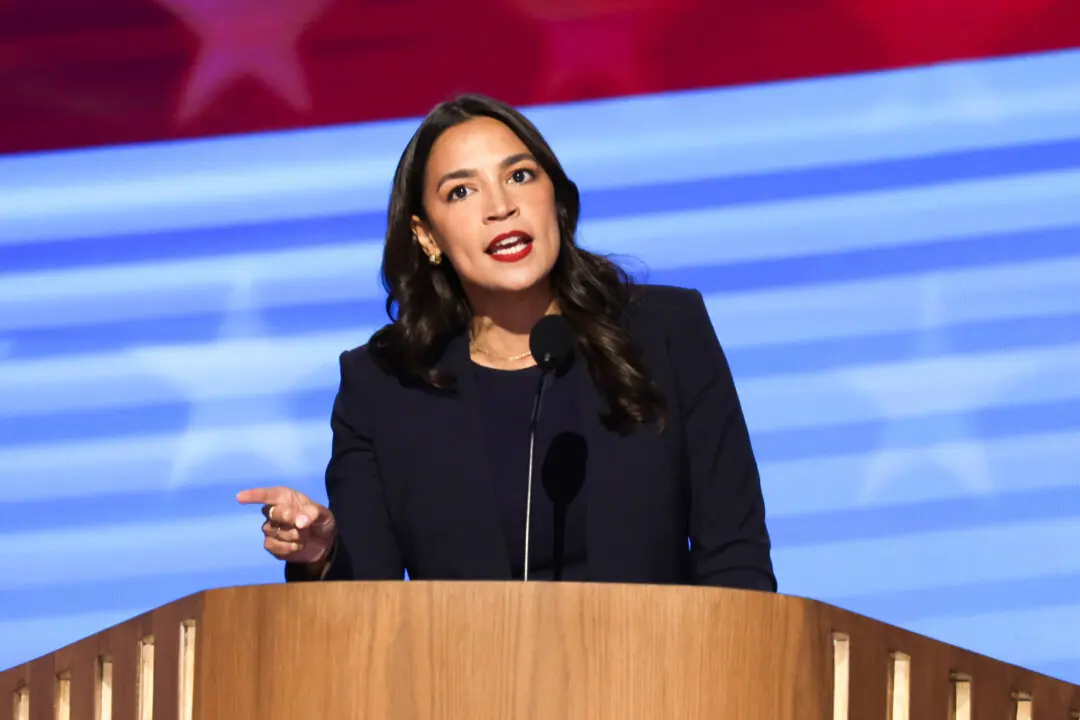
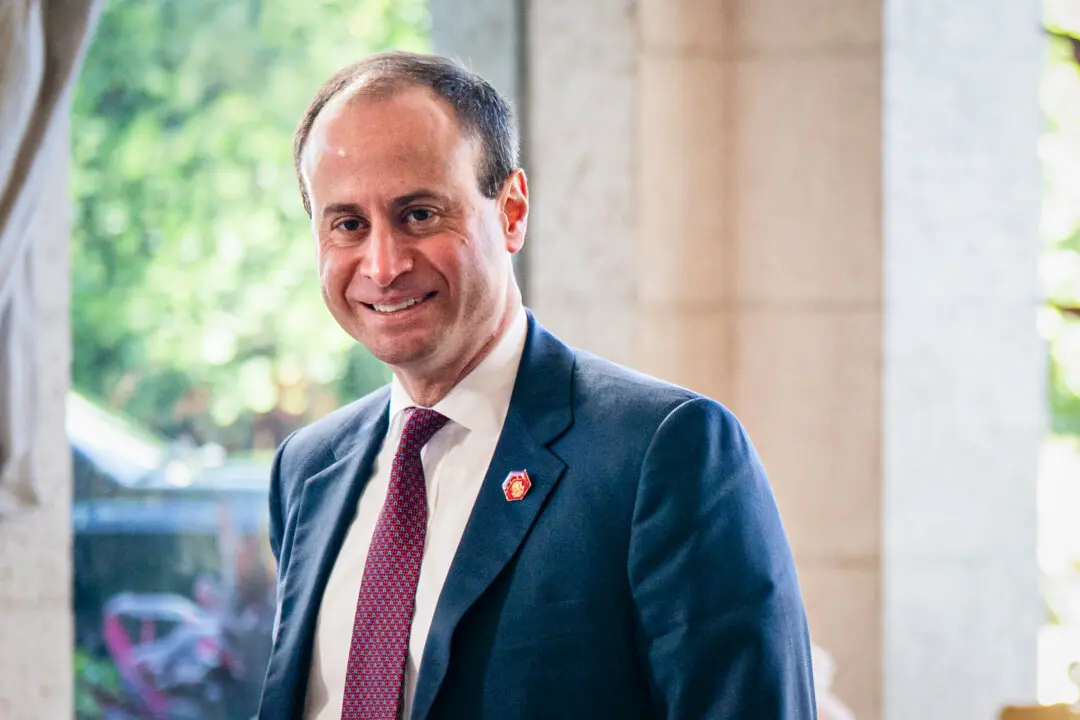
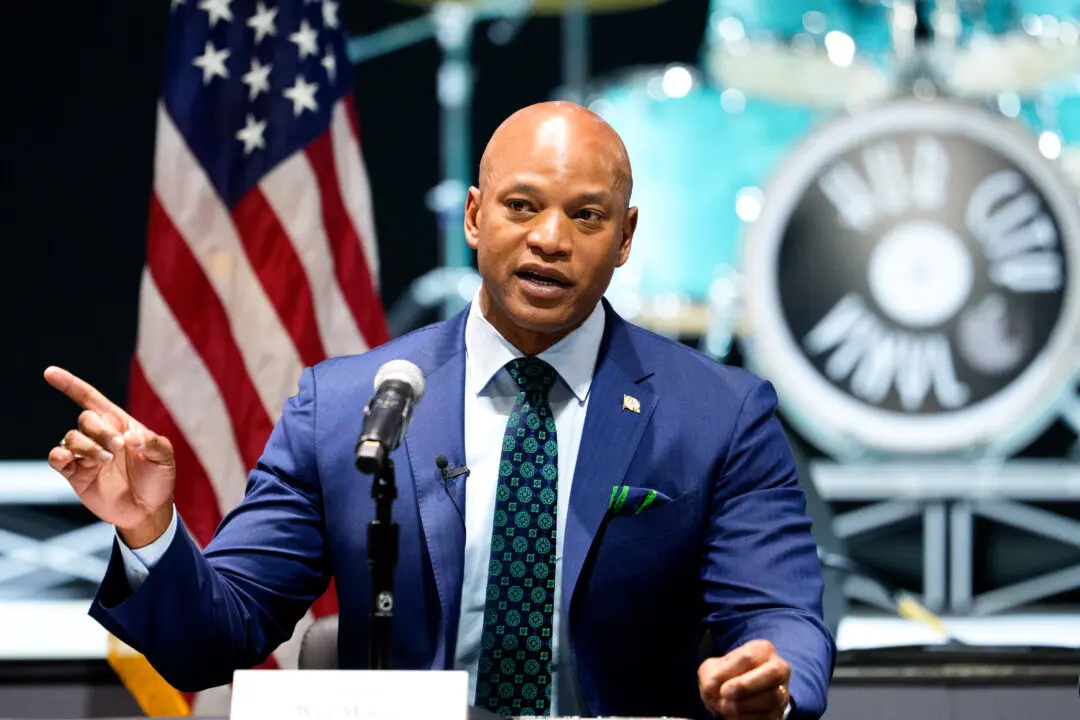
Democrats in America’s largest city will decide this week who will represent their party in November’s mayoral election.
The June 24 Democratic mayoral primary in New York City marks the first major test for Democrats since Vice President Kamala Harris’s loss to President Donald Trump last fall—and the GOP’s sweep of the U.S. House and Senate.
Former New York Gov. Andrew Cuomo and Assemblymember Zohran Mamdani are leading the nine-person field. The two represent competing Democratic visions: one focused on executive experience and party loyalty, the other on bold progressive policies and grassroots momentum.
City Comptroller Brad Lander comes in third place at 13 percent, followed by City Council Speaker Adrienne Adams at 8 percent and former City Comptroller Scott Stringer at 3 percent, with the rest of the field splitting the remaining support.
The polling also shows clear divides by age, race, education, and gender. Voters younger than 50 break for Mamdani two to one, while Cuomo leads among older voters, black and Hispanic voters, and those without college degrees. Mamdani leads with white and Asian voters and college-educated New Yorkers.
A Bellwether or a Barometer?
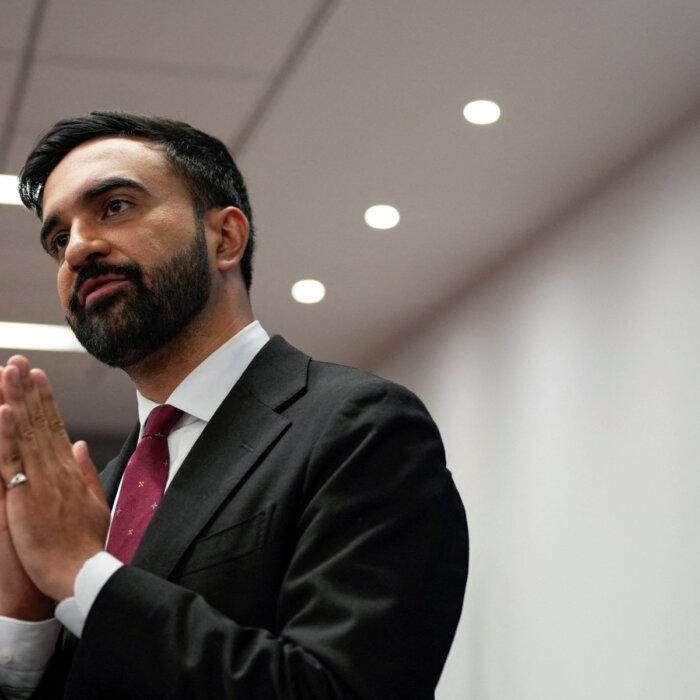
Some strategists see the race as a bellwether, a sign of where the Democratic Party might be headed nationally. Others view it more as a barometer—a reading of current energy within the party rather than a forecast of its future.“It’s a huge disaster for national Democrats if Zohran Mamdani is the mayor of New York,” said Kaivan Shroff, a Democratic strategist and former Democratic National Committee (DNC) delegate, in an interview with The Epoch Times.
Shroff, who voted for Cuomo, criticized Mamdani’s close alignment with the Democratic Socialists of America (DSA) and said Democrats should learn from Mamdani’s campaign style—but not adopt his policy platform.
“It’s really easy to promise the world,“ Shroff said. ”And then when you don’t deliver it, you really alienate people. This is not a playbook Democrats should copy.”
Others see Mamdani’s rise as a turning point. Matt Watkins, a Democratic voter in Chicago who volunteered at the 2024 DNC, told The Epoch Times that the campaign is showing what the party could be.
“What Zohran Mamdani is doing in this race isn’t just about New York,” he said. “It is a national blueprint for how Democrats can communicate ambitious ideas simply, without watering them down.
“He’s talking about fast buses, affordable housing, universal child care—not as slogans, but as clear, tangible goals backed by real policy work. As this race enters the home stretch, we are seeing the Cuomo camp fall into an all too common refrain: defining themselves by what they are against. It mirrors how the party is approaching Trump nationally—always reactive, rarely visionary. Voters are tired of that. The Cuomo campaign is clinging to a failed logic that treats the status quo as the best we can do. Mamdani is doing the opposite.”
The Mamdani campaign and Cuomo’s campaign did not respond to a request for comment by publication time.
In a February strategy memo, the group emphasized the race as a test for mass politics on the left, pointing to Mamdani’s coalition, grassroots organizing model, and early fundraising advantage—raising more than $642,000 from 6,500 donors in his first filing period.
Daniel Wortel-London, a professor at Bard College and author of a forthcoming book on New York’s economic development, told The Epoch Times that the race reflects national shifts.
“Cuomo has attracted support from both large developers and segments of the working class who feel they’ve lost ground in the global economy,” he said. “Zohran, meanwhile, has built a coalition of downwardly mobile young people and recent immigrants—groups acutely aware that the current economy isn’t working for them.”
“It doesn’t tell us where the whole country is going, but it gives us a read on where energy is building inside the party,” Lenchner said. “Especially among younger, more diverse voters. To state the very obvious, New York City Democrats are not your average national voter.”
He said enthusiasm for Mamdani isn’t radical—it’s responsive.
“It’s people asking for leaders who speak plainly about rent, about affordability, and fairness,” he said.
Lenchner argued that national Democrats should look closely at who turns out—and why.
“If Mamdani wins and that alarms some centrists, maybe the question should be—why does this kind of moral clarity on issues like affordability scare them?” he said.
Lenchner noted that, nationally, Republicans will attack either candidate.
“Those talking points are prewritten,” he said.
Lenchner also noted that Cuomo and Mayor Eric Adams are appealing to similar constituencies and share reputational baggage.
“Both have really been tarnished by a business-as-usual approach,” Lenchner said. “Democratic voters are still looking for someone that can speak authentically, credibly, on issues like affordability.”
The winner of the June 24 primary is widely expected to win the general election in November. Mayor Eric Adams—2021’s Democratic nominee—is running as an independent, and Curtis Sliwa is the Republican nominee. A split vote could complicate the outcome, but Democrats remain heavily favored in New York.
What remains to be seen is whether the city’s voters—and by extension, the party’s base—will choose continuity or a break from the party’s recent past.