This copy is for your personal, non-commercial use only. Distribution and use of this material are governed by our Subscriber Agreement and by copyright law. For non-personal use or to order multiple copies, please contact The Epoch Times Reprints.

The Epoch Times
The Epoch Times
AD
The Epoch Times
Policies & Impacts

Firms That Took a PPP Loan Under $2 Million Get ‘Safe Harbor’ Break

Google LogoMark Us Preferred on Google
Firms That Took a PPP Loan Under $2 Million Get ‘Safe Harbor’ Break
Rich's Barber Shop in Waukesha, Wis. on May 14, 2020. AP Photo/Morry Gash
Tom Ozimek
Tom Ozimek
Reporter
5/15/2020|Updated: 5/15/2020

The Trump administration said firms that took loans of less than $2 million under the COVID-19 small business relief program can count on a break in the form of not having to prove to auditors that the pandemic had a negative impact on their business.

New guidance issued Wednesday (pdf) for the Paycheck Protection Program (PPP) by the Small Business Administration (SBA) and the Treasury Department said all loans granted under the $2 million threshold will be seen as having met the “good faith” standard, namely that “current economic uncertainty” justifies their need for the loan because they’re less likely to have access to other resources.
The guidance appears to assume that all smaller businesses have suffered financial hardship in some way amid the outbreak of COVID-19, the disease caused by the Chinese Communist Party (CCP) virus, the novel coronavirus that emerged from Wuhan, China, late last year and spread across the globe.

“Any borrower that, together with its affiliates, received PPP loans with an original principal amount of less than $2 million will be deemed to have made the required certification concerning the necessity of the loan request in good faith,” the SBA and Treasury said in the new guidelines.
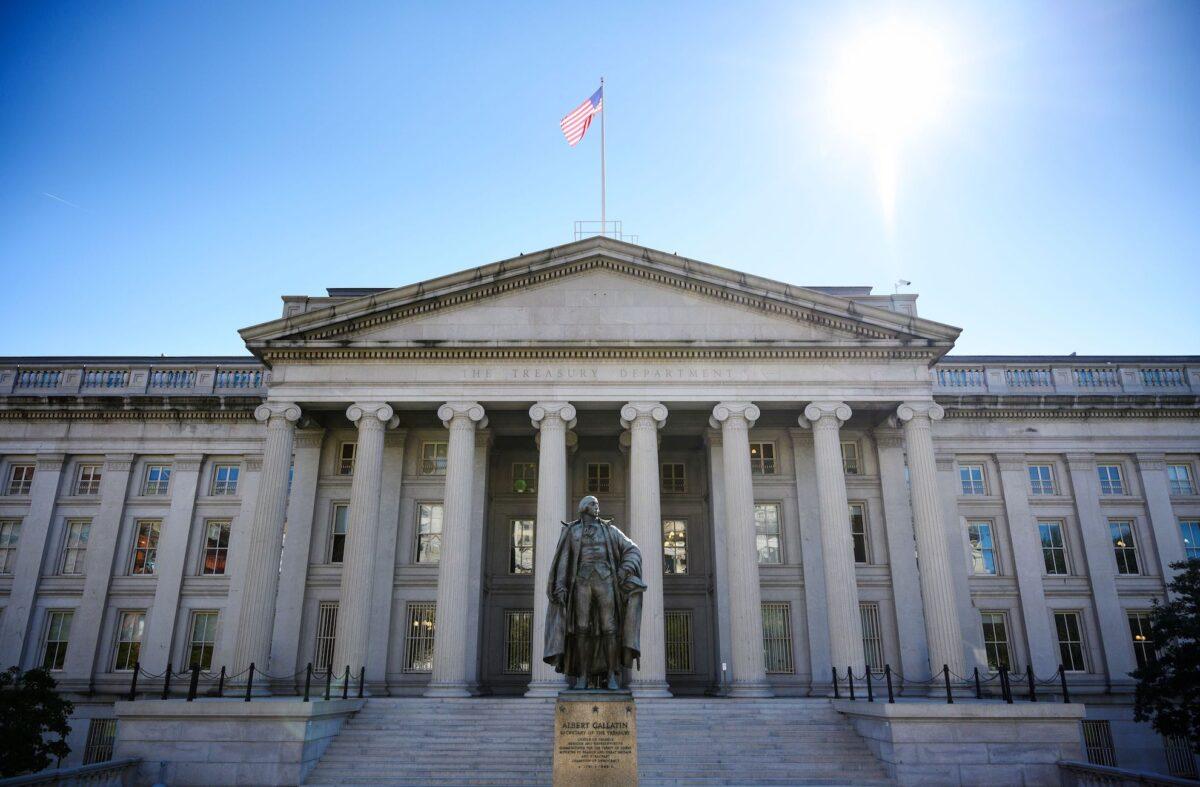
The U.S. Treasury Department building in Washington, on Oct. 18, 2018. (Mandel Ngan/AFP/Getty Images)
The U.S. Treasury Department building in Washington, on Oct. 18, 2018. Mandel Ngan/AFP/Getty Images

Besides assuming smaller borrowers have less access to liquidity amid the pandemic-driven economic crunch and so a “safe harbor” for them is justified, the SBA and Treasury said giving such firms a break will help them keep and rehire employees.

“This safe harbor will also promote economic certainty as PPP borrowers with more limited resources endeavor to retain and rehire employees,” the two agencies said.

The move will also let federal authorities focus their limited auditing capacity on bigger players.

“In addition, given the large volume of PPP loans, this approach will enable SBA to conserve its finite audit resources and focus its reviews on larger loans, where the compliance effort may yield higher returns,” the SBA and Treasury said.
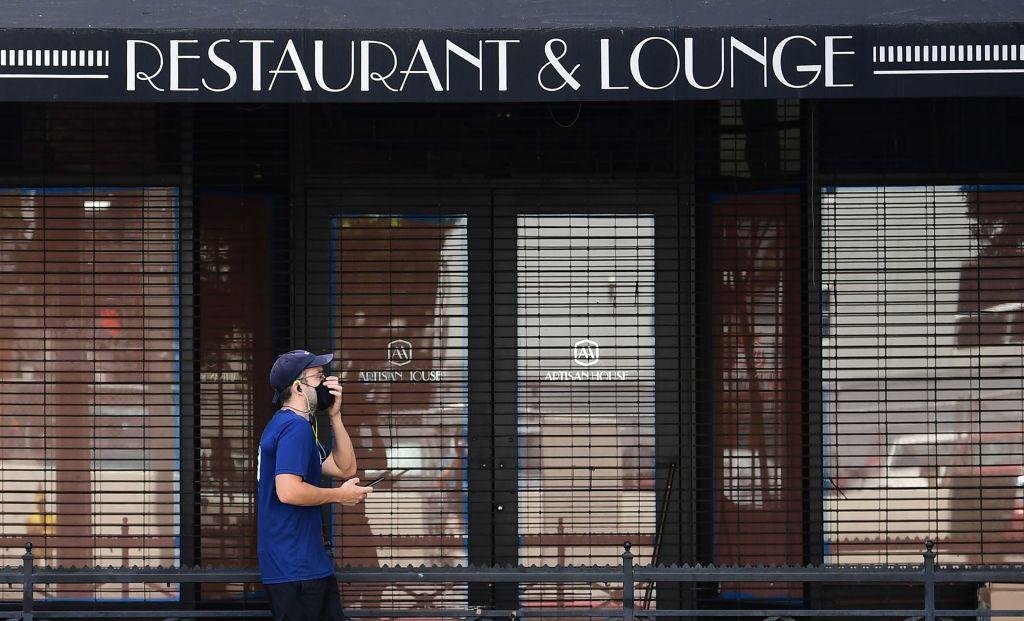
A pedestrian walks past a closed Artisan House restaurant in Los Angeles on May 7, 2020. (Frederic J. Brown/AFP/Getty Images)
A pedestrian walks past a closed Artisan House restaurant in Los Angeles on May 7, 2020. Frederic J. Brown/AFP/Getty Images

Also, companies that took loans over the $2 million mark will still have the opportunity to make a case that they took the loan in good faith. They will be subject to a compliance review to check if they met PPP requirements. Companies that are unable to prove they need the loan will have to repay the balance and they will be ineligible for loan forgiveness.

Also, firms that took loans of more than $2 million that they didn’t need will be allowed to repay the money without legal consequences. This reverses an earlier warning that the government could pursue such loan-takers criminally.

Last month, after a backlash following reports that big companies collected millions from the program intended to help small businesses struggling amid the outbreak, Treasury Secretary Steven Mnuchin said borrowers had criminal liability for taking loans they didn’t need.
“I want to be very clear—it’s the borrowers who have criminal liability if they made this certification and it’s not true,” he said, according to CBS.

The PPP program extends loans of up to $10 million, which are forgiven if firms spend the money mostly on paying workers, who must be kept on the payroll for eight weeks.

The idea behind the program was to encourage companies not to lay off staff amid the outbreak and so minimize the social impact of the pandemic. Also, because firms would spend less time on re-hiring workers and re-booting their businesses once stay-at-home orders are lifted, the policy would support a robust economic rebound.

“The purpose of this program was not social welfare for big business,” Mnuchin told CNBC. “The purpose of this program was to help small businesses.”
Google LogoMark Us Preferred on Google
Tom Ozimek
Tom Ozimek
Reporter
Tom Ozimek is a senior reporter for The Epoch Times. He has a broad background in journalism, deposit insurance, marketing and communications, and adult education.
twitter
Author’s Selected Articles
Judge Blocks USPS Ballot Rule Tied to Trump’s Election Integrity Order
Jul 02, 2026
Judge Blocks USPS Ballot Rule Tied to Trump’s Election Integrity Order
Iran Insists on Hormuz Tolls After 60-Day Grace Period
Jul 01, 2026
Iran Insists Hormuz Tolls Will Follow 60-Day Grace Period as Talks Continue
FAA Moves to Lift 50-Year Ban on Overland Supersonic Flights
Jul 01, 2026
FAA Moves to Lift 50-Year Ban on Overland Supersonic Flights
Trump Warns Gasoline Retailers of ‘Big Problems’ if They Don’t Cut Prices
Jun 30, 2026
Trump Warns Gasoline Retailers of ‘Big Problems’ if They Don’t Cut Prices
Related Topics
Paycheck Protection Program
AD
Add to My List
Save
The Epoch Times
Copyright © 2000 - 2026 The Epoch Times Association Inc. All Rights Reserved.