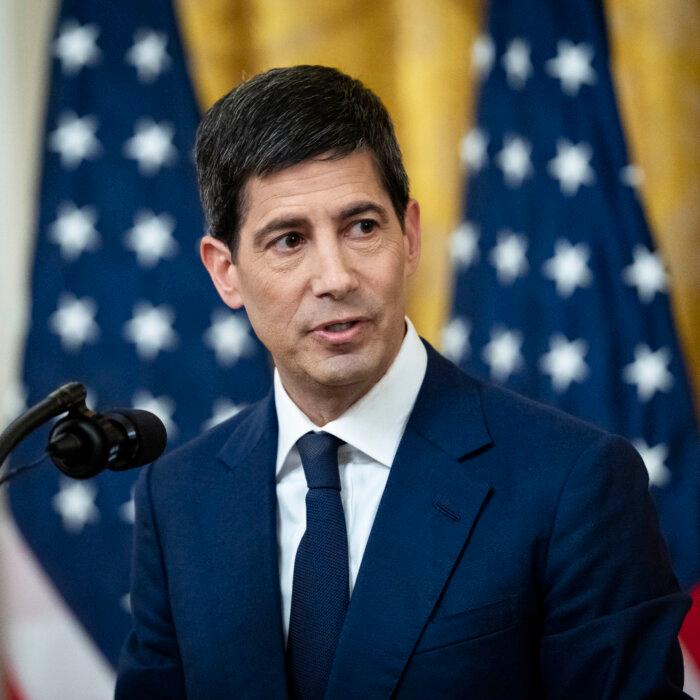
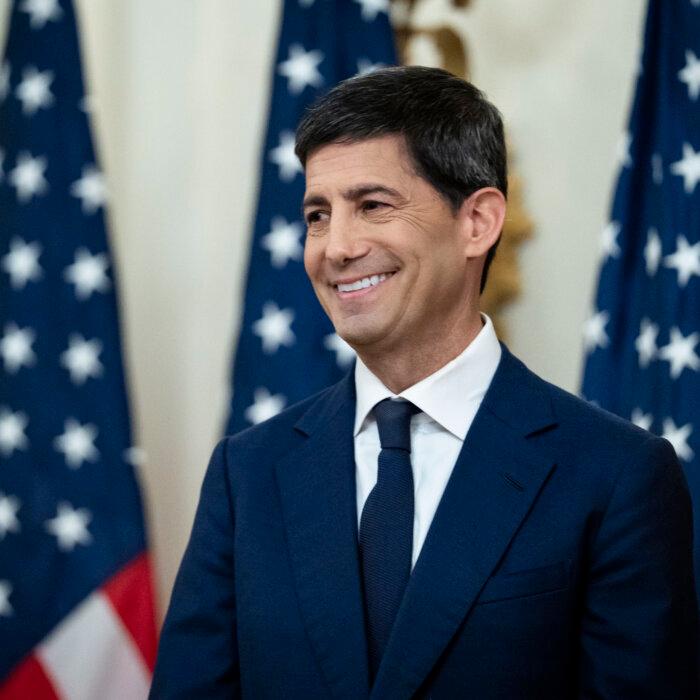
Federal Reserve Chairman Kevin Warsh said on July 14 that inflation over the past five years “will be a thing of the past.”
Warsh appeared on Capitol Hill for the first time since his confirmation hearing in April. The new central bank leader appeared before the House Financial Services Committee for his semi-annual monetary policy report to Congress.
In his opening statement to lawmakers, Warsh reaffirmed his commitment to vanquishing inflation that has plagued the Fed since 2021, taking a hardline stance on the price stability side of the institution’s dual mandate.
“Today, we are at a hinge point in history. It’s up to all of us to meet this moment,” Warsh said.
“The Fed’s number one objective is to get monetary policy right—or as near to it as we possibly can. That is our clear and constant aim, the star we steer by.
“And if we get policy right—and we will—the inflation surge of the last five years will be a thing of the past.”
Like other advanced central banks worldwide, the Federal Reserve maintains a 2 percent inflation target. Since early 2021, the Fed has been unable to meet this goal, with the annual rate remaining consistently above that threshold.
One of these panels is tasked with revisiting how the Fed understands and responds to drivers of inflation. It will be headed by Greg Mankiw, former chairman of the Council of Economic Advisers; Thomas Sargent, professor of economics at New York University; and William White, former economic adviser at the Bank for International Settlements.
Echoing his colleagues, Warsh recognized the “undue burden” elevated inflation has on U.S. households and businesses.
“While monthly price fluctuations are inevitable—especially in an unsettled world—underlying inflation over longer time horizons is determined largely by monetary policy,” he said.
June’s Consumer Price Index report showed the monthly inflation rate falling 0.4 percent, fueled by a sharp drop in energy costs. The 12-month annual inflation rate slowed to 3.5 percent, from 4.2 percent in May.
Both readings came in better than economists’ expectations.
He did not provide a signal as to the Fed’s next policy decision.
Investors widely anticipate the central bank will raise interest rates at least once this year. Futures market data suggest September could be the earliest date for a quarter-point hike.
‘Solid Pace’
The U.S. economy continues to expand at a “solid pace” and is defying recent headwinds, Warsh told lawmakers. Consumer spending growth is moderate, and manufacturing output has “moved up steadily” in 2026.
Warsh also gave top marks to the U.S. labor market, pointing to robust job creation, low unemployment, and few layoffs.
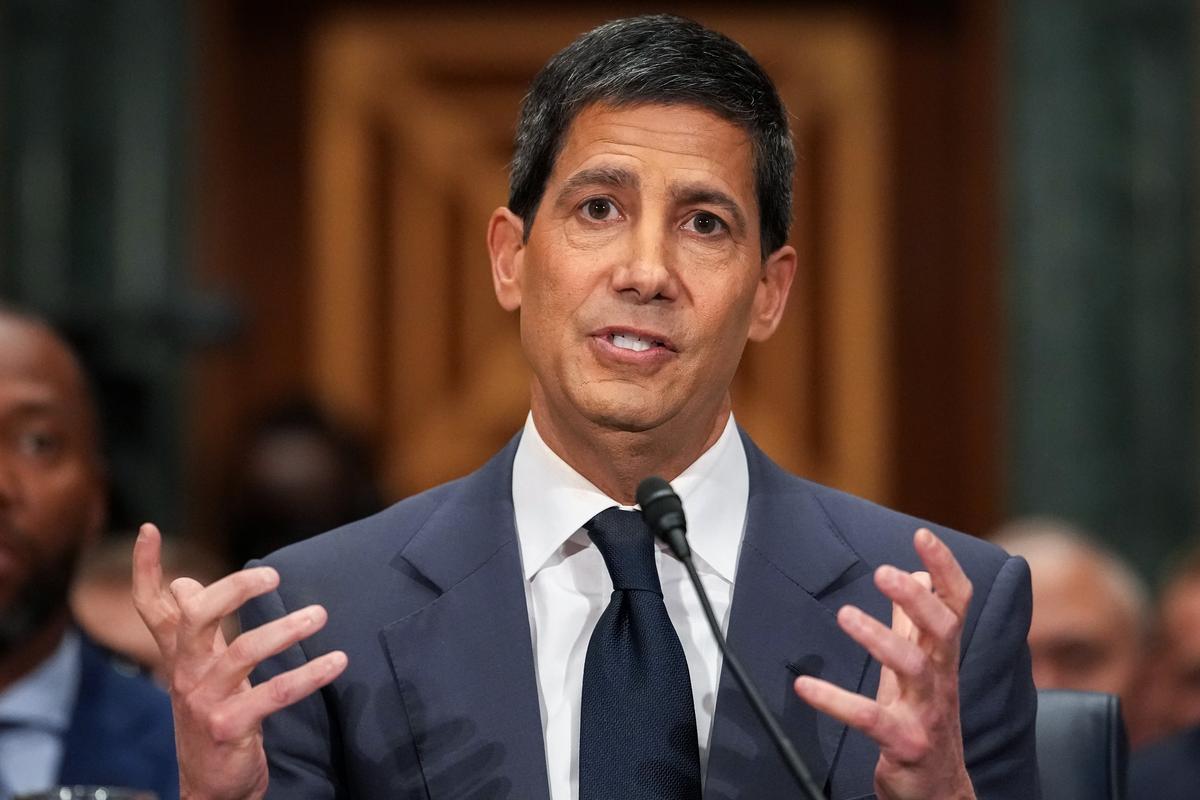
A key part of his opening statement reflected his optimism about the artificial intelligence (AI) boom, noting that business investment is “the most striking feature” of current economic conditions.
“The rapid pace—which appears to be accelerating—reflects, in large part, the construction of data centers and the immense demand for the AI-related equipment and software that fill them,” Warsh said.
Recent gross domestic product (GDP) data highlight the extent to which the capital expenditure boom is contributing to growth prospects.
“We don’t know the extent to which the economy will benefit from the AI buildout,” Warsh said. “Yet it seems inevitable that what is now called ‘AI investment’ will soon be called just ‘investment.’”
But new technologies do present new challenges for policymakers, Warsh added.
One of the chairman’s task forces will concentrate on the economic impact of AI and other general-purpose technologies. It will be led by Marc Andreessen, venture capitalist and co-founder of Andreessen Horowitz; Charles Jones, professor of economics at Stanford University; and Asha Sharma, Xbox CEO.