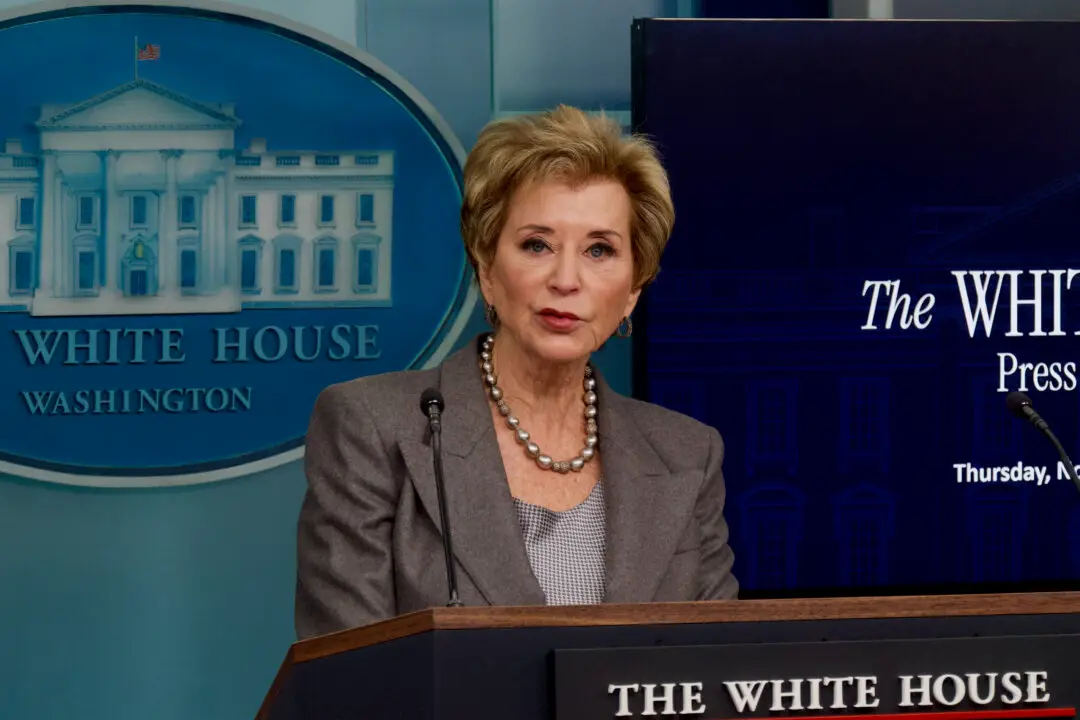
The Free Application for Federal Student Aid (FAFSA) process now informs applicants of their post-graduation earning potential based on data from colleges and universities, Department of Education Secretary Linda McMahon said Monday.
Upon completion of the FAFSA form, which students use to apply for federally administered grants and loans, applicants will receive key financial information on each of their selected higher education learning institutions, including a disclosure if the average earnings of a school’s graduates are below that of the average high school graduate.
This information will help prospective students and families better navigate their postsecondary application journey and their real-world earning potential, McMahon said.
More than 2 percent of undergraduate students across the nation attend a college or university where graduates earn less than the average worker who has only a high school diploma ($36,710 in 2025); yet those same institutions receive more than $2 billion annually, according to the statement.
The publicly available data can also be found on the federal College Scorecard website. High school guidance counselors and others who work with people to find higher education pathways will also be well served by these tools, according to the statement.

Harvey Mudd College in California listed the highest graduate average income, at $139,211 within four years of graduation as of 2025, adjusted for inflation. The lowest was IVAEM College in Puerto Rico at $10,985.
The federal government is pushing for greater transparency in college costs. The bipartisan College Transparency Act, reintroduced in the House and the Senate in late July, would task the National Center for Education Statistics with analyzing higher education costs and financial aid, as well as evaluating student enrollment patterns, completion rates, and post-collegiate outcomes.
President Donald Trump, in his proposed Compact for Academic Excellence in Higher Education, would incentivize universities to list the average graduate income by program and major.
A Pew Research Center survey conducted in September shows that 79 percent of 3,445 respondents indicated that colleges and universities are doing an unsatisfactory job of keeping costs affordable, and more than half rated higher education institutions as fair or poor in preparing students for well-paying jobs in today’s economy.