A federal judge has temporarily blocked the removal of wild horses that the U.S. Forest Service (USFS) has labeled “unauthorized livestock” in the Apache-Sitgreaves National Forests in Arizona while a lawsuit seeking to protect them moves forward.
In her July 8 ruling, Judge Krissa Lanham of the U.S. District Court for the District of Arizona found that the plaintiffs—the International Society for the Protection of Mustangs and Burros (ISPMB) and Betty Nixon—were likely to succeed on portions of their claims and that removing the horses would cause “irreparable harm.”
“Undoubtedly, both USFS and the public have an interest in the government’s lawful management of these lands,” Lanham wrote.
However, she said the public interest “tips in favor” of the plaintiffs because it requires the government to “carefully follow administrative procedure,” and they are likely to show that the Forest Service violated federal law.
“The balance of hardships and public interest also weigh in their favor,” Lanham said.
The judge’s order bars the Forest Service from classifying unclaimed or unbranded horses as “strays,” “feral,” or “unauthorized livestock” and from allowing their removal by independent parties.
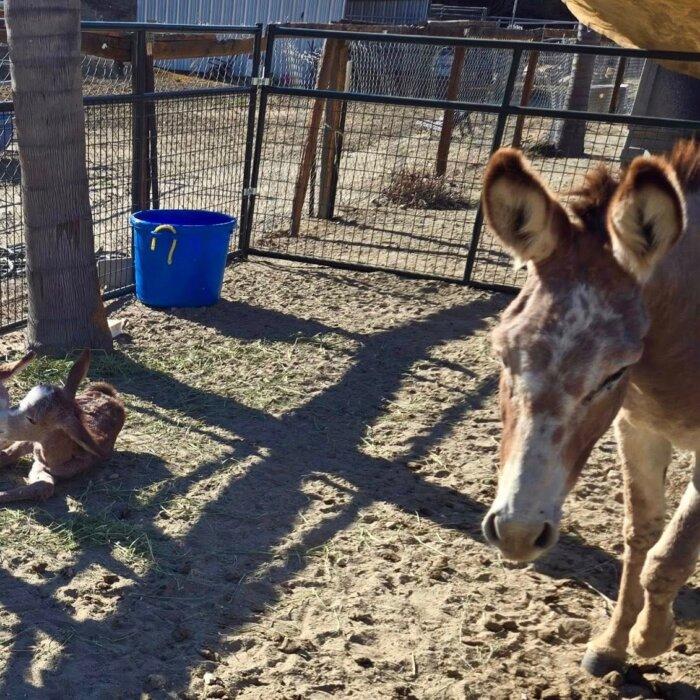

“This is not the final decision in the case, but it is a huge victory because it keeps the horses safe while the court considers the merits of the lawsuit,” advocacy group Heber Wild Horses posted on Facebook.
“Without this injunction, the Forest Service could have begun removing horses long before the legal issues were resolved.”
The group noted that the decision recognized that the Forest Service approved a Territory Management Plan in January to manage the animals as wild horses.
“Not even three months later, USFS issued a notice claiming none of those horses qualified as protected by a federal statute and all of them could be removed,” Lanham wrote.
The 1971 Wild Free-Roaming Horses and Burros Act protects and manages unbranded wild horses and burros on public lands.
In 2005, ISPMB sued the Forest Service to stop its plan to capture and sell about 120 horses from the 2.76-million-acre Apache-Sitgreaves National Forests without conducting an inventory or environmental impact analysis.
In 2007, the parties reached a stipulated settlement agreement, which the court approved.
The agreement required the Forest Service, in part, to develop a Territory Management Plan that complies with the National Environmental Policy Act and to obtain public input through a scoping process.
Although ISPMB argues that federal law does not require a genetic lineage dating to 1971, it does not dispute the applicability of the related regulation, the court said.
“The relevant regulation, however, defines wild-free roaming horses and burros slightly differently, as ‘all unbranded and unclaimed horses and burros and their progeny that have used lands of the National Forest System on or after Dec. 15, 1971,’” the judge wrote.
Wild horse advocates argue that many horses rounded up and later sold at auction ultimately end up in slaughterhouses.
On that point, the judge agreed with the plaintiffs.
“Because plaintiffs have shown likely success on the merits on at least one of their claims, the court analyzes whether they have established a likelihood of irreparable harm,” Lanham said.
“In providing significant evidence suggesting roundups by USFS or by USFS-authorized third parties will create irreparable harm to the herd, they have. A lethal taking of an animal ‘is, by definition, irreparable.’”
The Forest Service could not immediately be reached for comment by The Epoch Times.