CHICAGO—A federal judge on Oct. 9 announced that she will temporarily block President Donald Trump’s deployment of Texas National Guard troops into Chicago.
Judge April Perry, district judge for the Northern District of Illinois, in an oral ruling, granted in part Chicago and Illinois’s emergency application to halt the federal government from sending troops to the city. A written order will be issued on Friday.
In her oral ruling, Perry said that the government’s ability to take control of Illinois’s National Guard hinged on whether there was a rebellion taking place, which she defined as armed opposition to the government as a whole.
“I have seen no credible evidence” of a rebellion or the danger of a rebellion in the state of Illinois, she said.
Deputy Assistant Attorney General Eric Hamilton, arguing for the government, told the court at an earlier hearing that “Chicago is seeing a brazen new form of hostility from rioters targeting federal law enforcement.”
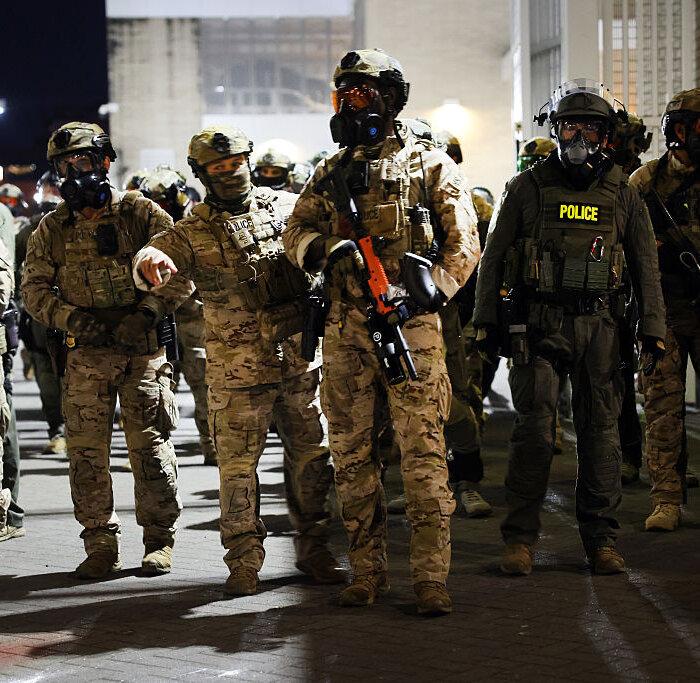
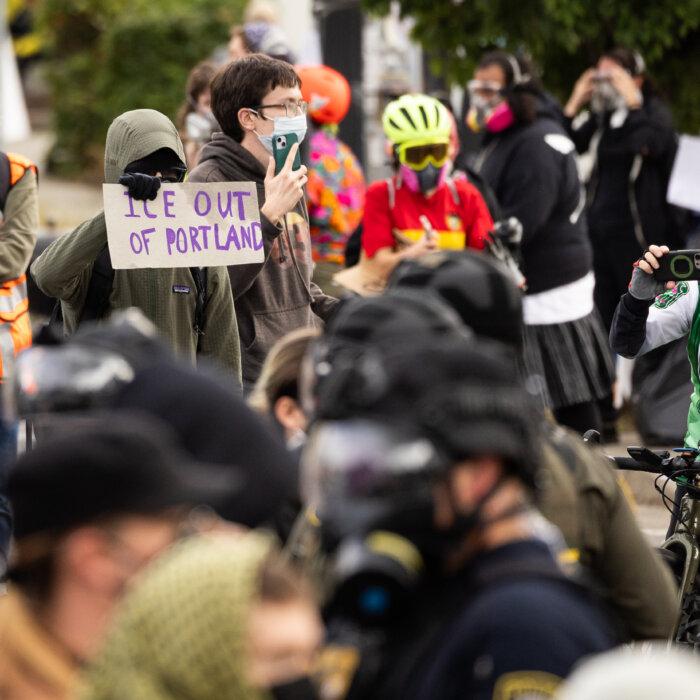
However, Perry said she doubted the severity of those incidents and raised questions about the credibility of the Department of Homeland Security when it comes to evaluating conditions in Chicago.
“I simply can’t credit the defendants’ declarations” about anti-Immigration and Customs Enforcement (ICE) protests, since they contradict state and local law enforcement accounts, Perry said.
At the hearing, she had described the protestors as “getting up to mischief.”
“The deployment of federalized National Guard, including from another state, infringes on Illinois’s sovereignty and right to self-governance,” the lawsuit reads.
“It will cause only more unrest, including harming social fabric and community relations and increasing the mistrust of police.”
In her ruling, Perry said that an ICE facility in the village of Broadview had been the epicenter of recent protest activity, and that the deployment of the National Guard might add fuel to the fire.
She said the facility had operated in relative peace over almost two decades, during which small groups held prayer vigils. Perry said that changed when “escalation in enforcement activity caused a corresponding increase in protests.”
The judge said ICE vehicles have been able to come and go from the facility despite the protests.
Perry said the government can employ other federal assets over the course of the temporary block.
Christopher Wells of the Illinois Attorney General’s Office, representing the state, said the administration’s talk of a rebellion brewing is “such an audacious claim.”
“[The deployment] is about the president’s animus for this community,” he said at the hearing on Thursday.
Wells cited Trump’s Sept. 30 speech—in which he suggested that he might use dangerous cities as training grounds for the military—and alleged that the president might go beyond using the National Guard.
Perry said she was concerned that there were no guardrails on the area of troop activity and that it might extend into other parts of the state.
“Anywhere in the state of Illinois?” she asked Hamilton.
“It could be,” he responded.
Perry was also concerned about the scope of the National Guard’s activity and asked whether they would engage in crowd control or pursue criminals or vehicles.
Hamilton said he was unsure of those details.
The case follows Trump’s previous deployment of the National Guard to Los Angeles to gain control of protests against ICE officers and their operations.
The Department of Homeland Security announced a surge of immigration enforcement resources in Chicago at the end of August.
Trump had also been signaling for weeks that he would send troops to the Windy City to quell crime, mirroring similar efforts in the nation’s capital earlier this year.
Pritzker and Chicago Mayor Brandon Johnson have consistently voiced opposition to federal intervention.
Homeland Security Assistant Secretary Tricia McLaughlin said on Oct. 2 that ICE officers had been targeted in two separate incidents by illegal immigrants who tried to ram them with cars.
After the officers exited the vehicle, one of the cars attempted to ram them. The officers fired defensive shots, wounding a woman armed with a semi-automatic rifle. The woman had been previously identified by Customs and Border Protection for doxxing agents online.
“Unfortunately, JB Pritzker’s Chicago Police Department is leaving the shooting scene and refuses to assist us in securing the area,” McLaughlin said.
On Oct. 8, a crowd of anti-ICE protesters—estimated at several hundred to more than a thousand—marched through downtown Chicago.
The judge, a day later, expanded that block to include National Guard from any state; the order expires on Oct. 19.