The Trump administration told a federal appeals court on Nov. 3 that it wants to withdraw its appeal of a ruling preventing the deployment of state National Guard troops to deal with violence directed against federal immigration facilities in Portland, Oregon.
A president may take over, or federalize, National Guard troops on an emergency basis in certain circumstances.
A lower court order temporarily blocking the deployment remains in effect.
“Following expiration of the temporary restraining order, the district court issued a new preliminary injunction. This appeal from the temporary restraining order is thus now moot.”

The plaintiffs in the appeal—the state of Oregon and city of Portland—informed the U.S. Department of Justice “that they oppose this motion and intend to file a response,” the motion states.
The Ninth Circuit is in the process of preparing to hold an en banc hearing reviewing a 2–1 ruling issued on Oct. 20 by a three-judge panel of circuit court judges.
The panel had voted to stay Immergut’s temporary restraining order blocking deployment of the Oregon National Guard. It did not rule on her second temporary restraining order barring deployment of the California National Guard in Oregon.
The panel found that “it is likely that the President lawfully exercised his statutory authority under [Title] 10 [of] U.S.C. [Section] 12406(3), which authorizes the federalization of the National Guard when ‘the President is unable with the regular forces to execute the laws of the United States.’”
In federal courts of appeals, an en banc hearing is one in which all the judges of the circuit rehear a case. The Ninth Circuit has so many members—29 active judges—that it is impractical for all of them to sit together for a rehearing. Instead, the Ninth Circuit will select 11 judges to conduct what it calls a limited en banc hearing.
The judge specifically blocked Secretary of War Pete Hegseth from implementing a series of memorandums federalizing and deploying members of the Oregon, Texas, and California National Guard, as well as “any memoranda deploying members of any other State’s National Guard to Oregon based on the same predicate conditions that were relied upon to authorize the above orders.”
The president’s use of Section 12406 “was likely not made ‘in the face of the emergency and directly related to the quelling of the disorder or the prevention of its continuance,’” the judge said, citing a Supreme Court precedent.
“Critically, the credible evidence at trial established that following a few days in June, which involved the high watermark of violence and unlawful activity outside the Immigration and Customs Enforcement building in Portland, Oregon, the protests outside the ICE facility between June 15 and September 27, 2025, were generally uneventful with occasional interference to federal personnel and property,” she said.
When there were occasional cases of lawbreaking, federal and local law enforcement were able to arrest and prosecute suspects, she said.
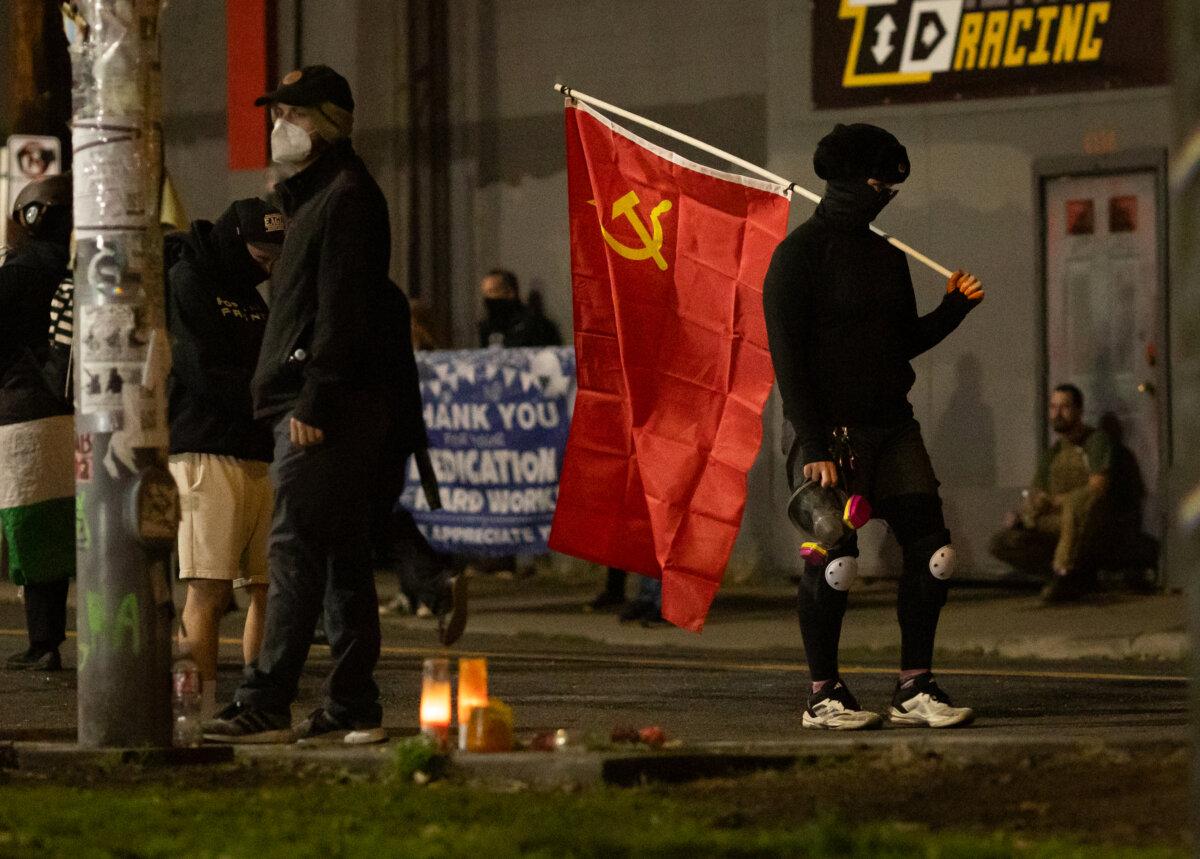
The court found no credible evidence that in the two months leading up to federalization, “protests grew out of control or involved more than isolated and sporadic instances of violent conduct.”
The violence that did take place in that time period was mostly between protesters and counter-protesters, according to the judge.
Immergut said she will release a final opinion on the merits of the case by 5 p.m. on Nov. 7.
It is unclear when attorneys for Oregon and Portland will file a response to the federal government’s dismissal motion with the Ninth Circuit.