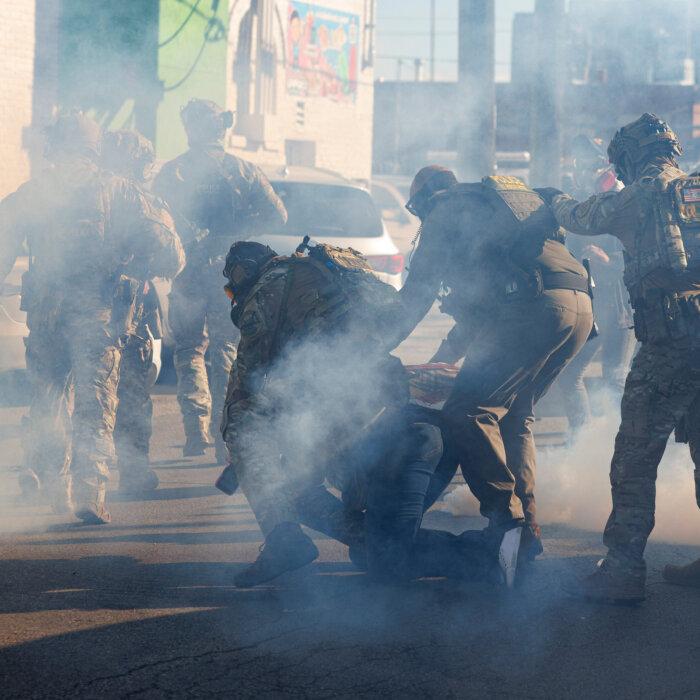
A federal appeals court on March 5 vacated an injunction entered by a federal judge against the Trump administration’s handling of protests and riots in Chicago.
Ellis’s order prevented federal agents from using tear gas and similar measures against people unless they were needed to prevent an “immediate threat.” It also included other requirements, such as requiring agents to warn twice verbally before using the measures.
They said the order “effectively established the district court as the supervisor of all Executive Branch activity in the city of Chicago,” impermissibly infringing on the executive branch’s authority.
The plaintiffs, including the Chicago Headline Club, later asked Ellis to dismiss the case, given that the Trump administration’s immigration enforcement operation in Chicago had ended. Ellis dismissed the case without prejudice, allowing the plaintiffs to refile in the future.
Brennan and Scudder said that the judge deviated from judicial procedure and should have dismissed the case with prejudice, foreclosing future litigation. They said they chose to vacate Ellis’s injunction to prevent it “from spawning any legal consequences,” such as requests from the same plaintiffs for near-identical injunctions to the one Ellis imposed. The majority also dismissed the appeal, as had been requested by government lawyers.
Attorney General Pam Bondi said in a post on X that the appeals court “delivered a huge legal win.” A law firm representing the plaintiffs declined to comment.

In a dissent, Circuit Judge Frank Easterbrook said he was also troubled by how the litigation had unfolded, but believes the vacatur was improper.
“If we vacate the district court’s order, we can’t then dismiss the appeal; vacatur ends the appeal without dismissal,” he said. “By contrast, if we dismiss the appeal as the motion proposes we cannot vacate or otherwise affect the district court’s judgment.”
He added later, “We should have left in place whatever the district judge left in place and committed to the future the resolution of any questions about what force, if any, the district judge’s opinions and orders have after all litigants abandon the field of battle.”