Minutes from the Federal Reserve’s October meeting revealed a growing divide over the path of monetary policy, including next month’s interest rate decision.
While many meeting participants supported the central bank’s decision to lower the federal funds rate by a quarter point for the second straight meeting last month, some officials said they could have endorsed no change.
Last month, officials trimmed the target rate to a new range of 3.75 percent from 4.00 percent.
As for the December Federal Open Market Committee meeting, many officials agreed that a rate cut would not be appropriate.
“Several participants assessed that a further lowering of the target range for the federal funds rate could well be appropriate in December if the economy evolved about as they expected over the coming intermeeting period,” the meeting summary states.
“Many participants suggested that, under their economic outlooks, it would likely be appropriate to keep the target range unchanged for the rest of the year.”
The minutes reflected meeting participants worried about deteriorating labor market conditions and data showing “little sign of returning sustainably” to the central bank’s 2 percent inflation target.
In addition to discussions of the policy rate, officials overwhelmingly supported the institution’s plans to unwind its quantitative tightening campaign.
The Federal Open Market Committee agreed to halt the reduction of Treasury and mortgage-backed securities in December.
Since June 2022, the Fed has reduced its balance sheet by more than $2.5 billion, although it remains elevated at $6.6 trillion—firmly above pre-pandemic levels.
“Participants agreed that the recent tightening in money market conditions indicated that it would soon be appropriate to end balance sheet runoff and that reinvestments of principal payments received on agency securities holdings should be directed into Treasury bills,” the summary reads.
Policy Divide at the Fed
The minutes spotlighting different views on inflation, employment, and interest rates did not come as a surprise.Last month’s meeting produced two dissents. Fed Governor Stephen Miran favored a half-point rate cut, while Kansas City Fed President Jeff Schmid preferred no change to the policy rate.
Miran, appointed to the Fed by President Donald Trump, defended his support for a larger rate cut as a means to prevent a potential economic softening. As a result, next month’s meeting should result in a more “appropriate” 50-basis-point reduction.
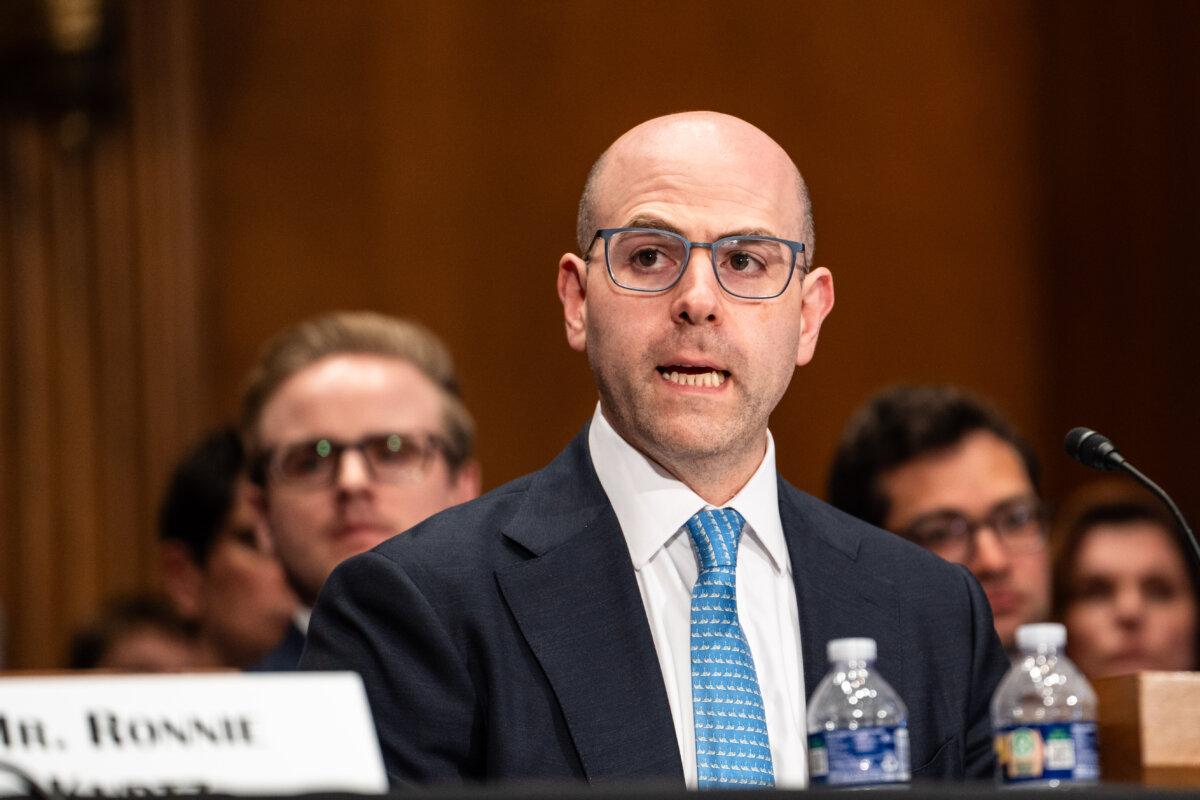
“With inflation still too high, monetary policy should lean against demand growth to allow the space for supply to expand and relieve price pressures in the economy,” Schmid wrote.
“With the dual mandate, Congress has directed the Federal Reserve to manage the trade-offs that arise from the economy-wide constraint that ties inflation to unemployment. Constraints lead to difficult decisions over how to balance competing objectives.”
Since the October meeting, a chorus of monetary policymakers has presented differing assessments of current conditions.
Speaking at an overseas event this week, Fed Gov. Christopher Waller said he is more focused on a deteriorating labor market than on inflation.
Ultimately, he supports a third straight quarter-point rate cut at the year’s final meeting.
“December cut will provide additional insurance against an acceleration in the weakening of the labor market and move policy toward a more neutral setting.”
The Bureau of Labor Statistics will release the September jobs report on Nov. 20. Market consensus indicates the economy added 50,000 jobs, and the unemployment rate held steady at 4.3 percent.
Boston Fed President Susan Collins, meanwhile, thinks there is a “high bar” for further rate cuts.
The next two-day Federal Open Market Committee meeting will take place on Dec. 9 and Dec. 10.