This copy is for your personal, non-commercial use only. Distribution and use of this material are governed by our Subscriber Agreement and by copyright law. For non-personal use or to order multiple copies, please contact The Epoch Times Reprints.
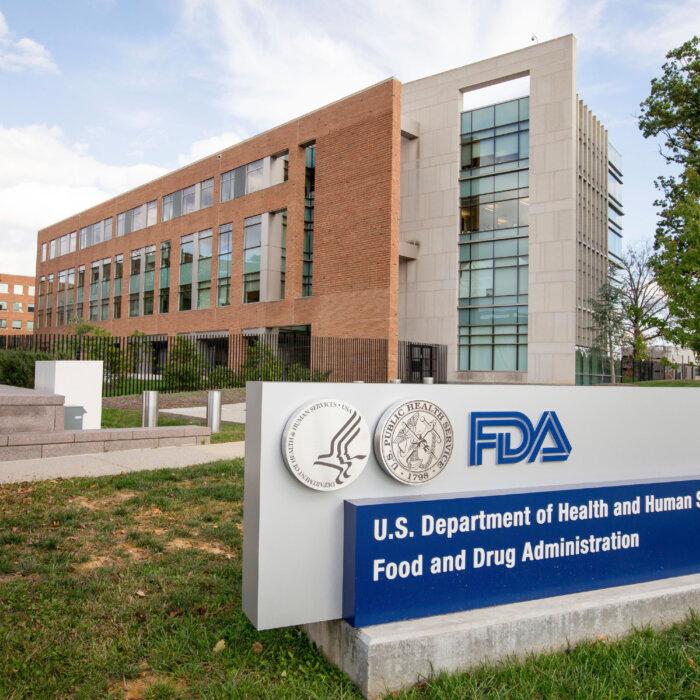
The Food and Drug Administration (FDA) flagged problems with two heart devices that have been linked to hundreds of injuries and more than two dozen deaths.
In two alertsissued on its website, the FDA warned about electrical problems associated with Boston Scientific’s defibrillator systems and a separate issue with one of the company’s heart implants used to reduce the risk of stroke.
Wires on the Boston Scientific’s Endotak Reliance defibrillator can become calcified and may lead to failures in providing shocks to the heart, the FDA said in an “early alert” posted Wednesday on its website. Defibrillators are surgically placed in the upper chest, where they monitor irregular heartbeats and use electrical shocks to jolt the heart back to normal.
The FDA said Boston Scientific has reported 386 serious injuries and 16 deaths in connection with the defibrillator problem.
According to the notice, the agency said it “is aware” that the company sent a letter alerting impacted customers of the issue and that “defibrillation leads with expanded polytetrafluoroethylene-coated coils may impact shock efficacy and/or require early replacement.”
The FDA said officials and customers should perform “routine follow-up of defibrillation systems” with the coils and perform a review to see if the system still functions as normal.
In the other announcement, the FDA said Boston Scientific recently updated instructions for its Watchman device, which is an implant that closes a section of the heart’s left atrium, or a section of the organ that receives blood from the body’s circulatory system.
Boston Scientific told physicians that patients who are under deep or conscious sedation may have a higher risk of developing an air embolism, where either air or gas bubbles enter the bloodstream and cause a blockage in blood flow. In some cases, an air embolism can potentially block blood flow to the lungs as well as the heart, brain, and other vital organs.
As of July 30, Boston Scientific reported 120 serious injuries and 17 deaths related to the problem, according to the notice.
“During procedures performed without positive pressure ventilation, there is a known risk of air embolism leading to severe outcomes, including life-threatening or fatal consequences,” the notice said. “These outcomes have been observed in this investigation and include arrhythmia, hemodynamic collapse, stroke (CVA), or other end-organ failure caused by ischemia.”
The risk of developing an air embolism is only associated with the implant procedure, the FDA notice added. People who have a Watchman device implanted do not need additional assistance, it said.
The Watchman device is described by the company as an alternative to long-term treatment with blood thinners for patients at increased risk of stroke. Meanwhile, several researchers, in a report published on the U.S. National Library of Medicine website in 2019, said they have reported calcification on leads used by the Endotak Reliance that had to be replaced.
Heart devices, including defibrillators and other implants, are Boston Scientific’s largest business, making up two-thirds of its $5 billion in revenue for the most recent quarter. Shares of Boston Scientific Corp. fell nearly 1.8 percent on Wednesday to close at $102.95 in trading. On Thursday, the company’s stock was down about 0.8 percent by midday trading.
Jack Phillips is a breaking news reporter who covers a range of topics, including politics, U.S., and health news. A father of two, Jack grew up in California's Central Valley. Follow him on X: https://twitter.com/jackphillips5