The Federal Communications Commission (FCC) announced on April 8 that it will vote on an order to revamp satellite spectrum-sharing rules that would benefit low-earth orbit broadband providers—and SpaceX stands to gain the most.
“By discarding last century’s satellite regulations, we could see billions of dollars in benefits for the American economy and broadband speeds many times faster than what is available today,” FCC Chairman Brendan Carr said in a statement.
“This overdue rethinking of space spectrum sharing rules will bring greater competition to the broadband marketplace and reduce the number of satellites needed to serve a given area.”
The vote on April 30 could reshape how tens of millions of Americans, particularly those in rural communities, connect to the internet via space.
The proposed order would raise the power levels that low-earth orbit (LEO) operators are permitted to use in frequency bands shared with incumbent geostationary orbit systems. For SpaceX, whose Starlink network already includes more than 10,000 satellites, the change would mean substantially faster and more reliable service.
Not everyone is on board. Geostationary operators, including Viasat, SES, and DIRECTV, have opposed the move, arguing that allowing Starlink to transmit at higher power would cause damaging interference to their own networks.

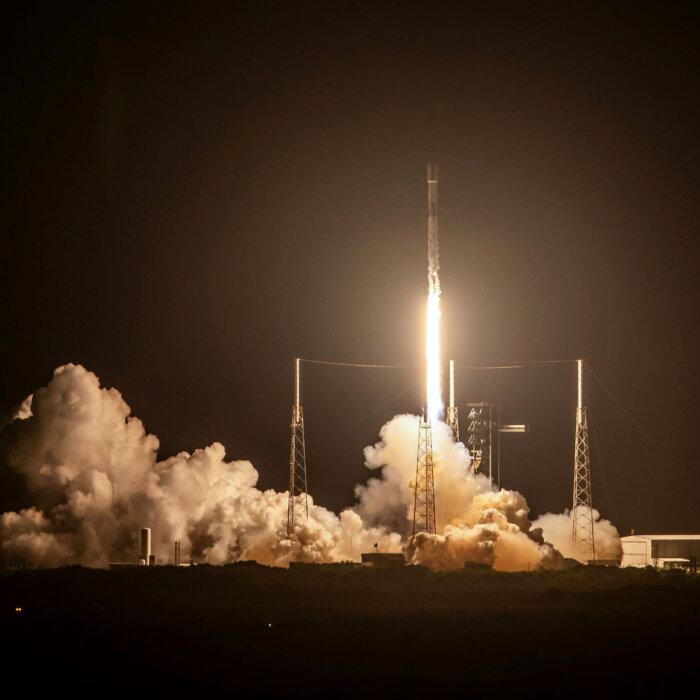
SpaceX has dismissed those concerns as a defense of the status quo.
“The question of whether the [equivalent power flux density] framework harms consumers by unnecessarily constraining [LEO] services has been definitively resolved: it does,” SpaceX wrote last month.
The company also stated that the current rules unfairly favor what it called outdated satellite systems while leaving rural users underserved.
The FCC appeared to agree. The agency said in its release that “government-imposed overprotection of GSO systems has meant that American households and businesses—most critically in rural and remote areas—do not receive the fastest space-based broadband American innovation has available.”
The international power limits at the center of the dispute were established in the 1990s and were designed to shield geostationary satellites from interference caused by lower-orbiting constellations. At the time, LEO broadband networks such as Starlink did not yet exist.
SpaceX has argued that the existing equivalent power flux density limits rely on obsolete computer models that fail to account for modern beamforming and interference-mitigation technologies that are now standard in newer satellite systems.
As of March, Starlink’s constellation comprised more than 10,020 satellites in low-earth orbit, accounting for roughly 65 percent of all active satellites worldwide, and it reported that it had more than 10 million subscribers as of February.
A change in the power rules would be the most consequential shift in satellite spectrum policy in a generation.