Federal Communications Commission (FCC) Chairman Brendan Carr announced a sweeping new policy initiative aimed at deregulation and modernization of the U.S. telecommunications infrastructure.
In a 20-minute speech at a Vikor Teleconstruction facility in Sioux Falls, South Dakota, on July 2, Carr announced a new regulatory framework he called the Build America Agenda that will guide the agency in the coming years.
That plan, he said, is focused on accelerating broadband deployment, streamlining regulations, and boosting America’s competitiveness in emerging technologies such as space-based internet and advanced wireless networks.
“We will unleash high-speed infrastructure builds. We will restore America’s leadership in wireless,” Carr said. “We will boost the U.S. space economy. We will advance our national security. And we will strengthen America’s tower and telecom workforce.”
Carr, a Republican, was appointed as the commissioner of the FCC, which regulates interstate and international communications made over radio, television, wire, satellite, and cable. He replaced Jessica Rosenworcel, a Democrat, who resigned from the commission in January. While the commission’s leadership reflects changes in presidential administrations, its policy directives often carry long-term implications for industry and consumers.
Carr said his leadership will differ starkly from Rosenworcel’s. In his speech, he criticized the agency’s Biden-era policies as overly bureaucratic and slow-moving. He also argued that excessive regulation stalled broadband expansion and undermined U.S. global competitiveness.

Specifically, Carr pitched his Build America Agenda as a package with proposals impacting almost every field the commission regulates: telecom infrastructure, wireless spectrum, and satellite communications.
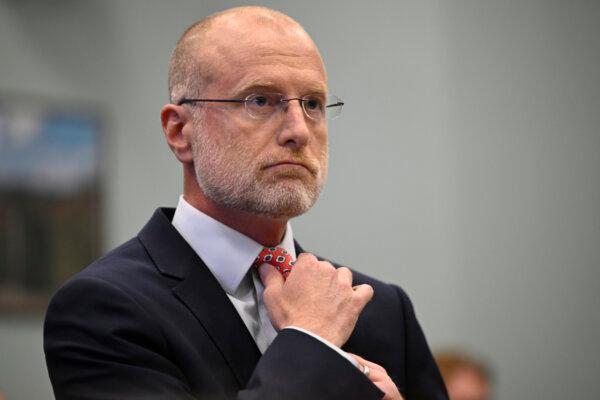
During his tenure, Carr said the FCC will have a renewed focus on permitting reform that will accelerate rural broadband rollout. Soon, Carr said, the commission will vote on a rule to support the transition away from aging copper-wire networks to modern, high-speed fiber-optic infrastructure.
Furthermore, Carr said the commission will move forward with updates to its pole attachment rules. The rules, he said, are a running issue for broadband internet service providers attempting to string new fiber. The changes are intended to reduce delays and ease large-scale deployments, especially in underserved areas.
The commission will also release new blocks of spectrum for commercial use. This dovetails with legislative efforts in Congress to establish a “spectrum pipeline” and restore lapsed FCC auction authority.
“Freeing up spectrum creates jobs, increases competition, and drives down prices for consumers,” Carr said. “It also helps keep these tower climbers busy. More spectrum means more building.”
In the skies, Carr said, the commission will improve its licensing processes for satellite operators. A new effort will be made to eliminate what he called “obsolete” limits and restrictions.
The speech also touched on Carr’s desire to roll back “red tape” that he said has slowed modernization efforts.
In a forthcoming proceeding he’s calling “delete, delete, delete,” the commission will launch what he described as the “largest regulatory rollback” in the agency’s history. The commission plans to eliminate dozens of what he called outdated rules, including some that still reference telegraphs, phone booths, and so-called rabbit ear television antennas.
The FCC’s July Open Commission Meeting, currently set for July 24, will feature votes on multiple components of the Build America Agenda, including steps to simplify internal operations and modernize filing systems, he said.
Carr’s remarks in Sioux Falls come amid a broader push by the Trump administration to increase domestic infrastructure investment and reduce federal oversight.
In acknowledgement of longstanding tensions with China over intellectual property and technology, Carr said the commission would continue efforts to purge suspect telecommunications equipment from U.S. networks. He also said that building new infrastructure and opening up more spectrum to commercial use will help “ensure the U.S. extends its lead over China in the race for critical technologies like 5G, 6G, and [artificial intelligence].”
Finally, Carr said the Build America Agenda should help improve job quality and pay for tower and telecom crews.
Carr noted that telecom companies are reevaluating their relationships with independent contractors and adjusting compensation to better reflect market conditions.
“These changes are also making it harder for foreign, fly-by-night crews to sweep in and undercut the safety and security of our networks,” Carr said.