Dr. Anthony Fauci and other top government officials worked on multiple occasions to prevent messaging about COVID-19 vaccines that they felt was too negative, according to Fauci’s diary.
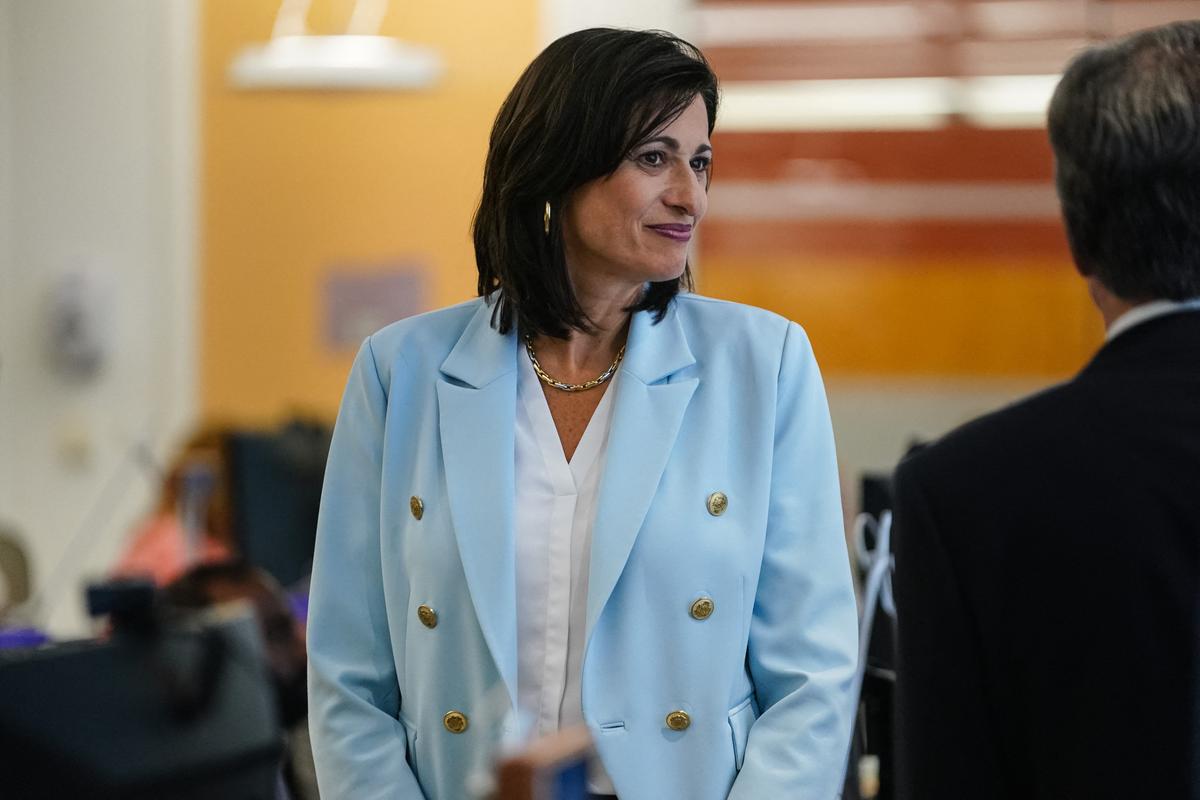
Fauci wrote in an entry on Aug. 13, 2022, that he, Surgeon General Dr. Vivek Murthy, and others worked to persuade Dr. Rochelle Walensky, director of the Centers for Disease Control and Prevention, not to say that COVID-19 vaccines “were not effective at all in preventing infection and transmission.”
Fauci said that the statement would have conflicted with the recent recommendation that Americans receive yet another booster, against the BA.5 strain.
“In addition, it would undermine the [Department of Justice’s] efforts at mandates for vaccines under certain circumstances,” Fauci said.
Fauci also said in a separate August 2022 entry that he was told in a phone call that then-White House chief of staff Ronald Klain was angry at Walensky “for wanting to come out with a statement that the vaccines do not protect against infection at all.”
Fauci wrote: “I have to look at the data but I think that although protection against true infection is low to modest at best, it is not zero and so I cannot figure out, and I am sure that this is what is bugging Ron, why the CDC needs to put that statement out now exactly at the time when we are pushing people to get the new BA.5 variant in early to mid-September.”
Early Concerns
After federal regulators in late 2020 granted emergency authorization for two COVID-19 vaccines, the CDC recommended the shots for most people.
Because of waning efficacy, in 2021, officials began discussing whether to recommend booster doses.
Fauci had mentioned before the emergency authorization that boosters would possibly be needed because immunity against coronaviruses typically lasted only up to one year. He began writing in his diary about concerns about vaccine effectiveness as early as Jan. 9, 2021.
“It looks like the vaccine might be compromised,” he wrote in one entry.
Other data provided reassurance in the coming months, particularly against severe disease, Fauci said.
In the summer of 2021, though, Fauci began regularly writing about data emerging from Israel that indicated that the Pfizer-BioNTech vaccine protection dropped within weeks of injection against the new Delta virus variant.
Fauci initially said that the protection against serious illness still appeared to hold up, and the CDC and FDA told Americans they did not need a booster. During a meeting with Fauci and other advisers at the White House on July 16, 2021, President Joe Biden said he was concerned that his goal that the country “mark independence” from COVID-19 was in danger.
“We spoke to him about the importance of emphasizing that vaccinated people do not get severe disease even from the Delta variant. In addition, we pointed out the possibility that we may need to give booster shots, namely a third dose following the two doses of the mRNA vaccine,” Fauci wrote, referring to shots from Pfizer and Moderna that use messenger ribonucleic acid technology.
Later in July, Fauci spoke with Naftali Bennett, Israel’s prime minister at the time, who said that his country would be providing boosters to elderly individuals. Two weeks later, Fauci said that data from Israel suggested that hospitalizations were increasing among vaccinated people.
The government later recommended annual boosters that were targeted to emerging strains, since protection started lower than before and dropped quickly.
Overruled Panel
Fauci texted Walensky and “begged her to call,” according to a diary entry. During the call, Walensky expressed that she could not go against the committee, prompting Fauci to press her to use her authority, according to the diary.
“I explained to Rochelle that if she does not do that she would be forever branded as someone with no leadership capabilities at all and if she did overrule them she could turn lemons into lemonade because she could reclaim her role as a leader since her reputation is one of unfortunately being a very weak leader,” Fauci wrote.
“Rochelle listened to me,” Fauci wrote.
He wrote that during an early morning call, he “congratulated her on what she had done” and told her that she had “shown clear leadership as the director of CDC.”
Spoke With Pfizer CEO Ahead of Change
Testing on COVID-19 vaccines in 2020 was fast-tracked as the pandemic killed thousands of people.
President Donald Trump talked about having a vaccine within months, and then in October 2020, ahead of the November presidential election.
Fauci said that Deborah Birx, another member of the White House’s COVID-19 task force, in the summer of 2020 was discussing granting emergency authorization for vaccines without clinical trial data.
“Clearly, she is trying to provide Trump with his October surprise,” Fauci said in his diary. “I may need to blow the whistle on her.”
Birx did not respond to a query.
Fauci also expressed opposition to other officials who he wrote were supportive of making vaccine data available before November 2020.
On Aug. 24, 2020, Fauci recounted that he spoke with Albert Bourla, the CEO of Pfizer. AstraZeneca, a rival, was trying to obtain emergency authorization before Pfizer, Moderna, and Johnson & Johnson completed their clinical trials, according to the diary.
“He suggested that he ask the companies to sign an agreement that they will all strive for completion of phase 3 studies before decisions are made,” Fauci said. “I suggested that we get the scientific community involved who should demand to see the data upon which the FDA would make any decisions.”
Bourla publicly said that efficacy data on the trial might be available by the end of October 2020. He backed away from that deadline after the FDA on Oct. 6, 2020, issued new guidance instructing companies to require two months of safety data for half of trial participants before applying for emergency clearance.
“New FDA Rules make it more difficult for them to speed up vaccines for approval before Election Day,” Trump wrote on Twitter. “Just another political hit job!”
The election came and went in November 2020, and Biden won. Then Pfizer and BioNTech announced positive results. In their press release, they also said that they initially planned a 32-case interim analysis. But after consulting with the FDA, they decided not to perform the first analysis until 62 cases of COVID-19 had occurred. The case count was actually 94 when the first analysis was conducted, the companies said.
“The only reason they changed it, in my opinion ... was to delay the vaccine until after the election,” Dr. Vinay Prasad, a former FDA official, said in a recent video.
Pfizer did not respond to a request for comment.
Fauci wrote in his diary after the press release was issued that he was surprised that the White House had not raised the possibility of “a conspiracy of some sort” with regard to the timing.
Fauci was called on Nov. 21, 2020, and informed that Trump had called FDA Commissioner Dr. Stephen Hahn and said Hahn lost him the election by “holding up the news about the Pfizer vaccine,” according to a diary entry.
“Trump was cursing Steve on the phone and then hung up,” it reads.
The White House did not respond to a request for comment.
Fauci had increasingly soured on Trump.
In September 2021, after Biden had taken office, Fauci wrote in the diary, “I am finally coming to the realization that our democracy is truly threatened and that it is possible, even likely, that our democracy will crumble with the 2024 election.”
He wrote, “If Trump wins, we are finished.”