Energy Secretary Chris Wright justified the termination of 24 energy projects that had been allocated $3.7 billion by Congress, during a Senate panel on June 18.
Wright said the clawbacks were the first round of scrutiny by a newly created review board in the Department of Energy (DOE) that is probing 500 authorized ventures set to receive $300 billion in funding through 2032.
“These projects failed to meet the economic, national security or energy security standards necessary to sustain DOE’s investment, and taxpayers should not be forced to subsidize them.”
He said that the terminated projects were among “179 awards worth $15 billion” reviewed, all but 24 of which passed muster.
The Senate’s plan largely replicates the House’s terminations of tax credits for electric vehicles, heat pumps, energy-efficient domestic appliances, and “rooftop” solar power while eliminating or scaling back wind and solar power subsidies expanded under 2022’s Inflation Reduction Act (IRA).
Wright said among the first things he did after his January confirmation was ferret through projects set to receive IRA-authorized funding through DOE’s Loan Program Office.
“It’s deeply concerning how many billions of dollars were rushed out the door without proper due diligence in the final days of the Biden administration,” he said. “[DOE] shoveled out more than $100 billion ... between Election Day and [Trump’s Jan. 20] inauguration.”
He cited several projects that provided little justification for federal funding, including one slated to receive $2.5 million that then sought, and garnered, $200 million without completing paperwork.
“In response to things like that, we created this program-review process where we have a team of cross-functional people to evaluate every project,” Wright said.
“There’s 500 such projects. We’re going to evaluate every one of them in a professional manner—not a political manner, not a self-interested manner, but a business-like manner.”
The projects include funding for carbon capture and sequestration, as well as “green energy” decarbonization; 16 of them were awarded after Trump’s Nov. 5 election.
Wright said more than 150 reviewed projects remain in the pipeline and that those that have already begun will be funded. The department will review “at least 20 a week,” he said.
“We’re funding plenty of projects right now. When we evaluate them, plenty of projects will pass,” he said. “Other projects we’ll say, ‘Hey, can you modify it to make it more beneficial?’ Some will be modified, some will be ended.”

Constitutional Questions
Sens. Catherine Cortez-Masto (D-Nev.), Martin Heinrich (D-N.M.), and Angus King (I-Maine) questioned the constitutional legality of rescinding funding approved under bills passed by Congress.“Those 24 programs, they were already enacted. Congress approved them,” Cortez-Masto said. “So what legal authority did you have to come back and terminate those?”
“All the contracts, just like in business, have cancelation clauses,” Wright said. “We are in dialogue with every one of those parties. Some projects can be fixed to make them more viable.”
Heinrich said during Wright’s January confirmation hearing: “I asked you if the executive branch has the authority, without Congress’s approval, to withhold or terminate funding Congress approved in law. You said you’d, quote, ‘follow the laws and statutes of the United States of America.’
“Cancellation of these awards crosses into impoundment territory and is certainly a breach of contract.”
King was concerned with “a significant number of programs” being scrutinized.
“Can you assure me that review is professional and engineering-based and not political?” he asked.
“Absolutely, it is,” Wright said. “We’re evaluating the engineering, the science, the finance, and just the viability of the projects. Unfortunately, it wasn’t done when grants were given.”
Senators lobbied Wright to reevaluate rejected projects or fast-track others.
Sen. John Hoeven (R-N.D.) said North Dakota natural gas operators see carbon capture and sequestration as a way to “crack the code” in boosting production.
Right now, he said, frackers extract “less than 10 percent of the oil out of Bakken shale and other shale plays” with “hot water and other things” ineffective in flushing more to the surface.
“CO2 will be much more effective,” Hoeven said, asking Wright to “make that happen” by reconsidering rejected and pending carbon projects.
Wright said that carbon sequestration has not yet proven viable enough to justify taxpayer support.
“For a coal plant, for example, to do sequestration, basically you lose a third of the power out of the plant to inject the CO2 underground,” he said.
But he also said that the science is evolving, adding, “If we can spend $1 and get $2 of benefit, we’ll do that every day and on Sundays too.”
King pressed Wright to fast-track large-scale battery projects.
“One I’m particularly interested in is the largest grid-scale battery project being manufactured in West Virginia, but scheduled to be located in a small town in Maine,” he said, adding that it would “make a huge difference” in advancing solar and wind energies.
“I’m very interested in that technology as well,” Wright said.
“We’ll get onto that project.”
Critical Mineral Projects
Cortez-Masto and Sen. Tom Cotton (R-Ark.) asked Wright to ensure that the reviews advance critical mineral development.Cortez-Masto said Trump on May 23 invoked the Defense Production Act, issuing a waiver for critical minerals, and that she supported that.
But she said that when DOE canceled 24 projects a week later, among them was “one in Nevada using innovative solutions to create the country’s only all-domestic source of alumina,” a critical mineral now imported from China, which controls 60 percent of global supply.
“So please explain to me how you’re making this decision when you identify critical minerals are necessary but, at the same time, you’re taking away essential funding for this country to be independent when it comes to these critical minerals,” Cortez-Masto said.
“It really just comes down to the devil’s in the details,” Wright said. “We review every project we’re going through, just to say, ‘Is this project, at the end of the day, going to lead to a positive outcome?’”
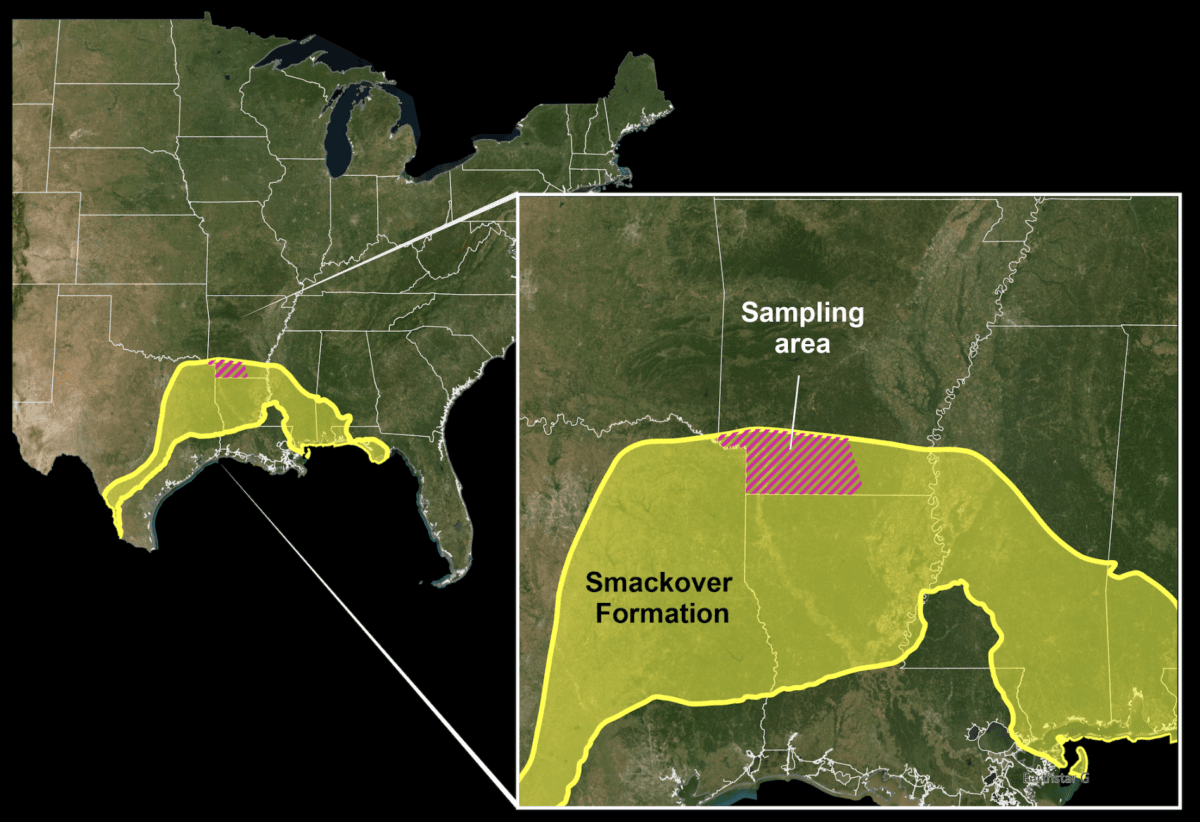
“Demand for lithium is substantially increased in recent years, but the United States is currently only responsible for about 1 percent of lithium mining and less than 5 percent of advanced lithium chemical processing capacity globally,” he said. “When can Arkansans expect an answer on when the grant will be approved?”
“All the sizable projects will be done ... by the end of August, for sure, maybe much sooner,” Wright said. “We want to be careful with American taxpayers’ monies, with monies you’ve allocated ... that these projects are responsible, credible, and thoughtful, and going to lead to some good results.”