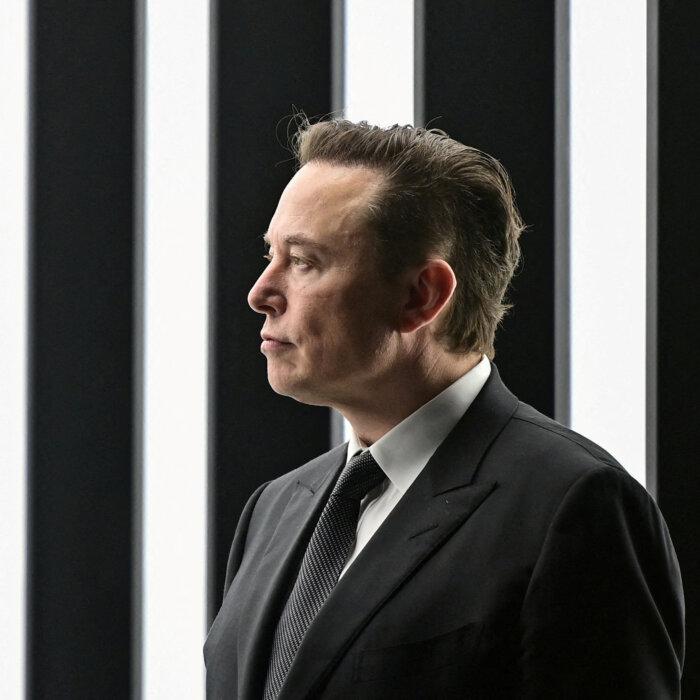
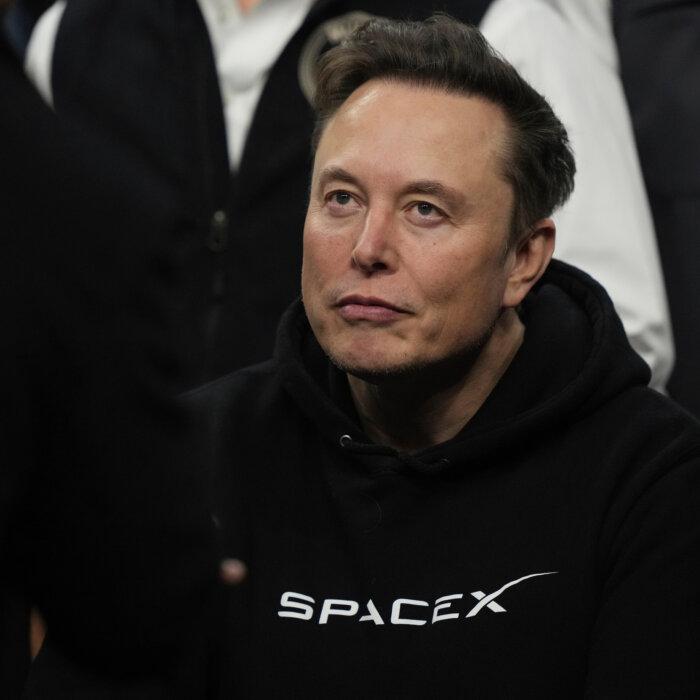
Elon Musk said in a wide-ranging podcast interview on Dec. 9 that he believes the Department of Government Efficiency (DOGE) was “somewhat successful” in its mission to reduce wasteful federal spending, that the rapid rise of artificial intelligence (AI) gives him recurring nightmares, and that “the Creator” is who he looks up to the most.
“We were somewhat successful,” he said when asked whether the program met its aims.
“I mean, we stopped a lot of funding that really just made no sense, that was entirely wasteful,” he said, describing widespread “zombie payments” embedded in government systems.
“There was probably a hundred, maybe $200 billion worth of zombie payments a year,” he said.
By requiring that every outgoing payment include a valid code and explanation, he said, DOGE forced federal systems to reject many improper disbursements.
“Simply by enforcing that there be a payment code and an explanation for the payment, that payment wouldn’t go out,” Musk said. “It seems insanely obvious, but there are just, call it, 2 or 3 percent of government payments that go out that really should not be going out.”
Recent actions have targeted what DOGE called “wasteful” consulting and IT contracts, including a $4.3 million Treasury project to devise a “strategic narrative” and a $29 million Commerce Department contract for project-management staffing.
Musk said DOGE’s successes came with personal cost. When asked whether he would repeat the effort, he replied, “I mean, the thing is, I think instead of doing DOGE, I would’ve basically ... worked on my companies, essentially... and the cars, they wouldn’t have been burning the cars.”
Musk said in the interview that cutting off entrenched funding streams provoked fierce pushback.
“If you stop money going to political corruption, they will lash out big time. They really want the money to keep flowing. So if you stop it from flowing, there’s like a very strong reaction to stopping the money flowing,” he said.
He also said his time in Washington did little to warm him to federal bureaucracy.
“Well, I wouldn’t say I was super illusioned to begin with,” he said in response to a question about whether he had become disillusioned about how the Washington bureaucracy operates.
AI Advances and Nightmares
Musk also discussed artificial intelligence, saying its accelerating capabilities could make most human labor optional—and that he finds the trajectory of AI development deeply troubling.“Assuming the current trend of artificial intelligence and robotics continues, which seems likely, AI and robots will be able to do anything that humans want them to do, essentially,” he said. They will “provide all the goods and services anyone could possibly want. ... Work will be optional.”
But Musk stressed that his predictions reflect what he expects, not what he desires.
“If I could, I would certainly slow down AI and robotics, but I can’t. It’s advancing at a very rapid pace, whether I like it or not,” he said.
When asked whether AI keeps him awake at night, he responded: “I’ve had a lot of AI nightmares. I’ve had AI nightmares many days in a row ... what am I supposed to do about it?”
At one point in the interview, Musk was asked who he admired most.
“The Creator,” he replied.
Pressed on his view of God, he added: “God is the Creator. ... I believe this universe came from something. People have different labels.”