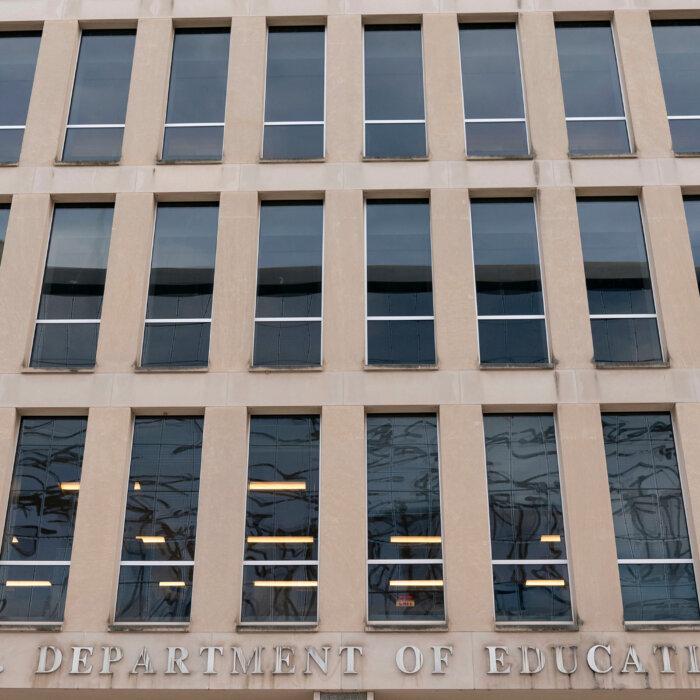
The Department of Education finalized its rule on June 29 that would determine the eligibility of college programs for federal student loans based on how much their graduates earn after completing their studies.
Under the new rule, undergraduate programs must demonstrate that their graduates earn more than high school graduates, while master’s and doctoral programs are required to prove that their graduates earn more than bachelor’s degree holders.
The department said in a statement that a college program will lose eligibility to participate in the federal direct loan program if it fails to show that its graduates earn at least a “modest financial return on investment” in two out of three consecutive award years.
In addition, college programs that fail the earnings premium measure over three years could lose eligibility for financial aid under Title IV of the Higher Education Act, including Pell Grant eligibility, according to the department.
“Under the final rule, nearly all programs and sectors will be subject to the same transparency and earnings accountability framework, without regard to an institution’s tax status or credential level,” it stated.
Undersecretary of Education Nicholas Kent said the new rule is intended to safeguard taxpayer dollars and prevent students from incurring “unmanageable debt” for programs that do not provide “a reasonable return on investment.”
“The Trump Administration is hitting the hard reset button on higher education and implementing commonsense reforms that will drive down the cost of higher education and hold all institutions, regardless of sector, accountable for low earnings outcomes,” Kent said in the statement.
“If a program cannot show that it leaves its graduates financially better off than if they had never enrolled, it should not be underwritten by federal taxpayers.”
The final rule is set to be published on July 1, according to the department.
The rule comes more than a week after the department announced a 1 percent reduction in federal student loan interest rates for borrowers enrolled in automatic payments, effective from July 1 through June 30, 2028.
Those enrolled in autopay already receive a 0.25 percentage point reduction in student loan interest rates. Starting on July 1, they will automatically receive an additional 0.75 percentage point reduction on the 1 percent reduction, the department said on June 18.
Kent said the temporary reduction is expected to boost repayment rates and improve the overall health of the federal student loan portfolio.
At present, only 40 percent of student loan borrowers use autopay to repay their loans, compared with more than 80 percent before the COVID-19 pandemic, according to the department.
The department said that eligible student loan borrowers who make on-time monthly payments may also qualify for Public Service Loan Forgiveness, which discharges certain loans after 120 payments.
As of February, the outstanding federal student loan balance totaled more than $1.6 trillion, with nearly 43 million student borrowers holding loan debt, according to the Education Data Initiative.