Last year’s dollar decline is part of a longer-term trend: over the past decade, its share of global reserves has dropped by 10 percentage points as central banks have gradually diversified their holdings. Yet that lost ground has not translated into meaningful gains for the euro.
In the foreword to the ECB’s report, Lagarde noted that the international role of the euro remained “broadly stable” in 2024, as the currency faced a mix of emerging opportunities and growing headwinds. She pointed to “highly unusual cross-asset correlations” triggered by U.S. tariff policy as one such opportunity for the euro, while also citing the rise of cryptocurrencies and alternative payment systems as mounting challenges.
While smaller currencies—most notably the Japanese yen and Canadian dollar—picked up modest share in global reserves, the biggest beneficiary in the rebalancing of global reserves was gold.

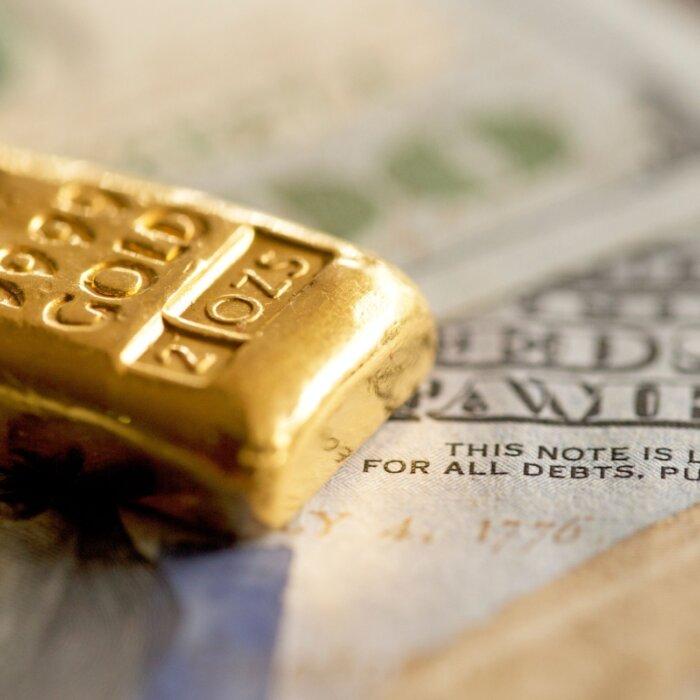
Fueled by historical central bank demand and surging prices, gold rose to become the world’s second-largest reserve asset in 2024, overtaking the euro. Central banks added more than 1,000 tonnes to their holdings last year—doubling the average pace of the 2010s and bringing total official gold reserves to levels not seen since the Bretton Woods era.
According to the ECB, when foreign exchange reserves are measured on their own, the euro maintained a roughly 20 percent share—unchanged from the previous year. But when gold is included in the calculation of total reserve assets at market value, the euro’s relative share falls to 16 percent. In this broader view, gold rises to 20 percent, displacing the euro as the second-largest global reserve asset behind the dollar.
Survey data cited in the report show that two-thirds of central banks cited diversification as a key reason for buying gold, while around 40 percent pointed to geopolitical risk—a signal that trust in traditional fiat currencies is increasingly being reassessed.
The greenback dropped 0.7 percent against a basket of major currencies, including the pound and the euro, falling to its lowest point since March 2022.
Since returning to the White House, Trump has revived his use of tariffs as a tool of economic and strategic leverage—first imposing a blanket 10 percent tariff on nearly all imports, followed by the announcement of reciprocal tariffs on April 2. He later paused those measures for 90 days to allow countries time to negotiate bilateral agreements.
Asked which nations may reach deals before the July 8 deadline, Trump said talks are underway with about 15 countries, including Japan and South Korea. While Trump said he would be willing to extend the deadline for countries to finalize deals with the United States, he also suggested that his administration is preparing to move unilaterally.
“At a certain point, we’re just going to send letters out … saying, ‘This is the deal—you can take it or you can leave it. You don’t have to use it. You don’t have to shop in the United States,’” Trump said, adding that those letters could be sent within the next week or two.
Treasury Secretary Scott Bessent reinforced that message in congressional testimony on June 11, saying the administration is willing to delay tariff hikes for countries engaged in “good faith” negotiations—up to a point.