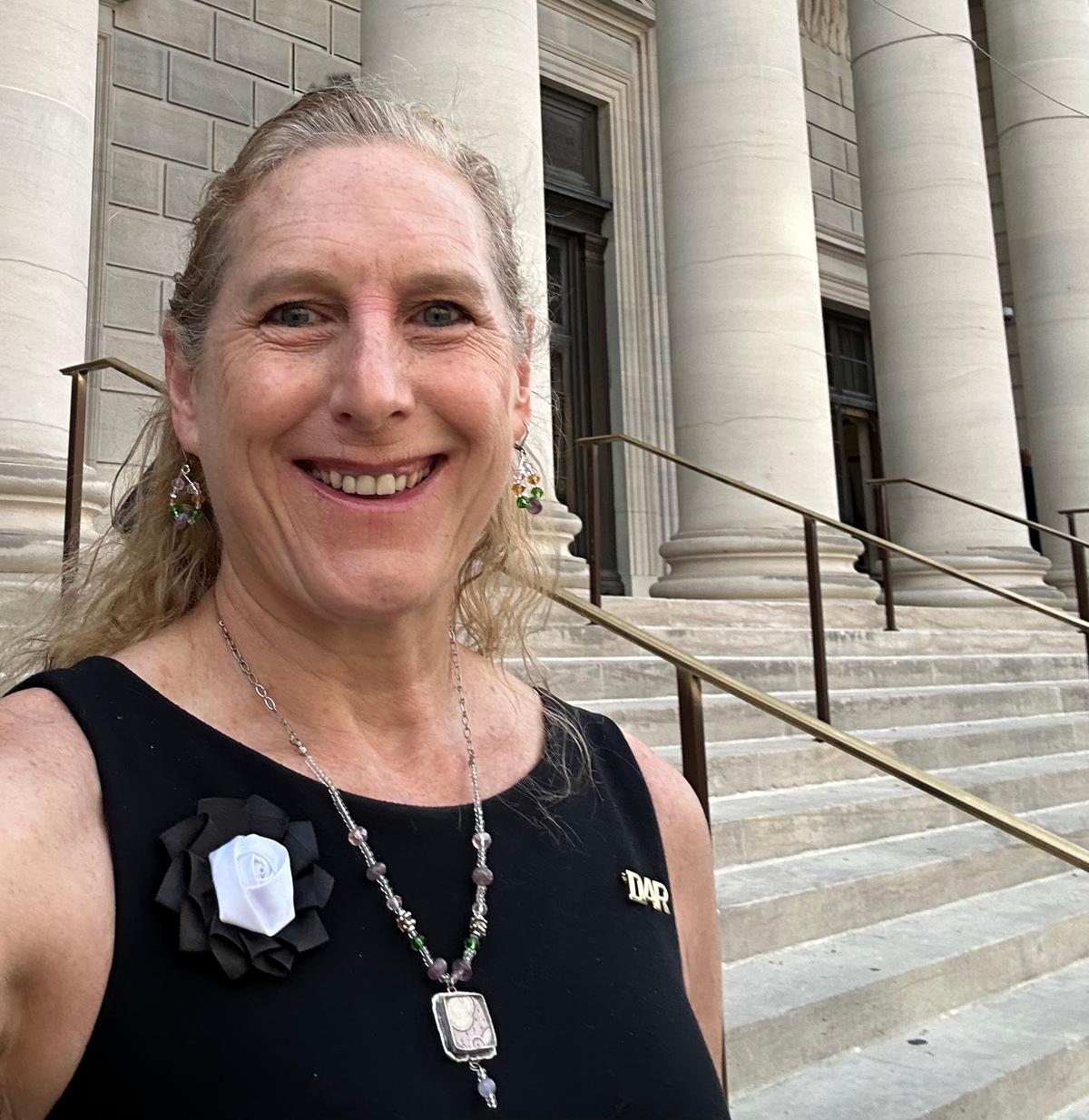
Heidi Weidamann joined Daughters of the American Revolution (DAR) for two reasons: She is a proud, verified descendant of Revolutionary-era patriots—and she values the female-only camaraderie DAR offers.
“I wanted the privacy of a women’s group ... to commune with other women,” Weidamann told The Epoch Times.
But Weidamann, 63, of Cincinnati was dismayed to learn that over the years, males have quietly been permitted to join DAR—one of the nation’s oldest and largest patriotic societies.
That revelation felt like a gut-punch. Weidamann said it hit especially hard because she recently quit a sport she loved—master’s swimming for women—after males were allowed to infiltrate it.
“Women have a right to women-only spaces and sports,” she said.
Implications of the DAR transgender-member dispute extend beyond the group’s 190,000 members, Weidamann said: “It directly ties to many evolving situations around the country and the world.”
About 3,000 DAR chapters dot all 50 U.S. states, plus Guam and 12 foreign countries. More than 1 million women have joined DAR since its founding more than a century ago, DAR’s website says.
The group’s internal feud over transgender-identifying members simmered for several years before it boiled over, drawing action from Republican lawmakers.
Congressmembers Intervene
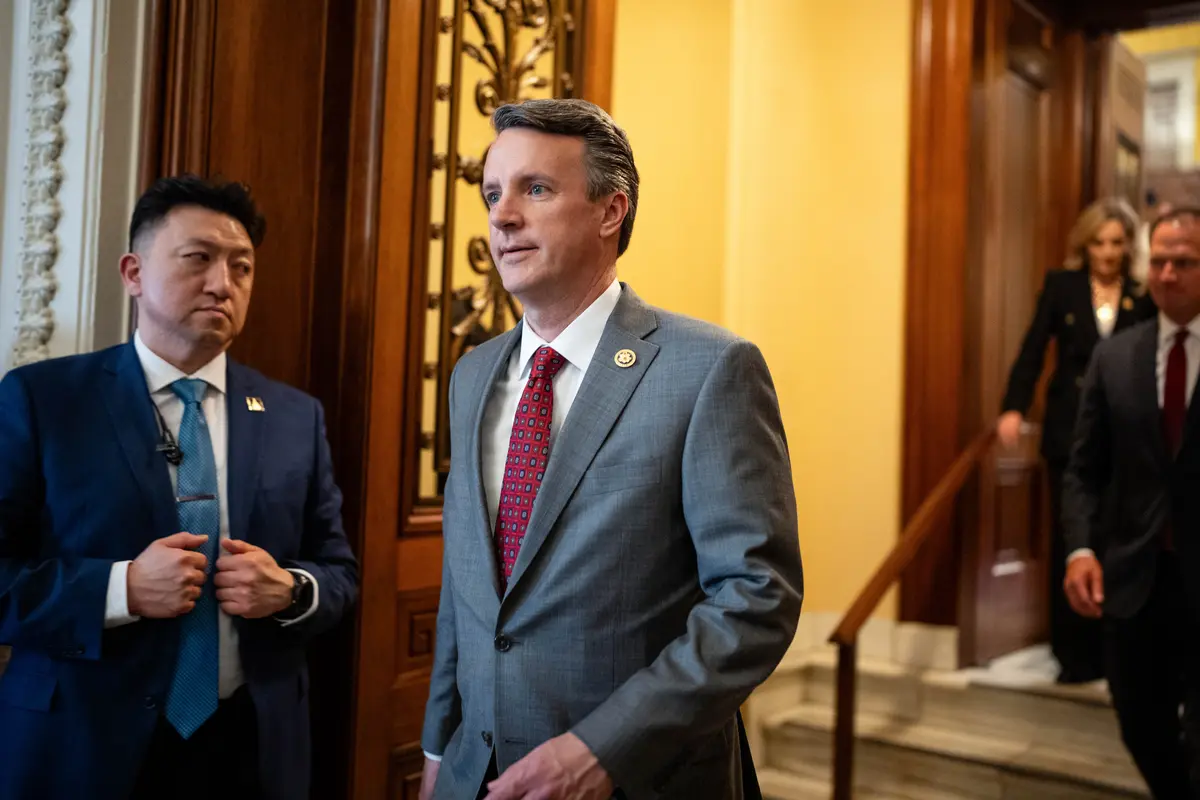
Last month, Rep. Ben Cline (R-Va.) and Sen. Marsha Blackburn (R-Tenn.) introduced the Daughters of the American Revolution Integrity Act.
If approved, it would amend DAR’s 1896 congressional charter to expressly block males from membership.
The charter gives the group clout. It also federally protects DAR’s name and insignia. It allows DAR to ask the Smithsonian Institution to accept its historic materials.
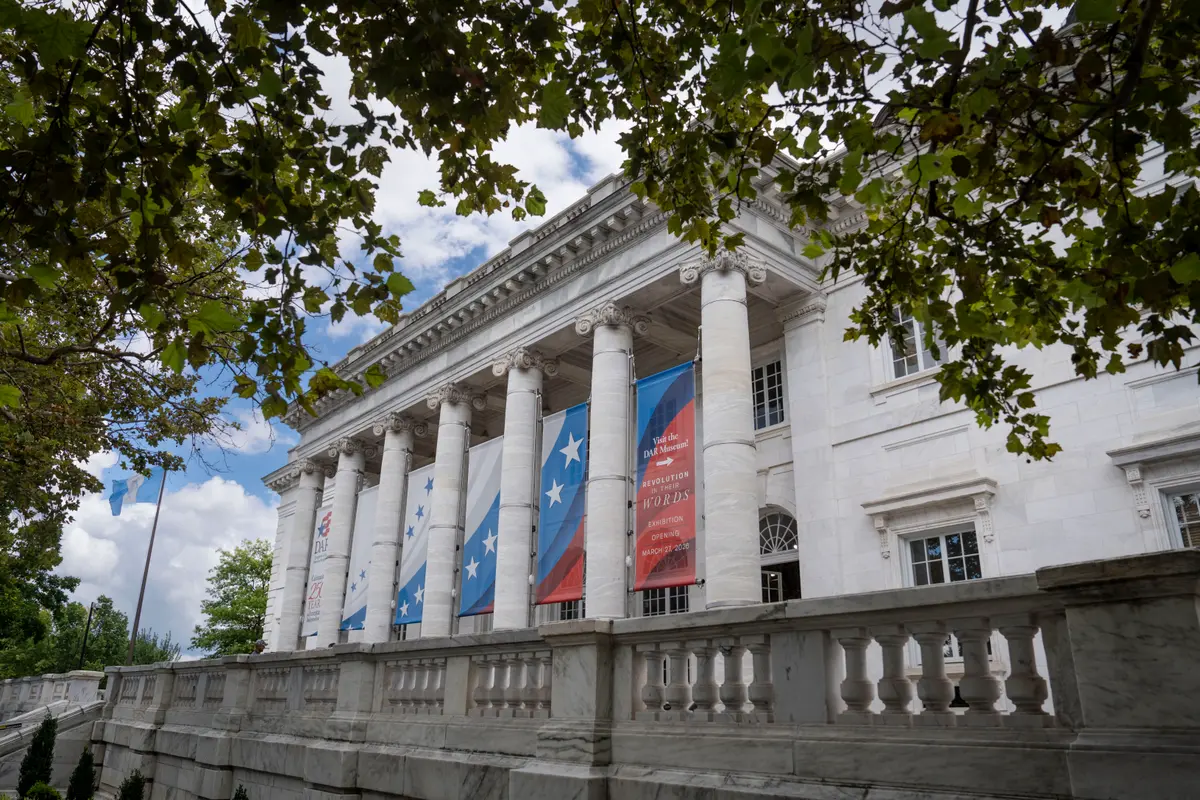
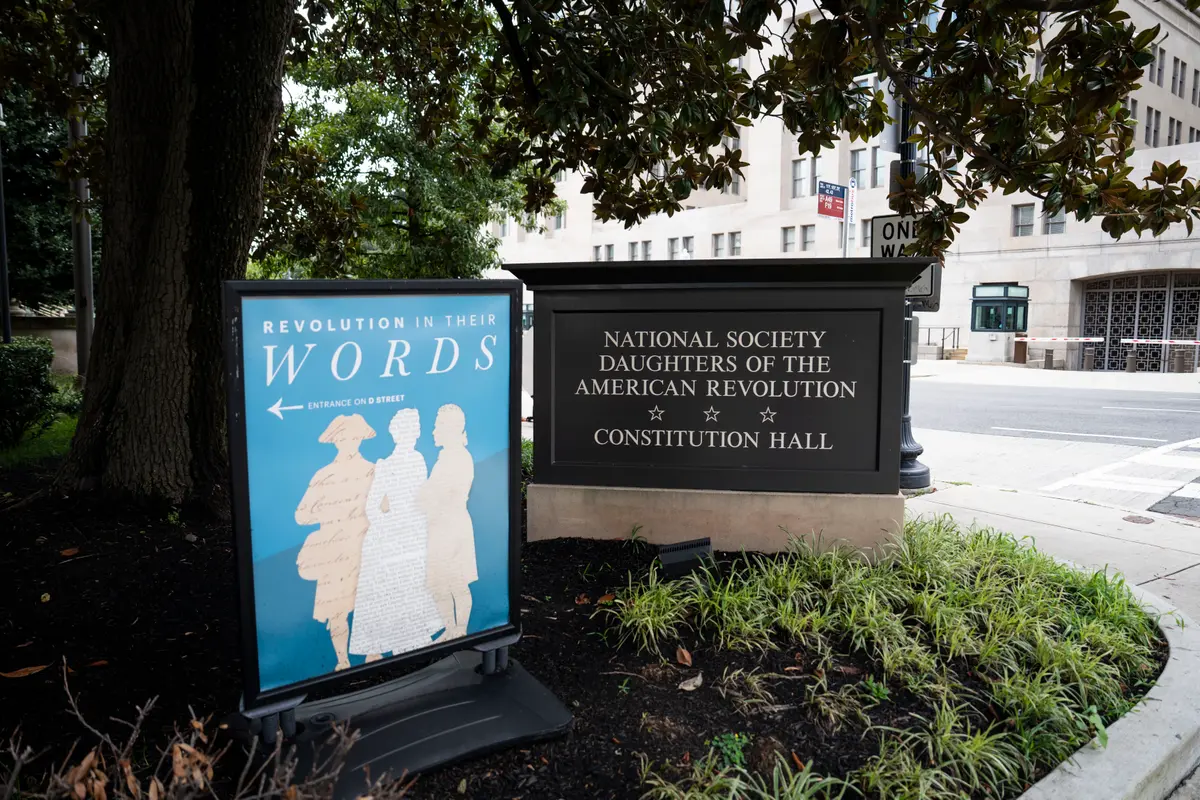
Further, the charter permits DAR to “acquire, own, lease, encumber, and transfer property” as desired. That is notable because the group’s headquarters—including a museum, convention hall, and other buildings—occupy an entire city block just west of the White House.
When announcing his bill, Cline contended that the organization has veered off course.
“Rather than honoring and preserving a lineage-based organization for women, it has embraced radical gender ideology at the expense of the women it was created to serve,” he said in a news release.
Blackburn said her proposal intends to “stop the organization from erasing biological reality and ensure it is reserved for the real daughters of the American Revolution.”
DAR leadership did not respond to The Epoch Times’ requests for comment.
Several women’s organizations and conservative groups are backing the Cline and Blackburn bills.
Transgender advocates lined up to oppose the measures, denouncing them as government overreach.
Topic Was Taboo, Some Say
Weidamann and DAR member Laura McDonald of Texas applaud the lawmakers for intervening and drawing attention to an issue that they say has been suppressed.
Besides being “shut down on DAR social-media forums,” members were forbidden from using DAR membership lists to contact other members and discuss the issue, McDonald said.
Some DAR leaders also branded the transgender issue “political,” she said, and told dissenters that members of an apolitical nonprofit therefore could not broach the subject.
She alleges other tactics, such as threatening members with discipline under a rule that forbids disrupting DAR “harmony.”
McDonald says she spent a year earnestly seeking answers to her questions about the transgender-acceptance practice. After “getting nowhere,” she felt compelled to go public and create Daughters Advocating for Restoration in 2024.
Now a nonprofit, the group is “dedicated to restoring, preserving, and promoting women-only membership in historical women-only societies,” its website says.
The Restoration group is pushing for “exclusive female-at-birth membership for historic women-only societies so that they may thrive free from external pressures.”
Over a two-year period, its Facebook group became 19,000 members strong.
“It’s been a long, hard grassroots battle,” McDonald said.
Battle Lines Drawn
She sees DAR at a crossroads.
“Either we can say, ‘We don’t want to deal with this, and this is too much of a fight,’” McDonald said. “Or we can say, ‘No, this is our society. They’re the ones who are trying to change it, not us.’”
She declared: “We’re trying to uphold our founding principles and be stewards of the society that been preserved for us.”
A faction opposing the Restoration group, “Daughters for Inclusivity,” has drawn 3,600 members to its Facebook group since launching in March.
The Inclusivity group calls for DAR to be open to “all women” who prove American-Revolution lineage, adding: “Yes, trans women are women.”
According to a DAR document that McDonald obtained and uploaded to the Restoration group’s website in 2025, “A transgender woman is not a man. ... A transgender woman lives and identifies as a woman.”
McDonald and others reject that definition. They say biology, not self-proclaimed “identity,” determines who is male and who is female.
Inclusivity member Valerie Jane wrote on Facebook that she fails to see what “organizational harm” would occur from allowing “trans women” into DAR.
It is unclear how many males identifying as transgender women have been permitted to join DAR so far.
But that practice, regardless of its scope, is incompatible with DAR’s 136-year history, Restoration advocates say.
Conflict Hits at Group’s Core
Patriotic women who “were frustrated by their exclusion from men’s organizations” established DAR in 1890, the group’s website says.
DAR’s motto is “God, Home, and Country.” Group members devoted more than 1.8 million volunteer hours to their communities, according to a tracker on the DAR website.
With such widespread influence, DAR is setting the wrong example for children and for society at large, McDonald argues.
“For the DAR to be participating in ‘trans’ ideology, saying we recognize men to be women ... I don’t even have the words. ... It’s a travesty,” she said.
DAR calls itself “one of the most inclusive genealogical societies in the country” on its website.
Facebook rosters show that DAR’s top leader, Ginnie Sebastian Storage, joined the Inclusivity group five months ago, shortly after it formed; her name is absent from the Restoration group’s list of members.
Restoration advocates say it’s nonsensical for biological males, who cannot factually be called, “daughters,” to join a group named, “Daughters of the American Revolution.”
Rules Enforced or Disregarded?
The society requires extensive documentation of Revolutionary-era descendancy—which can take years for prospective members to compile.
With such stringent requirements, Restoration advocates say it is contradictory for DAR to accept members based on a male birth certificate—or one that a state agency changed to “female” in defiance of biology.
Among America’s 50 states, only 10 states forbid such changes, according to Advocates for Trans Equality.
A member of the Inclusivity group, Eric Gubelman of Colorado, wrote on Facebook that restricting DAR membership to biological women “sounds simple until someone must decide how it will be enforced. ... And who will inspect, investigate, or challenge the women whose bodies or histories do not fit neatly into the rule?”
McDonald dismisses that concern as a “distraction” from the primary issue.
Using highway speed limits as an analogy, she maintains: “Just because you can’t enforce something 100 percent of the time, doesn’t mean you don’t still have a rule in place, or a standard.”
Inclusivity advocates say the debate should be moot, after DAR members voted against clarifying the word “woman” in the society’s bylaws.
On June 26, the Restoration-backed measure failed, 1,474 votes to 981 votes.
McDonald thinks that vote doesn’t reflect the members’ true intent. Many mistakenly “thought that a ‘no’ vote meant they were saying ‘no to men in the DAR,’” McDonald said.
Other members said they felt “misled” into voting “no.” DAR leadership presented a legal memo saying that local laws required “inclusivity,” McDonald said. Restoration advocates obtained a contrary legal opinion, but McDonald alleges that DAR leaders blocked it from being presented prior to the vote.
34 States Sought Special Meeting
McDonald also faults the process that brought the vote to the floor of the DAR’s annual Continental Congress.
Nearly 5,000 members came to DAR’s headquarters—the largest turnout in the group’s history, according to a DAR social media post.
Instead, a special meeting should have been convened solely to address the transgender dispute, McDonald contends.
“Three times, we’ve had 122 chapters in 34 states” calling for such a meeting, McDonald said.
Because that groundswell of support exceeds a 10-state, 30-chapter threshold, McDonald and others argue that DAR violated its own rules when it called a vote at the convention rather than at a special meeting.
Restoration members are weighing their next steps.
But the Inclusivity faction says Restoration members ought to respect the outcome of the vote and just move on.
“Nothing could be clearer. ... Unless a substantially new bylaw amendment or resolution is proposed, no other action on this topic is expected,” an Inclusivity group administrator wrote on Facebook July 29.
On Aug. 7, Barbara Wells, a moderator of the Restoration group’s Facebook page, posted an image of a woman wearing a Revolutionary-War uniform, below a banner reading, “Hold the Line.”
“The issue before the Society has not been resolved,” the post says.
It notes that Storage, the DAR’s president general, reportedly has rejected the special-meeting demand.
Local DAR chapters should continue to push for one, the post says, outlining specific reasons why.
And, in all-capital letters, it urges members: “Stay United. Don’t Give Up. Our Voice Can’t Be Silenced.”