
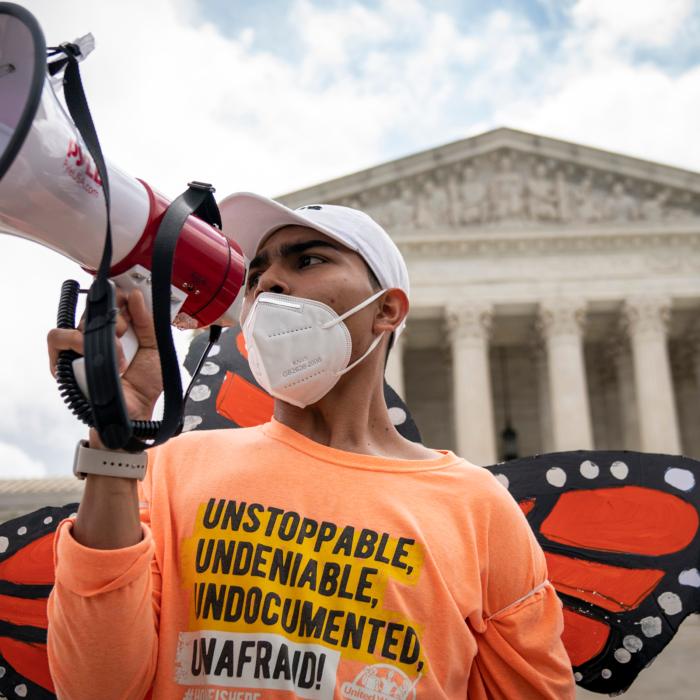
The Department of Homeland Security (DHS) has told a federal court it could, for the first time in four years, resume processing new applications for the Deferred Action for Childhood Arrivals (DACA) program.
Since 2021, DACA has been closed to first-time applicants, though existing beneficiaries have been allowed to renew their two-year work permits.
Under the plan, DHS would begin accepting new DACA applications in all 49 states except Texas. Applicants approved outside Texas would qualify for both deportation protections and work permits. By contrast, applicants in Texas could receive only protection from removal, without work authorization, and would not be considered “lawfully present” in the United States.
The proposal also warns that current DACA recipients could have their work permits revoked if they move to Texas.
“These proposals do not limit DHS from undertaking any future lawful changes to DACA,” the department said in its filing.

In that order, a three-judge panel of the Fifth Circuit affirmed the lower court’s decision, but narrowed its scope, making it applicable only in Texas, the state spearheading the Republican-led lawsuit against DACA.
The panel also paused the decision’s impact on current recipients, allowing renewals to continue nationwide while the case proceeds, either before the full Fifth Circuit or ultimately the U.S. Supreme Court.
Should Hanen approve DHS’s proposal, the underlying lawsuit will continue, and DACA could still be
struck down altogether once the litigation reaches a conclusion.
“DACA recipients have known for years—through unambiguous judicial decrees—that their status derives from executive overreach, not statutory authority. They have had ample time to adjust their affairs, to seek alternative paths, or to petition Congress for legislative relief,” the nine states wrote in their filing.
“What remains is mere inertia masquerading as reliance.”
The states also argued that only Congress has the authority to determine the fate of DACA recipients, since it created the immigration framework on which the program rests. Any change to that framework, they said, must come from legislation, not executive action or judicial intervention.
“Ultimately, neither the executive nor the judiciary can substitute its judgment on such policy-laden determinations for that of the people’s elected representatives,” the filing reads.
DACA has faced legal challenges since its creation in 2012. Texas sued in 2018 to end the program, and the case has been winding through the appeals process in the years that followed.
As of June, more than 525,000 people had active DACA status, including nearly 88,000 in Texas—the second-highest total after California, according to Citizenship and Immigration Services.