This copy is for your personal, non-commercial use only. Distribution and use of this material are governed by our Subscriber Agreement and by copyright law. For non-personal use or to order multiple copies, please contact The Epoch Times Reprints.
The U.S. Department of State on Jan. 12 announced that it had revoked the visas of more than 100,000 foreign nationals in the first 51 weeks of the second Trump administration.
The Department, in a post on X, said that it had revoked approximately 8,000 visas for students, usually issued in the F-1 and J-1 categories, and 2,500 “specialized visas for individuals who had encounters with U.S. law enforcement for criminal activity.”
Visa revocations have been undertaken frequently by the U.S. government during the Trump administration, which has prioritized immigration law enforcement. Additionally, it has issued orders suspending the issuance of visas to nationals from several countries.
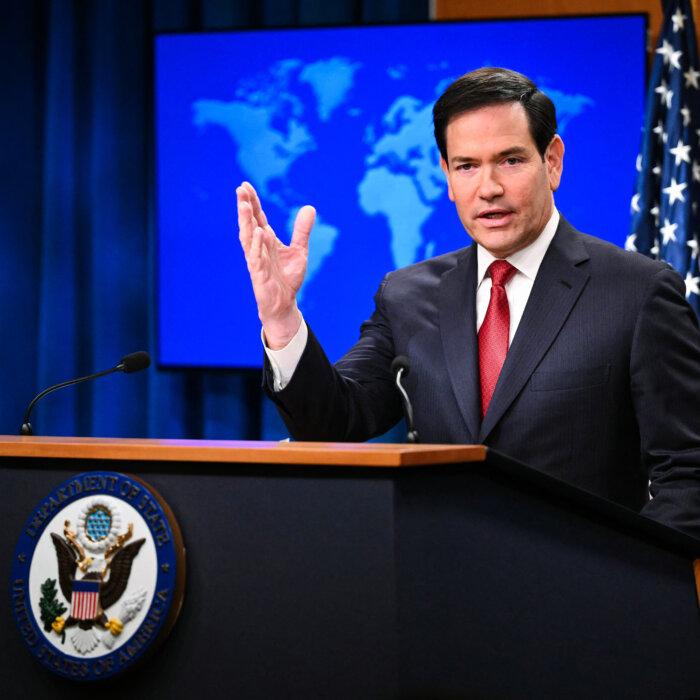
“There are people that have visas, that are in the United States, doing things counter to our national interest, and the law gives us the right, and I would argue the obligation, to remove people like that from our country, and we’re going to continue to do it,” Secretary of State Marco Rubio said during a press conference on Dec. 28, 2025.
“If you have the power to deny someone a visa before they get one, you most certainly have the power to revoke it once they get one and then do something they shouldn’t be doing.”
The revocation of such visas has been controversial during Trump’s second term, particularly those targeting foreign nationals affiliated with university campuses that have criticized Israel or expressed support for Hamas during the ongoing hostilities in Gaza. Several instances of international students whose F-1 visas were revoked, and who were then arrested by U.S. Immigration and Customs Enforcement (ICE), have provoked criticism of the government and protests.
The U.S. government, through the Secretary of State, has the authority to revoke a visa “at any time, in his discretion” without requiring a reason, according to federal law. Additionally, when a visa is denied upon application abroad, no judicial review in U.S. federal courts is possible due to the constitutional law doctrine of “consular non-reviewability.”
Revocations usually happen when a foreign national, during their stay in the United States, is arrested or commits an offense. The Foreign Affairs Manual, a collection of regulations for the Department of State, highlights visa revocation as being permissible when a foreign national is arrested for “driving under the influence, driving while intoxicated, or similar arrests/convictions (DUI) that occurred within the previous five years.”
Visa revocations of this type only affect “non-immigrants” whose status in the country is nominally temporary. It does not affect lawful permanent residents, also known as “Green Card” holders, who are not issued “visas” and who have stronger protections against removal from the country.
A revocation of a visa does not mean a foreign national loses lawful status in the country, though it will prevent them from re-entering the country to seek that same status. However, revocation renders a lawfully present foreign national deportable from the United States under the Immigration and Nationality Act, though the government must pursue those charges and the person must receive a hearing in Immigration Court before being removed.
In a statement to The Epoch Times, Tommy Pigott, the department’s Principal Deputy Spokesperson, said that it had “revoked visas from thousands of foreign nationals charged or convicted with crimes, including assault, theft, and driving under the influence,” which he said was a “150% increase in revocations since 2024.”
Arjun Singh was a reporter for The Epoch Times. He covered national politics, legal controversies, immigration, the U.S. Congress, and the Supreme Court of the United States.