House Democrats sharpened their focus on health care on Sept. 30, as a now-likely government shutdown approached, saying they will not support a short-term funding bill that leaves in place cuts they blame on Republicans and that omits an extension of Affordable Care Act (Obamacare) premium tax credits.
At a Tuesday morning press conference on Capitol Hill, House Democratic Leader Hakeem Jeffries said Democrats were still “ready to work to find a bipartisan deal to avoid a government shutdown and save the health care of the American people.”
He addressed Trump directly, saying, “Mr. President, allow me to reintroduce myself. I’m the House Democratic Leader. Our caucus is 217 members strong. We serve in a separate and co-equal branch of government. We don’t work for you. We work for the American people. We are fighting to lower the high cost of living and to protect the health care of everyday Americans.”
Caucus Chair Pete Aguilar repeated a message Democrats are using to summarize their position: “Cancel your vacation. Cancel these cuts. Lower costs. Save health care.”
Democrats again noted the scheduled expiration of the enhanced ACA premium tax credits at year’s end, claiming that premiums will rise without congressional action.

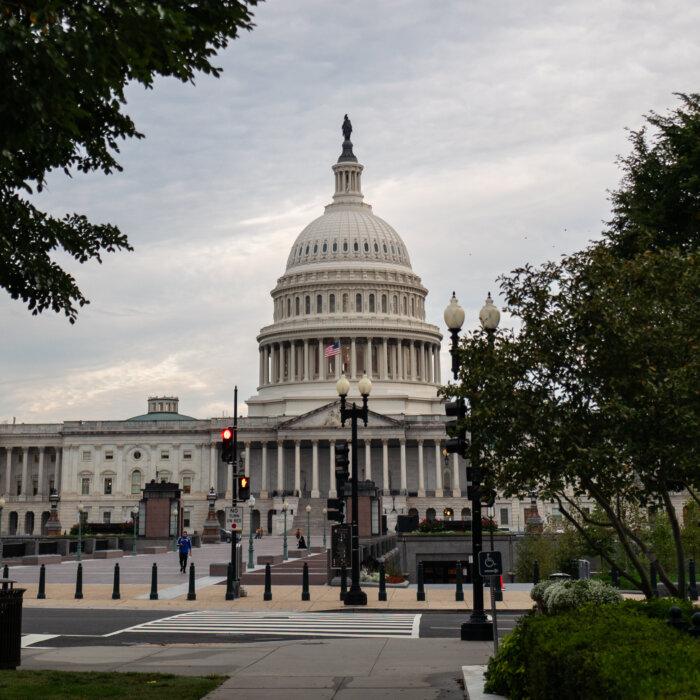
Vance called the Democrats’ approach “preposterous,” while Senate leaders said they are willing to discuss health policy but not as shutdown leverage. Senate Minority Leader Chuck Schumer (D-N.Y.) said there are “very large differences on health care,” and Jeffries said Democrats would not support a bill that “continues to gut” coverage.
Republicans currently control the House, the Senate, and the White House—but do not have large enough majorities to pass their stopgap bill without Democratic support. Funding is set to run out at midnight on Oct. 1.
Democrats say their bottom line is unchanged, as they press GOP colleagues to extend the ACA credits and reverse cuts they attribute to the GOP’s earlier legislation this summer. Republicans maintain that any broader policy fight should wait until full-year spending bills are negotiated.