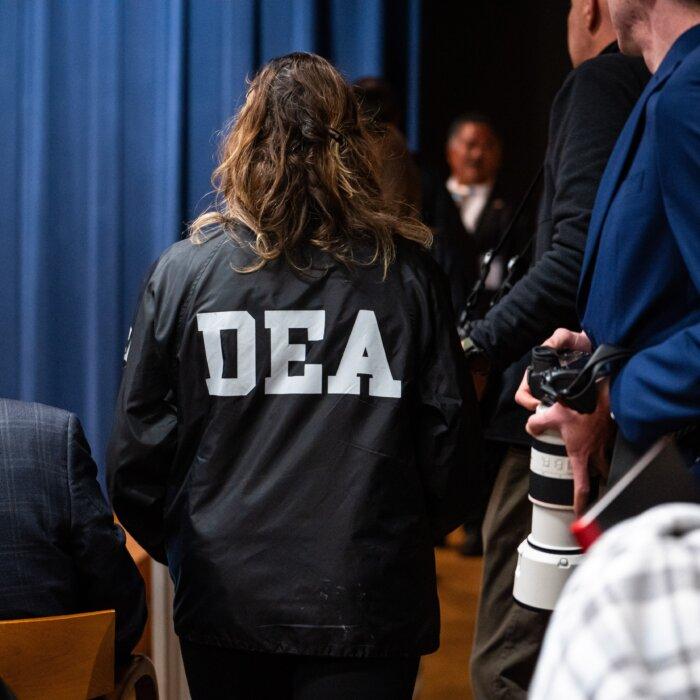
“Let this serve as a warning: DEA will not relent,” agency administrator Terrance Cole said in a statement.
“Every arrest, every seizure, and every dollar stripped from [the cartel] represents lives saved and communities protected. This focused operation is only the beginning—we will carry this fight forward together until this threat is defeated.”
The cartel operates across the globe in at least 40 countries, with tens of thousands of individuals helping produce, manufacture, and distribute dangerous narcotics, according to the DEA.
Cole said the operation, which ran from Sept. 22 through Sept. 26, involved collaboration between DEA agents in 23 domestic and seven foreign divisions, a Department of Homeland Security Task Force, other federal agencies, and state and local law enforcement partners.

Investigations led to the seizure of nearly 100 kilograms of fentanyl—enough to kill about 50 million people, by the agency’s calculations.
More than 1.1 million counterfeit pills were seized, along with more than 6,000 kilograms of methamphetamine, almost 23,000 kilograms of cocaine, and 33 kilograms of heroin.
Photos from the agency’s Atlanta office show tables piled high with confiscated packages filled with seized narcotics. Another image shows roughly 300,000 counterfeit pills, pressed in a variety of colors, seized in New York.
Approximately $19 million in cash and currency was recovered, and the agency estimated the value of assets impounded at nearly $30 million.
Also confiscated were 244 firearms, officials said.
Hundreds of cartel members and associates were detained, but the group’s leaders have eluded capture.
Oseguera Cervantes was indicted in the United States in 2017, and again subsequently on multiple occasions, for conspiracy to commit drug trafficking crimes.
According to the State Department, he has also allegedly been involved in assassination attempts on Mexican government officials.

The terrorist designations “expose and isolate” suspects and provide law enforcement with more leverage to investigate and disrupt transnational criminal networks, according to the State Department.