
The Washington Metropolitan Police Department (MPD) will now allow limited cooperation with federal immigration authorities as the department comes under temporary federal control.
However, the order reaffirms existing policies barring police officers from sharing with federal immigration agents any information about those in MPD custody, including their release dates, locations, addresses, personal details, photographs, or criminal case information.
It also maintains that immigration agents may not question people in MPD custody and that the department will not hold individuals beyond their lawful release time, even if requested by immigration authorities.
The order further instructs officers not to arrest people solely because they are flagged by immigration authorities, unless there is an outstanding warrant or underlying offense that justifies arrest. Officers are likewise barred from searching databases solely to check someone’s immigration status or investigate civil immigration violations.
Both Immigration and Customs Enforcement (ICE) and Customs and Border Protection (CBP) said their personnel are already patrolling the nation’s capital.
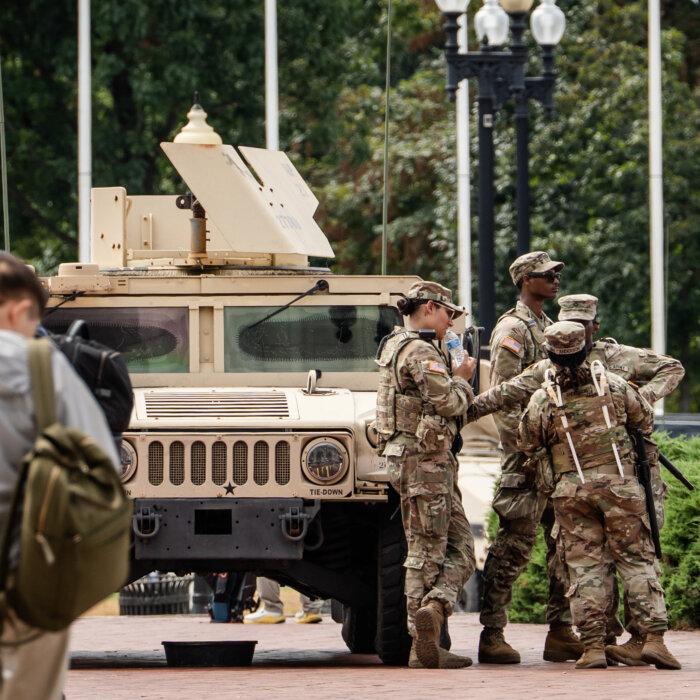

“We’re happy to participate,” Vitiello said.
“Our capital city has been overtaken by violent gangs and bloodthirsty criminals, roving mobs of wild youth, drugged-out maniacs, and homeless people,” the president said on Aug. 11. “And we’re not going to let it happen anymore.”
Under Section 740 of the D.C. Home Rule Act of 1973, a president can federalize the MPD for up to 48 hours before notifying Congress. Federal control can then be extended for up to 30 days. Any extension beyond that would require a joint resolution by the upper and lower houses of Congress, which are in recess and will not return until Sept. 2.
Trump on Aug. 13 told reporters that he would be able to extend beyond the 30 days without Congress “if it’s a national emergency.”
“I never went to Congress for anything,” Trump said, pointing to his actions that effectively closed the southern border through a declaration of an invasion of illegal immigrants. “I don’t want to call a national emergency. But if I have to, I will. I think the Republicans in Congress will approve this pretty much unanimously.”