Patients with a particular form of lung cancer who received a COVID-19 vaccine lived longer than those who did not, researchers said in a new study.
The Pfizer and Moderna vaccines utilize messenger ribonucleic acid (mRNA) technology.
The researchers ran a retrospective study examining medical records of patients treated at the University of Texas MD Anderson Cancer Center who had stage three or stage four non-small cell lung cancer.
Of the 884 patients whose records were analyzed, 180 had received one of the mRNA shots within 100 days of immunotherapy initiation, while the rest did not.
After controlling for other variables, the researchers said the patients who took one of the vaccines had a median survival of 37 months, compared to 20 months for the other population.
The survival advantage held true for patients who were vaccinated in the 100-day period surrounding initiation of immunotherapy, and for those vaccinated within the 100-day period prior to starting immunotherapy.
The patients were treated between January 2015 and September 2022.
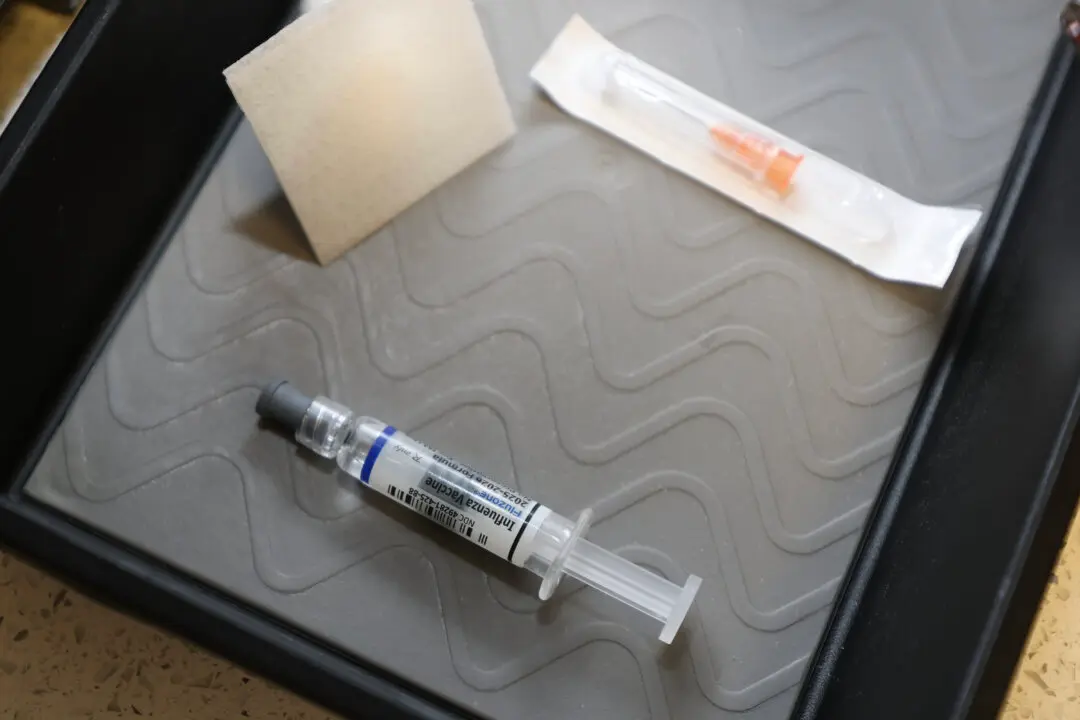
Receipt of a pneumonia or influenza vaccine, on the other hand, was not associated with an improvement in survival.
The researchers said the results showed the available mRNA vaccines “are potent immune modulators capable of sensitizing tumours” to immune checkpoint inhibitors, a form of immunotherapy.
They also cautioned that the results are preliminary and that a randomized clinical trial is needed to confirm them. Such a trial is currently being designed.
Funding sources for the study included the National Cancer Institute.
A number of the researchers reported competing interests, including two that are associated with BioNTech.
“The findings in this study provide substantial evidence that patients with late-stage, poor-survival cancers starting immune checkpoint inhibitor treatments would prolong their survival by first receiving a COVID-19 vaccine. This benefit applies to a narrow and specific class of patients and is not extrapolatable to other patients,” Dr. Harvey Risch, professor emeritus of epidemiology in Yale School of Public Health’s Department of Epidemiology and Public Health, who was not involved in the research, told The Epoch Times in an email.
El-Deiry said that reliable studies in the United States have not been performed on cancer outcomes after COVID-19 vaccination, and that there are “certainly questions about causality.”