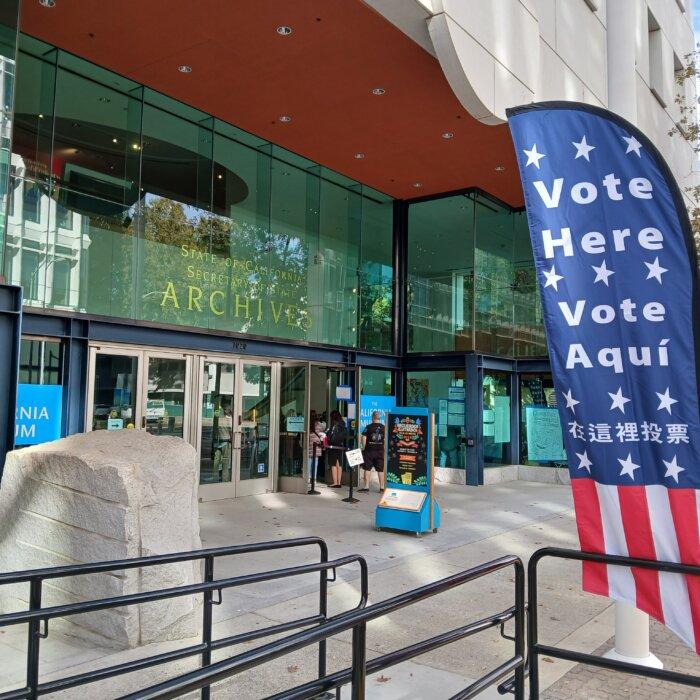
A federal district court in Los Angeles kicked off a multi-day hearing Dec. 15 over California’s new congressional map that state voters approved in a referendum last month.
The lawsuit alleges that the new map violates the 14th and 15th Amendments to the U.S. Constitution. The former guarantees all citizens “equal protection” under the law, and the latter prohibits denying citizens the right to vote based on race.
The lawsuit also alleges that the new California map was redrawn by a consultant paid by the Democratic Congressional Campaign Committee (DCCC) to do the task, not by legislators or the state of California.

It also alleges that the new map is an example of unconstitutional racial gerrymandering.
Gerrymandering refers to the manipulation of electoral district boundaries to benefit a particular party or constituency. The Supreme Court has previously ruled that race-based gerrymandering violates the U.S. Constitution, but that redrawing district boundaries to boost partisan fortunes passes constitutional muster.
“Race cannot be used as a proxy to advance political interests, but that is precisely what the California General Assembly did with Proposition 50—the recent ballot initiative that junked California’s pre-existing electoral map in favor of a rush-job rejiggering of California’s congressional district lines,” the lawsuit said.
The Dec. 15 hearing got underway with a discussion about how the 13th congressional district in the state’s Central Valley was redrawn, involving issues such as map-drawing software and the Hispanic voting age population.
A witness called by the plaintiffs, elections analyst Sean Trende, testified that “race was the predominant interest in drawing the district.”
He referenced a thumb-like appendage sticking out of the northern end of the new district, which he likened to a precise knife cut aimed at capturing certain voters.
Defense attorneys questioned his analysis, asking whether political shifts in the region could have dictated how lines were drawn rather than racial considerations. Trende acknowledged that the thumb-like bump in the boundary of the district was less extreme than in other states’ congressional maps.
The contract terminated in August, by which point the “DCCC had obtained what it wanted from Mr. Mitchell (his map), for the reason it wanted it (Democratic gains), and had paid Mr. Mitchell for it,” the brief said.
“Simply put, Plaintiffs continue to try to slam square pegs into round holes to build up their paper-thin case at the last minute. The Court should look past this desperate effort,” the brief said.
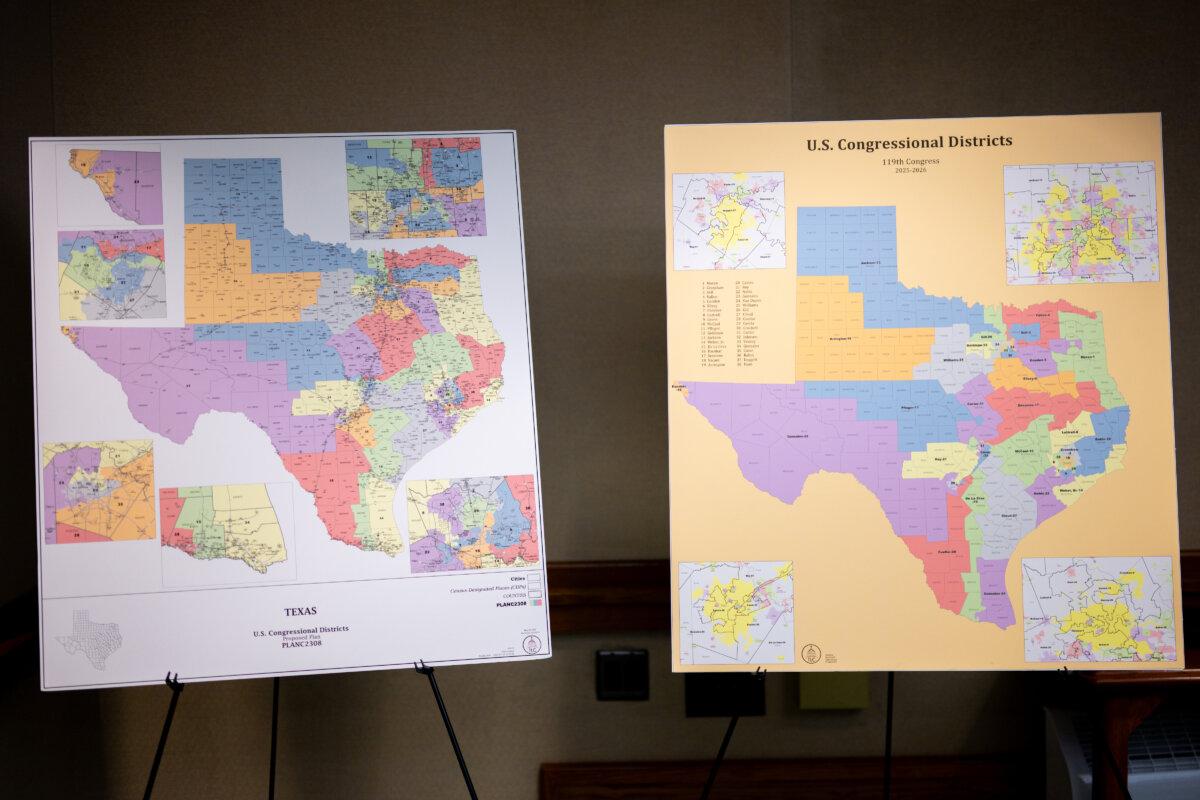
The hearing came after the Supreme Court rejected a claim that the redrawn map in Texas constituted a racial gerrymander.
Justice Samuel Alito wrote in a concurring opinion that “Texas needs certainty on which map will govern the 2026 midterm elections.” Here, the federal district court, which issued the decision that was being appealed, failed “to apply the correct legal standards as set out clearly in our own case law,” the justice said.
The hearing in Los Angeles is expected to last three days.