A federal court on June 8 declined a request from the Corporation for Public Broadcasting (CPB) to block the Trump administration from removing three members of its board of directors.
The court cited three distinct features of CPB: The president appoints board members with the advice and consent of the Senate; the organization is not an agency or establishment of the U.S. government; and government departments, agencies, officers, or employees of the United States are prohibited from exercising control over CPB except under certain anti-discrimination laws.
Plaintiffs said CPB is a private corporation that Congress has carefully shielded from government interference. The U.S. president lacks the authority to fire board members since he is an “officer” of the United States, they argued.
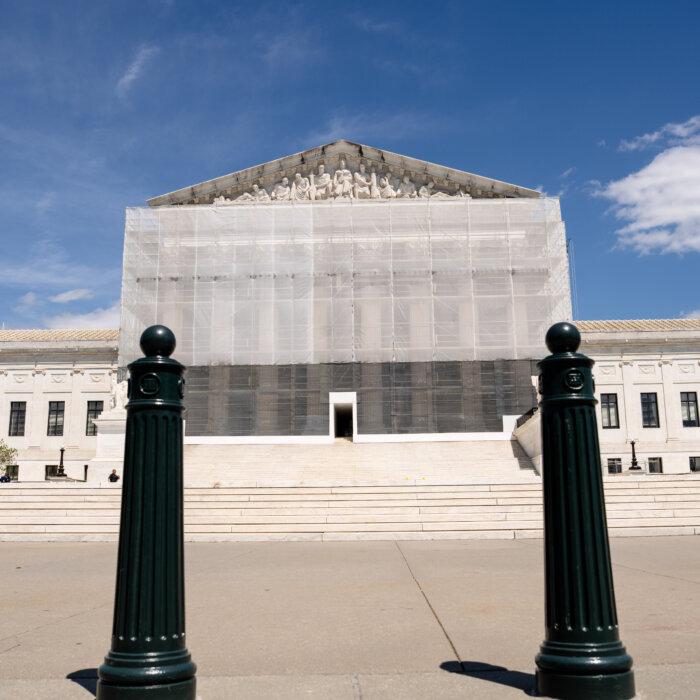

The court said it is likely Congress intended to prevent the U.S. president from controlling CPB. However, Congress did provide the president appointment power at CPB, it said, adding that such authority “carries with it at least some ability to influence the affairs of the Corporation.”
“U.S. District Court Judge Randolph Moss today recognized the independence of the Corporation for Public Broadcasting,” the organization said, citing the ruling.
The statement said that the court “recognized that under the D.C. nonprofit act, the bylaws of CPB govern in this instance,” and that the president lacks authority to remove a director without a two-thirds vote of the other directors confirming such removal.
“Consistent with the Court’s decision and the authority provided under the governing statute, Harrison has today taken steps to affirm that the three individuals whom the President purported to remove, Laura G. Ross, Thomas E. Rothman, and Diane Kaplan, are, remain, and shall continue to be directors of the Board of Corporation for Public Broadcasting,” CPB stated.
The judge wrote in the order that “the president is not free to remove directors and then unilaterally to appoint their replacements, thereby using his power to remove as an effective tool for altering Board policy. Rather, the President’s appointment authority is tempered by the requirement that he proceed only with the advice and consent of the Senate.”
In an emailed statement to The Epoch Times, Harrison Fields, a spokesperson for the White House, said the CPB is “creating media to support a particular political party on the taxpayers’ dime.”
“Therefore, the President is exercising his lawful authority to limit funding to NPR and PBS,” Fields said. “The President was elected with a mandate to ensure efficient use of taxpayer dollars, and he will continue to use his lawful authority to achieve that objective.”
Responding to the White House comment, a CPB spokesperson said: “That is absolutely not true. By law, CPB does not create content.
Funding Cuts
The Trump administration is also facing legal challenges over its decision to cut CPB funds for two recipients, NPR and PBS. On May 1, Trump signed an executive order to this effect, accusing the outlets of “biased and partisan news coverage.”“Our Constitution and laws forbid the President from serving as the arbiter of the content of PBS’s programming, including by attempting to defund PBS,” the lawsuit stated.
A PBS spokesperson said the complaint was filed to “safeguard public television’s editorial independence, and to protect the autonomy of PBS member stations.”
The spending rescissions package includes many of the cuts proposed by the Department of Government Efficiency. The Legislature has 45 days to approve the cuts via a simple majority vote.