
The stalemate between Republicans and Democrats broke on Nov. 9 when eight Senate Democrats sided with Republicans to bring the agreement, forged after weeks of negotiations among a bipartisan group of senators, to a vote.
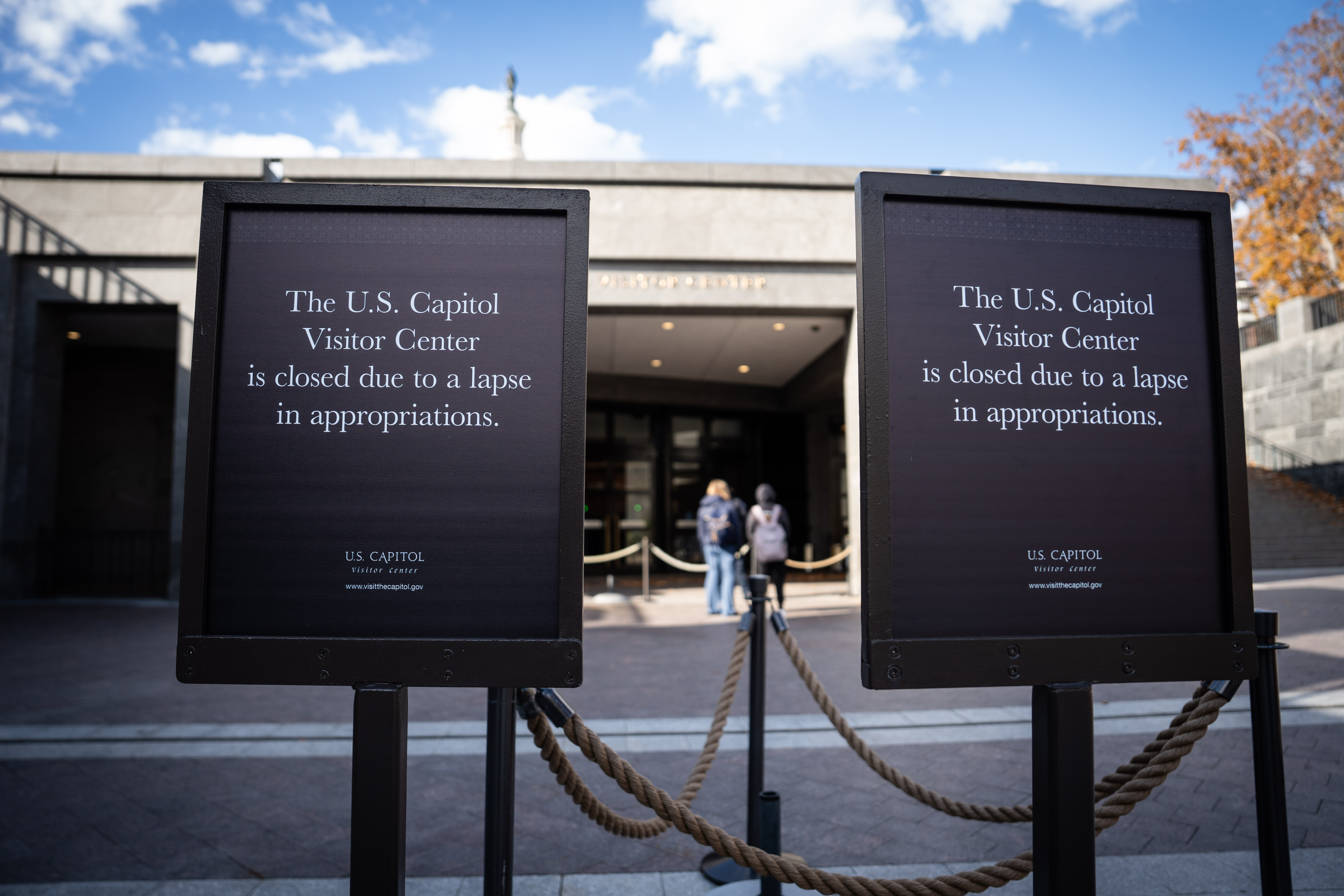
Now, after six weeks of limited government services, delayed or cancelled flights, and a delay in the distribution of supplemental nutrition assistance, the shutdown of 2025 seems nearly at an end.
1. Shutdowns Are Expensive
The shutdown delayed about $54 billion in federal spending over the last six weeks, meaning that money was kept out of the U.S. economy, according to a Congressional Budget Office estimate.Aside from that, an unknown amount of money was not spent on airplane tickets due to flight cancellations. And the late distribution of supplemental nutrition assistance in November means some perishable goods were not purchased as expected.
Withheld pay for federal employees will be distributed promptly when the shutdown ends, but there’s a cost for doing that, too.
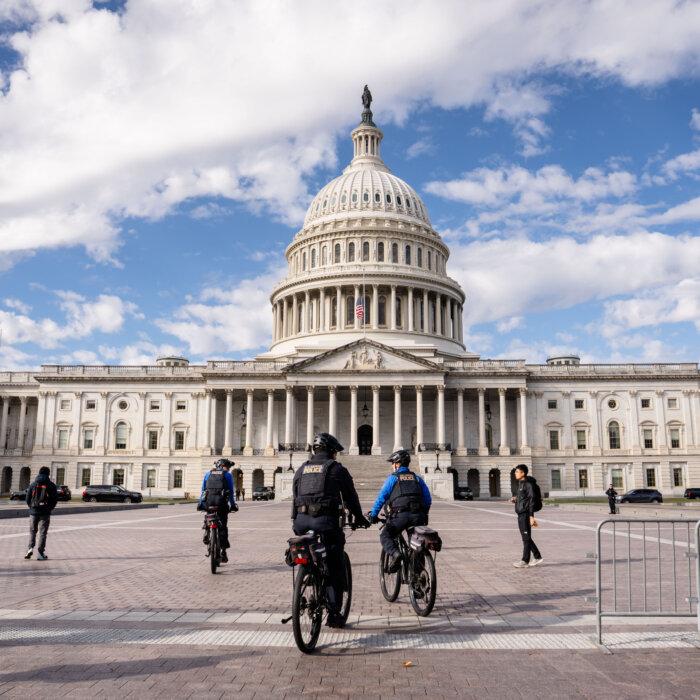

Although much of the lost economic output will be replaced after the money starts flowing, between $7 billion and $14 billion in gross domestic product will be permanently lost, according to the Congressional Budget Office.
“You will re-establish your upward trajectory of economic growth, but you will never catch up,” Robert Kravchuk, professor emeritus of public administration at Indiana University, told The Epoch Times.
2. Shutdowns Have Political Costs
“Democrats lost the public policy aspect of the shutdown, even though they won the rhetorical debate,” David Schultz, professor of political science and legal studies at Hamline University, told The Epoch Times.Democrats also aimed to repeal many of the cuts to Medicaid spending that were included in the One Big Beautiful Bill Act.
Most public opinion polls showed that Democrats enjoyed a slight edge regarding the shutdown, Aaron Dusso, chair of the political science department at Indiana University Indianapolis, told The Epoch Times.
The party also did well in the Nov. 4 elections, winning major races in New York City, New Jersey, and Virginia.
Republicans also agreed to add a provision ensuring that federal employees who were laid off during the shutdown would be rehired. That simply returns the federal workforce to the state that existed before the shutdown began.
Some Democrats were frustrated by the outcome.
Rep. Ro Khanna (D-Calif.) went further, holding his party’s leaders responsible for the result.
Dusso said the result was a capitulation by Democrats, not a compromise.
3. Shutdowns Likely to Be More Common
The federal government has had a lapse in spending authority on at least 20 previous occasions since 1977. However, shutdown procedures were not required until 1982. Since then, some funding gaps were resolved in a single day or occurred on weekends and did not trigger shutdown procedures, according to the U.S. House of Representatives’ History, Art & Archives website.In recent years, shutdowns have become more frequent and longer. The current shutdown is the fourth in 11 years. The last one in 2018–2019 lasted 34 full days. This one has spanned 41 days.
“It is becoming the new normal,” Nicholas Higgins, chair of the department of political science at North Greenville University, told The Epoch Times.
That’s driven in part by the political divide in the country, which creates a sharply and evenly divided Congress, Higgins said.
That makes it tempting for one or both sides to leverage a shutdown to force agreement on difficult issues.
“It’s kind of a high-stakes poker game where you’re really betting on your opponent breaking or making an embarrassing mistake,” Ken Kollman, professor of political science at the University of Michigan, told The Epoch Times.
4. The Spending Battle Continues
The shutdown did not resolve the primary issue advanced by Democrats, extensions of the enhanced Obamacare subsidies, and other health spending matters.Democratic leaders have vowed to continue pushing for more affordable health care as the spending debate moves back to the regular appropriations process.
“We'll continue that fight today, tomorrow, this week, next week, this month, next month, this year, next year,” House Majority Leader Hakeem Jeffries (D-N.Y.) told reporters on Nov. 10. “We’re going to continue that fight to fix our broken health care system and lower the high cost of living for the American people.”
“We will not give up this fight. We will deliver for the American people,” Schumer said after the spending resolution advanced in the Senate on Nov. 9.
However, some experts question whether the Democrats will retain any leverage in negotiations after declining to press the fight now.
Dusso believes the party has lost its advantage. “It’s over for them,” he said. “Now, their only hope is the 2026 election.”
The House must approve the Senate’s resolution for the shutdown to end. House Speaker Mike Johnson (R-La.) on Nov. 10 urged members to begin returning to Washington immediately, given the widespread disruptions in air travel due to the shutdown.