WASHINGTON—A statue of a Confederate general toppled during the 2020 riots over the death of George Floyd will be reinstalled at Washington’s Judiciary Square, the National Park Service announced on Aug 5.
The park service announced that it would seek to return Pike’s statue to “its pedestal by October of 2025. They cited two executive orders—concerning the District of Columbia’s beauty and the government’s advocacy of American history—as reasons for their decision.
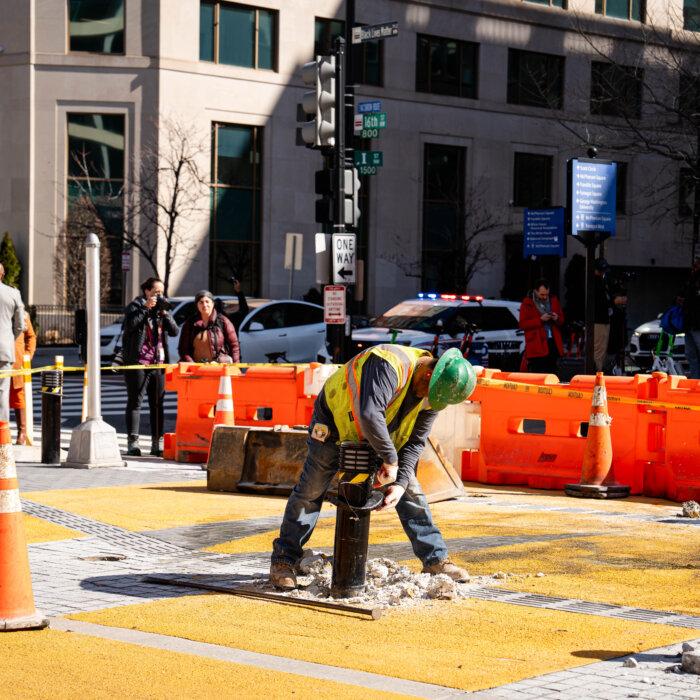
“Originally authorized by Congress in 1898 and dedicated in 1901, the statue honors Pike’s leadership in Freemasonry, including his 32 years as Sovereign Grand Commander of the Ancient Rite of Scottish Freemasonry,” wrote the park service. “The statue has been in secure storage since its removal and is currently undergoing restoration. ... Site preparation to repair the statue’s damaged masonry plinth will begin shortly, with crews repairing broken stone, mortar joints, and mounting elements.”
The statue had stood in the Judiciary Square, where many law enforcement and judicial facilities are located. It is adjacent to the National Law Enforcement Officers’ Memorial, as well as the District of Columbia Court and the E. Barrett Prettyman United States Court House, which houses federal courts other than the U.S. Supreme Court. The park service plans to return the statue to its original location.
Apart from his Confederate affiliation, Pike has also stirred controversy for his membership in the American Party, known more commonly as the “Know Nothing Party,” which between 1844 and 1860 opposed immigration to the United States from Europe, especially Italian, Irish, and other Catholic immigrants. President Millard Fillmore, who served as the 13th president from 1850 to 1853, also became a member of the party after his presidency. Fillmore had been president under the Whig Party.

Pike was also allegedly associated with the Ku Klux Klan, though it is unclear if he was ever formally a member.
The decision to restore Pike’s statue has been opposed by some Democrats, most notably Delegate Eleanor Holmes Norton (D-D.C.), the District of Columbia’s delegate to Congress.