Revelations that thousands of noncitizens were found on New Jersey’s voter rolls—and that hundreds cast ballots illegally—have raised questions about the extent of the problem, how long it has persisted, and how it can be remedied.
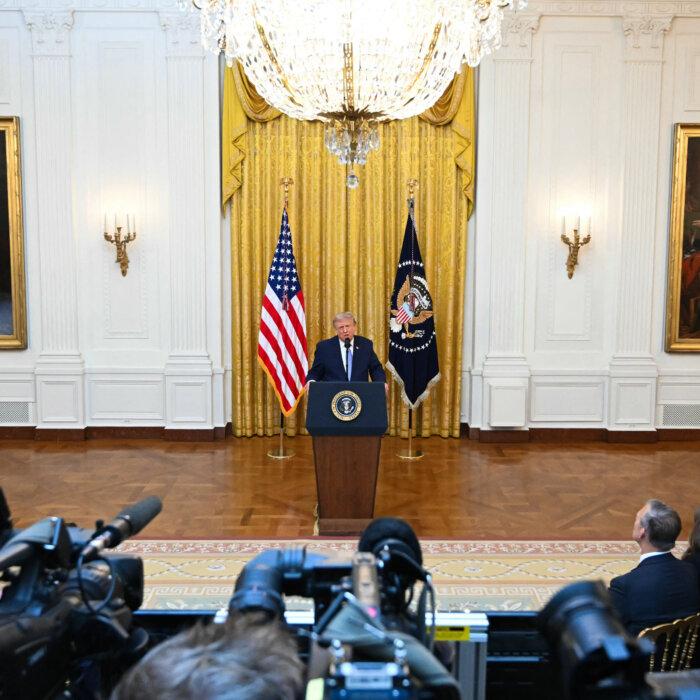
President Donald Trump’s recent national address on election integrity thrust the noncitizen voting issue into the national spotlight.
He said the Department of Homeland Security (DHS) found 278,000 noncitizens registered to vote.
Investigators from the Trump administration tallied 250,000 of those unqualified registrants in four blue, or Democrat-led, states: California, Nevada, Pennsylvania, and New Jersey.
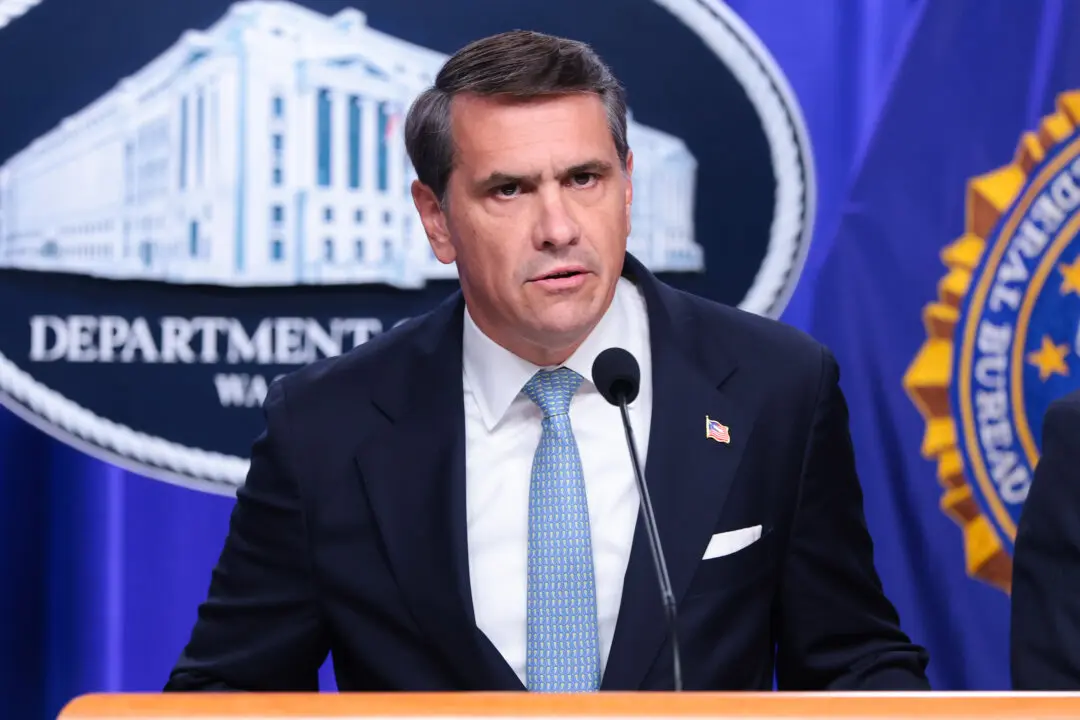
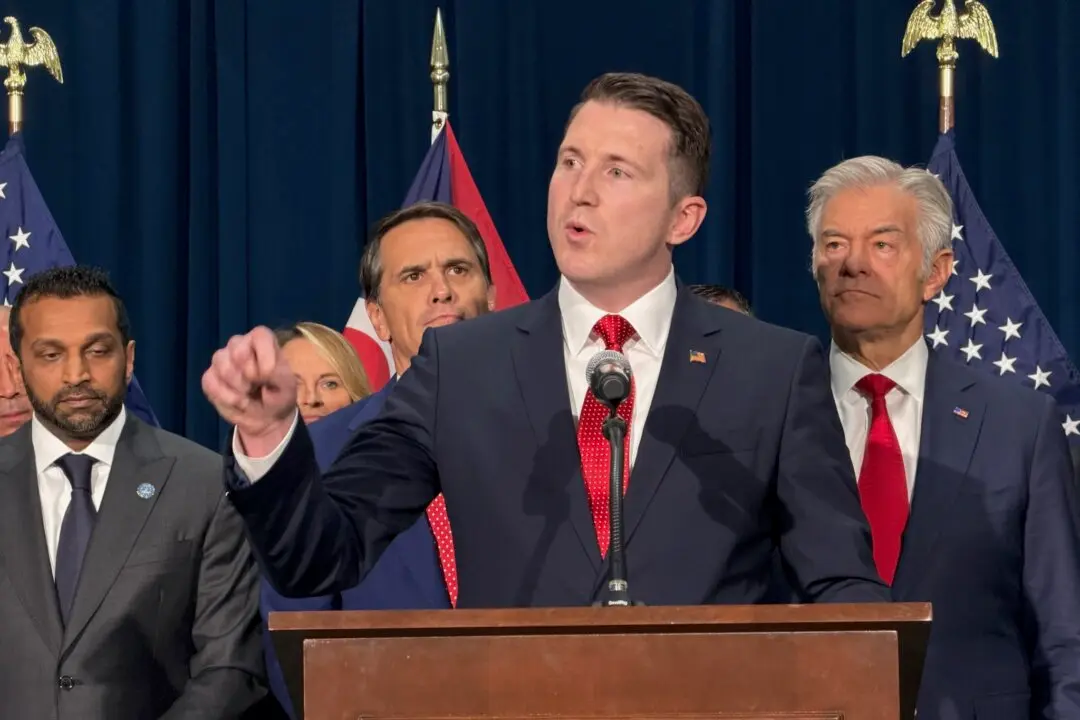
Across 23 other states—predominantly Republican-governed—investigators found 28,000 noncitizens on voter rolls, DHS Secretary Markwayne Mullin told reporters. The agency also identified 400,000 deceased people still registered to vote, he said.
Those figures are based on a “preliminary review” of data, DHS said.
Automatic ‘Motor Voter’ Registrations Cited
Logan Churchwell, who heads noncitizen voting investigations for the Public Interest Legal Foundation, told The Epoch Times that “motor voter” systems—especially those with automatic registration features—can easily “trap noncitizens into the voting process.”
The foundation reported finding “enforcement flaws” in New Jersey’s automatic voter registration system in 2017.
Churchwell’s organization also found similar issues in Oregon and South Dakota, Churchwell said, noting that “this has happened in California and Nevada, too.”
The problem is more likely in states that automatically register people to vote when they interact with certain agencies—typically motor vehicle bureaus, he said.
“Automatic and legacy ‘motor voter’ systems have proven to invite noncitizens into the voting system,” Churchwell said, lamenting the fact that get-out-the-vote groups and progressive policymakers have continued to support these systems despite the pitfalls.
Supporters of those methods have often claimed that voter fraud is “rare.” They frequently used that term “while the problem got worse around them,” he said.
“Look up the definition of ‘widespread,’” Churchwell said. “We’re there now with this problem.”
What Happened in New Jersey?
Last week—days after Trump’s national address—New Jersey Gov. Mikie Sherrill announced that about 6,600 noncitizens were mistakenly registered to vote in the Garden State “through no fault of their own.”
In a July 21 statement, Sherrill said she had learned of the issue during the preceding week, but she did not directly tie her disclosures to Trump’s speech.
Sherrill said the noncitizen registrations occurred during 2023 and 2024, well before her tenure began in January 2026, and that fewer than 400 of the noncitizen registrants went on to cast ballots.
In response, Mullin said on X, “Just ONE illegal vote cancels out the vote of a U.S. citizen.”
DHS reported that the number of noncitizens on New Jersey’s voter rolls could total 35,152—about five times more than Sherrill acknowledged, Mullin wrote on X.
Trump, Mullin, and other Republicans assert that the president is leading the way to ensure that American elections are on the up-and-up.
But some Democrats, such as Sherrill, accuse the president of undermining Americans’ confidence in elections. Trump has continually disputed his 2020 election loss to then-candidate Joe Biden, a Democrat.
Sherrill, in her statement, alleged that Trump is trying to “weaponize elections for political gain.”
However, as Mullin discussed DHS findings about noncitizens on voter rolls, he said: “This isn’t about rehashing the 2020 election. This is just exposing what took place and to make sure it never happens again.”
Sherrill blamed the problem on a “serious software error” that caused a computer system to improperly register people to vote even after those individuals correctly identified themselves as noncitizens.
However, the technology company that has worked with the Garden State’s motor vehicle agency for decades, IDEMIA, disputed that characterization.
“The voter registration information is transmitted to the New Jersey Department of State, Division of Elections, which is ultimately responsible for verifying eligibility to vote,” the company said in a statement provided to The Epoch Times.
“Information submitted by IDEMIA must still be validated and adjudicated by the Division of Elections.”
Solutions Proposed
Mullin and Trump both used noncitizen registration figures to fuel their argument that Congress must pass the Safeguard American Voter Eligibility Act.
“[That legislation would] amend the National Voter Registration Act of 1993 to require proof of United States citizenship to register an individual to vote in elections for Federal office, and for other purposes,” according to a description of the bill provided by Congress.gov.
Specifically, the bill would require proof of U.S. citizenship upon registering to vote and presentation of a photo ID before casting a ballot in federal elections. It also would require each state to purge noncitizens from its list of eligible voters.
The proposal has been bandied about for many months. It has been caught in a political quagmire—mostly along partisan lines, with Democrats largely opposing it even though a high majority of Americans support it, according to a Harvard CAPS/Harris poll in March.
However, voter integrity efforts are not limited to Republicans, Churchwell said.
He said the Trump administration should continue building upon an initiative that began under former President Barack Obama on the “one-of-a-kind” Systematic Alien Verification for Entitlements system.
It provides immigration and citizenship status to federal, state, and local agencies, which then use the information to decide whether people are eligible for programs ranging from healthcare benefits to professional licenses.
However, some states do not use that system for voter verification.
Yet, at the same time, about half the U.S. states use an automatic voter registration method, according to the National Conference of State Legislatures.
Agencies gather information from people and transmit it to election officials, “who use it to either create a new voter record or update an existing registration,” according to the conference.
Its website summarizes arguments for and against automatic voter registration.
Proponents say the goal is to remove obstacles and increase voter participation. They also argue that automatic registration helps ensure that residential addresses are up to date in voter lists.
“[Opponents say] the government should not tell citizens they must register to vote, particularly in states that provide the ‘opt-out’ choice by mail, after the fact,” the conference website states.
And opponents also have long been concerned about the potential for errors or abuse in those systems.
Examples in at Least 7 States
Current users of the automatic registration approach that have had past or recent issues with noncitizen registrations include New Jersey, Oregon, Alaska, Illinois, California, Pennsylvania, and Nevada.
In 2024, more than 1,600 noncitizens were mistakenly registered to vote in Oregon; a technical and clerical error was to blame, officials said at the time.
During a two-year period ending in 2024, about 50 people in Alaska were registered to vote even though they stated that they were not U.S. citizens, according to information that surfaced in a 2025 lawsuit.
In 2020, the Illinois automatic voter registration system mistakenly registered more than 547 noncitizens to vote. Those people correctly answered no to a citizenship attestation, but a “programming error” caused their data to be entered in the registration process, officials said.
In 2018, California officials announced that 1,500 individuals might have been registered to vote in error during a six-month span. The issue was blamed on a “processing error” that registered legal resident noncitizens to vote.
And in 2017, a Pennsylvania report showed that about 200 noncitizens were able to legally register to vote because of a glitch in the state’s electronic driver’s licensing system.
The Epoch Times contacted all of the listed states for comment; only Illinois responded by publication time.