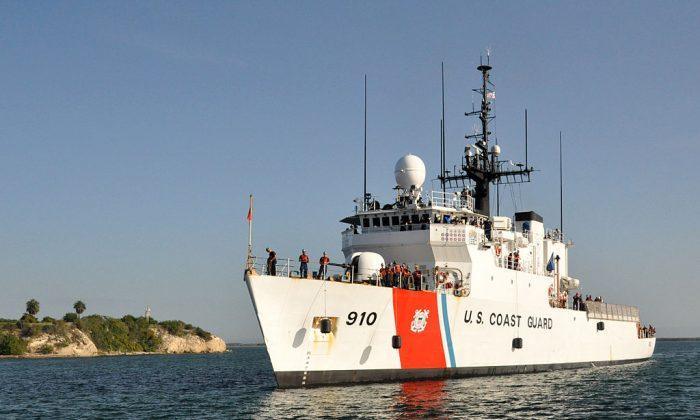
The U.S. Coast Guard (USCG) repatriated 60 illegal immigrants to the Dominican Republic on March 30 after earlier interdicting these individuals in a vessel near Puerto Rico, the agency has said.
“The repatriated aliens were transferred to Dominican Republic Navy authorities including 43 men and 11 women who claimed Haitian nationality and five other men and one woman who claimed Dominican Republic nationality,” USCG said in a March 30 statement. “No minors were identified in this case.”
The interdiction, conducted by crew members of Coast Guard cutter USCGC Thetis, took place on March 27 after authorities detected a makeshift vessel roughly 50 nautical miles from Aguadilla, Puerto Rico.
Thetis deployed a crew on a small boat, who then took control of the vessel and safely removed all the individuals aboard. Once immigrants board a Coast Guard cutter, they are processed to determine their identity. The individuals are provided with shelter, food, water, and basic medical attention, according to USCG.
The repatriation operation was also carried out by the Thetis crew.
Cmdr. Matthew Romano, Sector San Juan’s chief of response, attributed the successful interception to the “swift response, effective communications and seamless coordination” between Sector San Juan personnel, Thetis, and partners at the Customs and Border Protection.
“To those thinking of taking part in an unlawful migration voyage, don’t take to the sea! These voyages most often involve unseaworthy and grossly overloaded makeshift vessels with no lifesaving equipment,” Romano said.
“They are highly unstable and could capsize without warning, killing everyone onboard. Individuals taking part in these voyages should also realize they may be subject to criminal prosecution and/or repatriated to their country of origin or departure.”
The Coast Guard said on March 27 it had interdicted 15 suspected illegal immigrants 16 miles offshore San Diego.
The suspected illegal immigrants were traveling in a vessel and attempted to flee when authorities sent a boat crew to investigate. The individuals, all claiming Mexican nationality, were stopped without the use of force and transferred to Border Patrol personnel, according to USCG.
In a March 5 statement, the Department of Homeland Security (DHS) said that the Coast Guard was being revitalized into one of the most elite fighting forces in the world under the Trump administration.
“The Coast Guard used advanced unmanned systems and intelligence-driven patrols to secure over 100,000 miles of U.S. border by interdicting, deterring, or transporting over 12,000 illegal aliens, which increased interdictions by 44 percent in key regions,” DHS said.
In a Jan. 13 report, the Government Accountability Office (GAO) said the Coast Guard needed to improve its maritime interdictions, citing the agency’s performance between 2015 and 2024.
“The Coast Guard did not meet its primary drug interdiction performance target in fiscal years 2015 through 2024, and did not meet its primary migrant interdiction target for 6 years during the same period,” the GAO said in the report.
On the plus side, the report said, “as of July 2025, the Coast Guard had identified which would be its new primary drug interdiction measures. In addition, the Coast Guard is in the initial stages of developing new migrant interdiction performance measures, but as of July 2025 had not yet implemented them.”
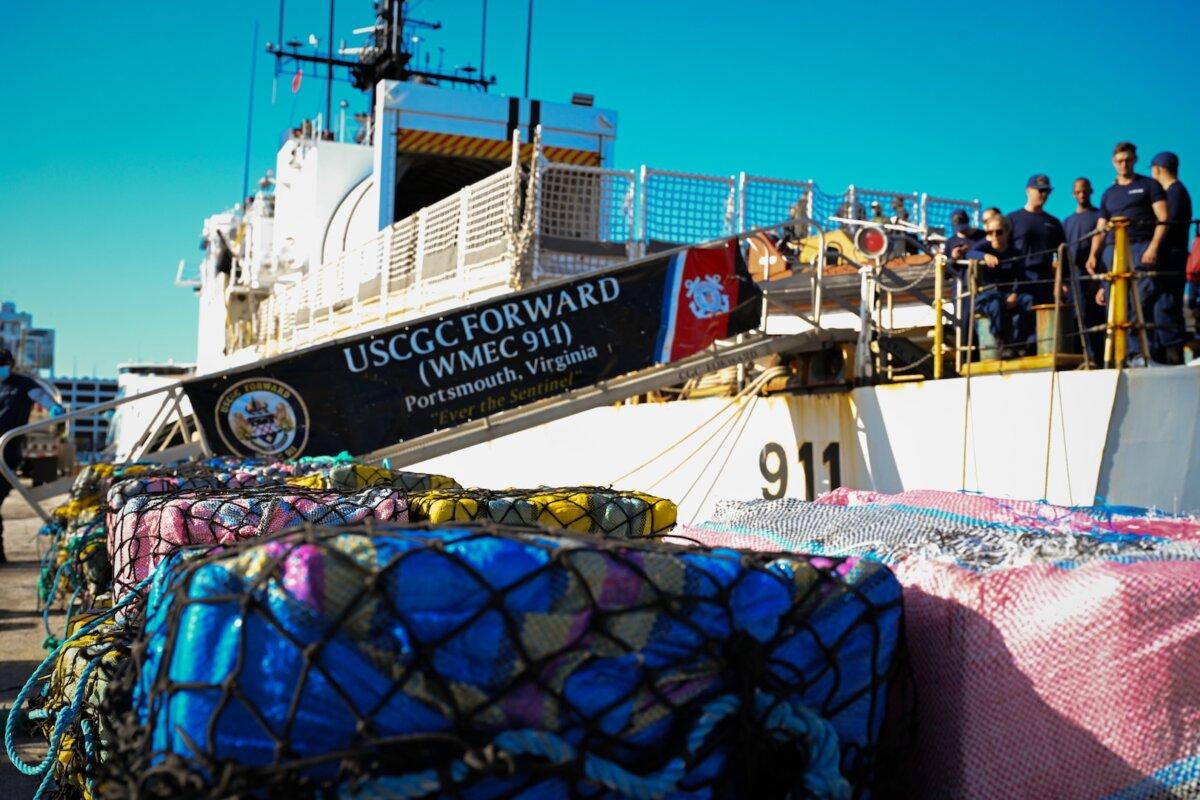
The actions were part of Operation Pacific Viper, which was launched in August 2025 and directs U.S. forces to the Eastern Pacific region to counter criminal groups and cartels, aiming to cut off drug and human smuggling before they reach American shores.
Since the launch of the operation, more than 200,000 pounds of cocaine have been seized by USCG, with 150 suspected drug smugglers taken into custody.