Nationally, there is a growing interest in teaching public school students the history of the U.S. government and the role of citizenship.
New Hampshire’s law, passed in 2023, is the most extensive, requiring half a year of civics in both middle and high school, as well as one year of history and government in high school. All students in public, charter, and private schools must pass a civics assessment to graduate.
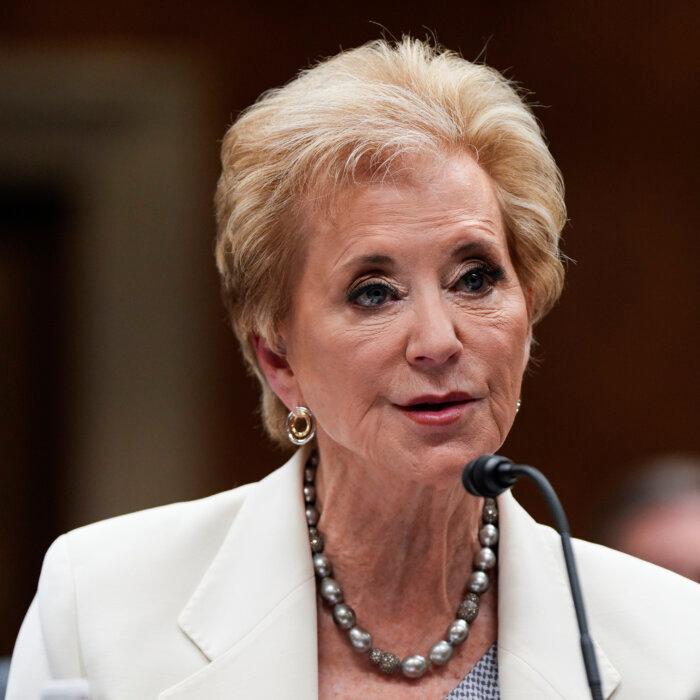
Course offerings such as U.S. history, U.S. politics, and participation in government are expected to increase nationally under a new initiative announced by Education Secretary Linda McMahon on Sept. 15. She said $160 million in competitive grants will be available for U.S. history and civics instruction as the federal government shifts money away from education programs based on racial and ethnic quotas.
Fourteen states require students at public colleges and universities to complete a civics course, according to the James G. Martin Center report.

The report also rates the civics education in teacher training programs at large public universities, identifying the 20 schools with the “most civically aligned” teacher preparation programs in U.S. history and/or U.S. politics. It rates the University of Illinois–Urbana-Champaign and the University of California–Berkeley as having the “least civically aligned” teacher training programs.
“How will you channel your righteous indignation about the injustices against people across the world and against the earth itself with the fortitude of dialogue, humility, and hope to transform schools in the Bay area?” the homepage reads.
The James G. Martin Center report calls on all colleges to implement and mandate a three-credit course on the Constitution, Declaration of Independence, and the Federalist Papers in which students must pass an exam required for graduation.
“Colleges should do everything they can to ensure that college graduates—including future teachers—are equipped with an in-depth understanding of the ideas and history on which this country rests,” the report states.
Jenna Robinson, the center’s president, said civics education is needed more than ever, given the nation’s deep divisions and lack of confidence in the U.S. public education system.
“Americans’ faith in institutions is at a low ebb,” she told The Epoch Times via email. “Increased education on our constitutional history and traditions can help improve public knowledge and public trust.”
Shannon Watkins, a research and policy fellow at the center, said: “Civic knowledge is an essential ingredient for responsible citizenship. In a time of heightened divisions, we must prioritize education in our shared American heritage.”