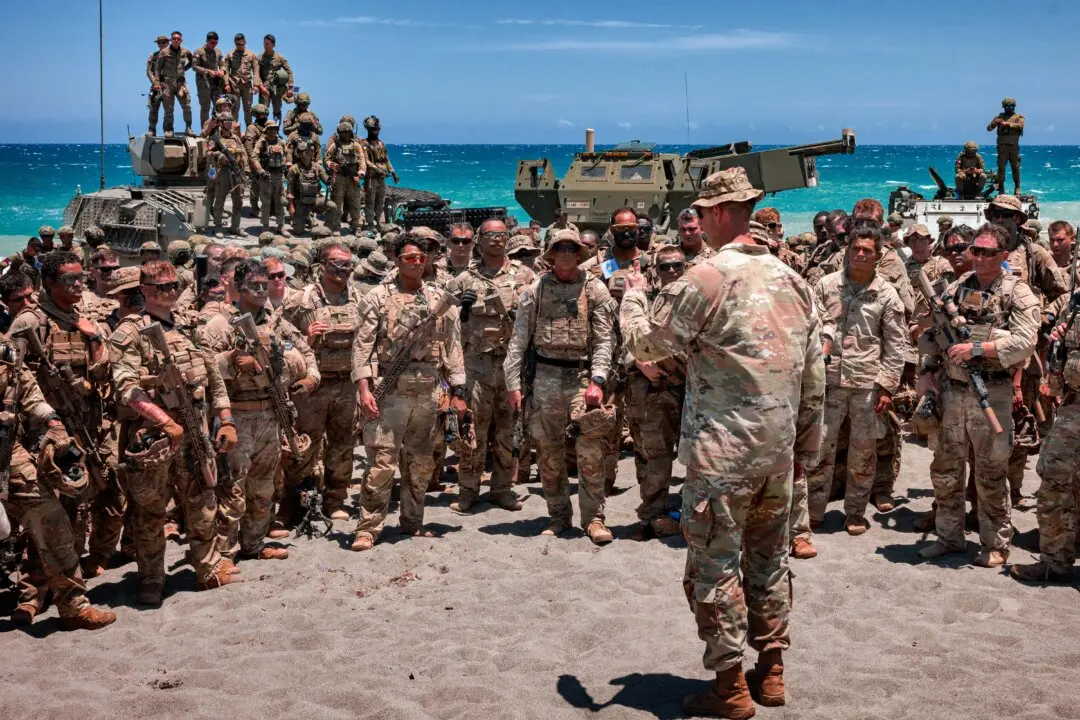
Chicago Mayor Brandon Johnson has signed an executive order authorizing “immediate, drastic action” to respond to what he said could be a looming military deployment by the Trump administration to the city.
At an Aug. 30 press conference, Johnson said that his order “affirms” that Chicago police will not “collaborate with military personnel or civil immigration enforcement.”
“We will not have our police officers, who are working hard every single day to drive down crime, deputized to do traffic stops and check stops for the president,” he said.
“We do not want to see tanks on our streets.”
“After we do this, we’ll go to another location, and we’ll make it safe also,” Trump told reporters inside the Oval Office, referring to his efforts in Washington to crack down on crime. “Chicago’s a mess. We’ll straighten that one out probably next. That will be our next one after this. And it won’t even be tough.”
“This is not about fighting crime. This is about Donald Trump searching for any justification to deploy the military in a blue city in a blue state to try to intimidate his political rivals.”
“He better straighten it out, FAST, or we’re coming,” he wrote.
Trump officials have also signaled increased immigration enforcement in the city.
Other Democratic lawmakers have expressed opposition to National Guard deployments in Chicago and other cities.
House Minority Leader Hakeem Jeffries (D-N.Y.) rejected Trump’s suggestion that he could deploy National Guard troops to Chicago or Baltimore, calling it an effort to “manufacture a crisis,” as reported crime has fallen in both cities.
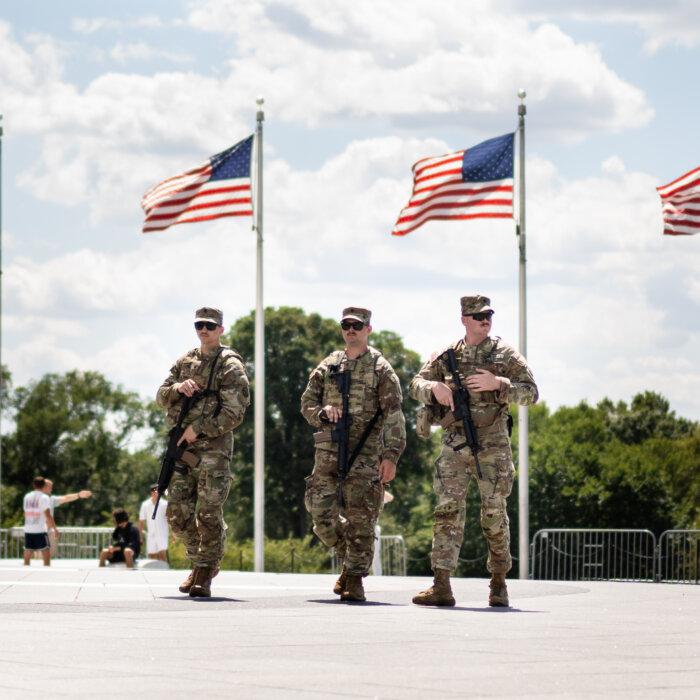
Washington Mayor Muriel Bowser said on Aug. 27 that crime has decreased since Trump deployed National Guard troops to the city and took federal control of the local police department almost three weeks ago.
Bowser told reporters during an update on the enforcement surge that in just 20 days, the number of carjackings had fallen by 87 percent from the same period last year.
“We know that when carjackings go down, when the use of guns goes down, when homicide or robbery go down, neighborhoods feel safer and are safer, ” Bowser said. “So this surge has been important to us for that reason.”