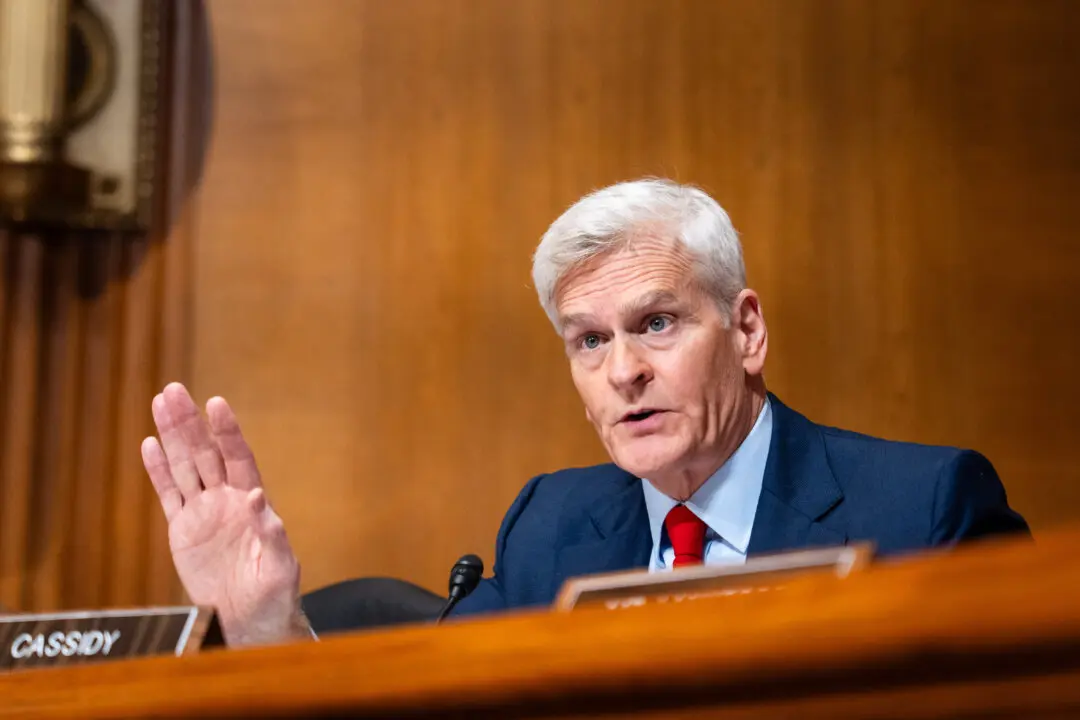
The Centers for Disease Control and Prevention should recommend that people receive a COVID-19 vaccine only after speaking with a health care provider, agency advisers said on Sept. 19.
The Advisory Committee on Immunization Practices (ACIP) unanimously advised the CDC to change its immunization schedules to move COVID-19 vaccination to shared clinical decision-making.
ACIP provides advice to the CDC. The CDC’s acting director can choose to accept the advice, accept it after changing it, or reject it entirely. It’s not clear when that decision will happen.


The CDC usually updates its recommendations for COVID-19 vaccines in the summer, before the FDA approves shots with updated strains that target circulating variants. This year, officials decided to have the CDC’s advisers meet after the FDA’s moves.
Kennedy appointed all the members of ACIP.
Workgroup Chair: Data Weak
The COVID-19 vaccines in late 2024 and early 2025 were estimated to provide people who were not immunocompromised 32 percent to 53 percent protection against hospitalization, according to CDC data. No estimates were provided for protection against infection.Some members took issue with the estimates, noting that a percentage of the hospitalizations characterized as COVID-19-associated are actually driven by other causes, and patients merely test positive for COVID-19.
Retsef Levi, chair of ACIP’s COVID-19 immunization workgroup, said that the work group assessed the assessments of protection as being based “on very low quality data and analyses.”
Safety Data
Another presentation focused on data indicating that COVID-19 vaccination alters the immune system of a recipient, potentially causing problems such as increasing vulnerability to other viruses.The CDC said in a presentation that no new safety signals have emerged for updated formulations of the vaccines.
“Myocarditis can cause death. It’s proven,” he said.
Prescriptions?
ACIP also considered advising state and local officials to require a prescription for COVID-19 vaccination.Members supportive of the motion said they wanted to make sure people engage in nuanced discussions before receiving one of the shots.
“I’m a very big proponent of informed consent,” Dr. Evelyn Griffin said. “And I feel that getting a prescription would require that, or necessitate that interaction with a provider that can discuss informed consent, much like getting a blood pressure medication refilled or started.”
Catherine Stein, another member, was among the no votes.
“I’m really concerned about the requirement of a prescription because I believe the segment of the population that is under-insured has a lack of access to healthcare. They’re going to be unable to get a prescription,” she said. “And those are the people that are at higher risk of a lot of the comorbid conditions.”
The vote was 6–6. Martin Kulldorff, who voted no, broke the tie, so the motion failed.
Kulldorff had said earlier that the motion would not have required prescriptions.
“We don’t have power over prescriptions,” he said. “That is a state issue.”