President Donald Trump’s latest nominee to head the Centers for Disease Control and Prevention said on July 15 that she will not “betray the science” when asked about how she would handle potential disagreements with administration officials on vaccines.
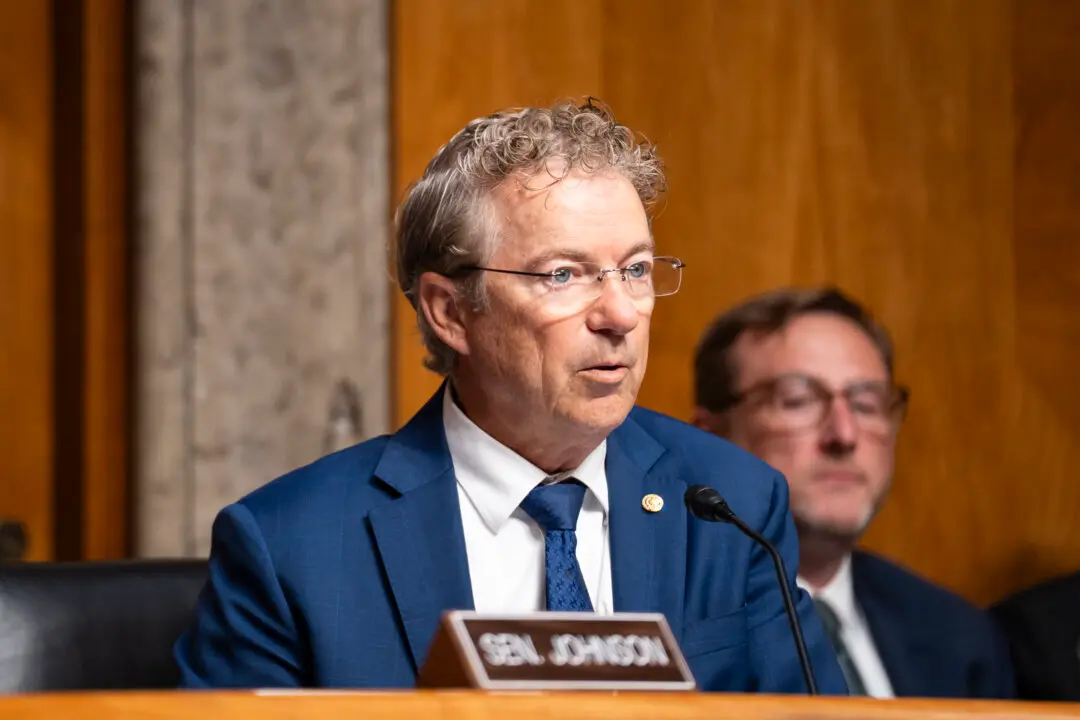
“You can be CDC director and just take orders. We need a CDC director that will actually stand up to crazy, stupid things that are being said, that undermine faith in immunization,” Sen. Bill Cassidy (R-La.), chairman of the Senate Committee on Health, Education, Labor, and Pensions, told nominee Dr. Erica Schwartz during a hearing in Washington.
Schwartz said: “You have my assurances that I will continue to lead by my integrity. I will never compromise on the science. I will always, always have the public’s health in mind.”
Cassidy pressed Schwartz, asking her whether she would “have the ability to say no to junk science and to say yes for that which has been firmly established.”
“I have always stood up for what is right and what is true, and I will continue to do that,” Schwartz said. “I will never betray the science, ever. I will go where the science leads us. I will not have predetermined answers to conclusions.”
Cassidy said at the start of the hearing that “vaccines are overwhelmingly safe and effective” and “have saved countless lives.”

“Any equivocation of these facts and I shall not be able to support your nomination,” he said.
Trump nominated Schwartz, of Naples, Florida, in April, months after terminating Susan Monarez, the first Senate-confirmed CDC director in history. Monarez, another Trump nominee, had clashed with Health Secretary Robert F. Kennedy Jr., who oversees the CDC, on how to handle vaccine policy.
Trump’s first selection, Dr. Dave Weldon, an advocate for vaccine safety, was withdrawn after some Republican senators disapproved of him.
Schwartz currently works for UnitedHealth Group. Schwartz was deputy surgeon general during Trump’s first term and has also been the Coast Guard’s chief medical officer.
“When I was a military physician, my job was all about readiness,” Schwartz said in a video she has deleted. “It was all about public health: prevention, vaccines, early detection. If we get that right, we change lives before illness ever begins.”
Schwartz told Sen. Bernie Sanders (I-Vt.), the ranking member of the Senate Health Committee, that she accepts what he described as overwhelming evidence that vaccines do not cause autism. She also said she has been in situations in the past where she has had to raise issues during “very difficult conversations” with superiors and that she is prepared to do the same with Kennedy.
Sanders asked whether Schwartz would report to Congress if administration officials ever asked her to implement “unscientific policies.”
“I do not believe that the president or the secretary would ever do what you just mentioned,” she said.
Sean Kaufman, a senior CDC adviser whom Trump nominated to be the assistant health secretary for preparedness and response, also appeared on July 15. Kaufman told senators, when asked about a social media post in which he said he would rather die than have his children receive a vaccine in which the risks outweigh the benefits, that he had advised his mother-in-law and her husband to receive COVID-19 vaccines.
“I believe 100 percent that vaccines are safe and effective and that we should have conversations with our physicians to make a determination on which and what is the best risk-benefit equation for that patient,” he said.