
Some people as young as 30 should take statins, cardiology groups said in a new update.
The American Heart Association and other groups say that doctors should use a new calculator, called Predicting Risk of Cardiovascular Disease Events, to assess the risk of dyslipidemia, or higher than normal levels of lipids such as cholesterol, in patients aged 30 to 79.
If a patient is deemed at high enough risk of developing atherosclerotic cardiovascular disease within the next 10 years, then therapy, including statins to lower lipids, should be considered, according to the new guidelines, released on March 13.
Dr. Roger Blumenthal, chair of the committee that wrote the guidelines, and the director of the Johns Hopkins Ciccarone Center for the Prevention of Heart Disease in Baltimore, said in a statement that lifestyle changes such as eating healthier foods and engaging in regular physical activity will lead to the prevention of plaque buildup in the arteries, which can cause cardiovascular disease.
For some patients, medication is necessary, Blumenthal said.
“While we want to try to optimize healthy lifestyle habits as the first step to lower cholesterol, we realize that if lipid numbers aren’t within the desirable range after a period of lifestyle optimization, we should consider adding lipid-lowering medication earlier than we would have considered 10 years ago,” he said.
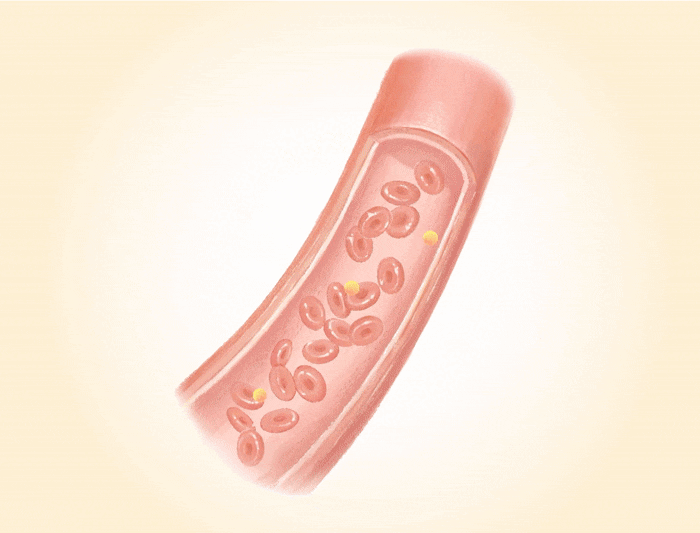

Some 92 million Americans took them in 2018 and 2019, an increase after the American Heart Association and other groups in 2013 dramatically expanded statin eligibility. At the time, and in an update in 2018, the organizations advised statins for some people as young as 40.
Lifestyle changes can lead to lower lipid levels, but when they do not, doctors should consider steps such as taking images of calcium in coronary arteries when figuring out their future risk of suffering a heart attack or stroke, according to the new guidelines.
After going through the steps, doctors should discuss with patients what therapies to try. Non-statin therapies include inhibitors of a protein known as PCSK9.
The updated guidelines were based on studies, reviews, and meta-analyses published through April 2025.
Certain authors have financial relationships with companies that produce statins, such as Pfizer, according to the organizations behind the update. Those authors were “required to recuse themselves from voting on sections to which their specific relationships with industry and other entities may apply.”
Some of the organizations, such as the American Heart Association, accept money from Pfizer and other statin manufacturers.
Dr. John Mandrola, a cardiologist in Kentucky who was not involved in the guidelines, was among the critics of certain aspects of the new guidelines. He wrote in a blog post that coronary artery calcium detection is sometimes incidental and should not always warrant treatment with medication.