The Supreme Court’s ruling allowing the Trump administration to cancel temporary protected status (TPS) for hundreds of thousands of Venezuelans in the United States has negatively affected members of the community who have not committed crimes, according to advocates.
Meanwhile, the White House said the decision made by the Department of Homeland Security (DHS) to cancel the immigration protections for Venezuelans, upheld by the Supreme Court on May 19, aligns with promises President Donald Trump has made to the American people.
TPS is an immigration status granted to foreign nationals residing in the United States from countries with conditions that temporarily prevent the safe return of their citizens.
Ludmila Padrino, a Venezuelan lawyer based in the United States who works closely with the Venezuelan immigrant community, told The Epoch Times that the Supreme Court “had to rule on a very basic question: whether or not the secretary of homeland security had the authority to make a decision such as approving, extending, or revoking TPS.”
“And she simply does,” she said.

However, Padrino said that innocent Venezuelans in the United States are being penalized because of a small group of people who have committed crimes.
“Currently, half of the Venezuelans who are beneficiaries of TPS, which is the TPS of 2023, are being harmed,” she said. “Everyone truly knows that Venezuelans are not leaving their country for fun. ... Many left out of necessity, others out of persecution, because of the humanitarian crisis, and the sociopolitical crisis.”
The Biden administration granted TPS to Venezuelans in two designations: the first in 2021, to approximately 250,000 Venezuelans, valid until Sept. 10, 2025, and another designation in 2023, which was granted to another 350,000 Venezuelans.
Before leaving the White House, the Biden administration extended the 2023 TPS for Venezuelans until Oct. 2, 2026.
TPS is a temporary status that does not lead to legal permanent residence. However, it provides work authorization and protection against deportation to citizens of the countries in which the designation is held, for the duration of the designation.
Padrino said that Venezuelans who lost TPS benefits are now in a very complicated situation and are facing great challenges.
“Companies are sending out notifications that people have only a few days to continue working,” she said. “People can’t renew their licenses. It’s complicated, it’s distressing. ... The biggest challenge is supporting their families.”
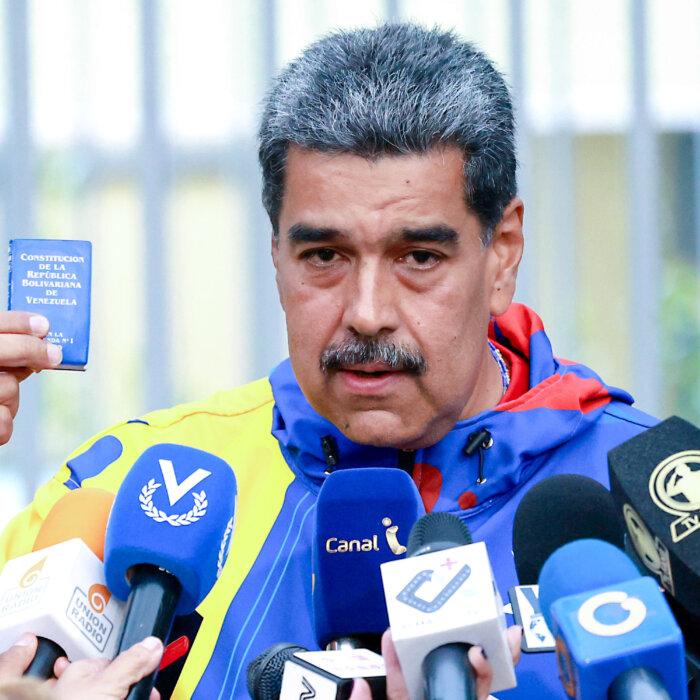
Returning to Venezuela at this time could also be very complex for TPS beneficiaries, according to Padrino. Venezuela is in the midst of a political and humanitarian crisis, which intensified following the July 28, 2024, presidential elections, amid widespread reports of arbitrary detentions, enforced disappearances, and the persecution of opposition members and Venezuelan citizens by the Nicolás Maduro regime.
Temporary Protections
On the other hand, White House spokeswoman Abigail Jackson said in an email to The Epoch Times on May 22 that “Temporary Protected Status is, by definition, temporary, and is committed to the discretion of the DHS Secretary.”“District courts have no right to prevent the Executive Branch from enforcing our immigration laws,” Jackson said. “The Trump Administration will continue to deliver on the President’s promises every day for the American people.”
The Supreme Court’s decision, Jackson said, “is an important inflection point in the ongoing saga of lawless lower court decisions that flout plain law and legislate from the bench.”
Noem said that TPS protections for Venezuelans are contrary to the interests of the United States and the interests of Americans, that they are no longer justified by conditions in Venezuela, and that, as Trump has said, immigration enforcement “is critically important to the national security and public safety of the United States.”
Secretary of State Marco Rubio said that the former administration granted TPS protections across the board without vetting applicants, thereby allowing criminals to enter the country.
Rubio added that Venezuelans who lost TPS benefits have the option of applying for asylum with the appropriate agency.
“And I believe many of them, if not most of them, will have very credible asylum claims,” he said.
Lawsuit Challenges, Congressional Bill
The National TPS Alliance, an organization led by TPS beneficiaries, and a group of Venezuelans filed a lawsuit against the White House on Feb. 19, challenging the DHS secretary’s decision.Ahilan Arulanantham, co-director of the Center for Immigration Law and Policy at the University of California–Los Angeles and one of the attorneys who filed the lawsuit, told The Epoch Times via email that he and the other plaintiffs were deeply disappointed with the Supreme Court’s ruling, calling it “the largest single act stripping people of immigration status in modern American history in a two paragraph order that contained no reasoning.”
“The United States made a commitment to our protection, and we will hold this Administration to it,” José Palma, coordinator of the National TPS Alliance, said. “We will continue to make our case in court and in the court of public opinion. Like all previous generations of immigrants to this country, we will defend our families and demand equal protection under the law.”
The law would allow beneficiaries to work legally, provided they meet requirements such as having no criminal record and having properly registered.
“That’s why I am proud to co-lead the Venezuela TPS Act of 2025—to ensure law-abiding Venezuelans currently in the United States can stay here until conditions improve and they are not forcibly returned to a brutal dictatorship.”