California lawmakers sent a bill to Gov. Gavin Newsom’s desk on Sept. 12 that would allow colleges and universities to give preferential treatment in admissions to students who are descendants of slaves.
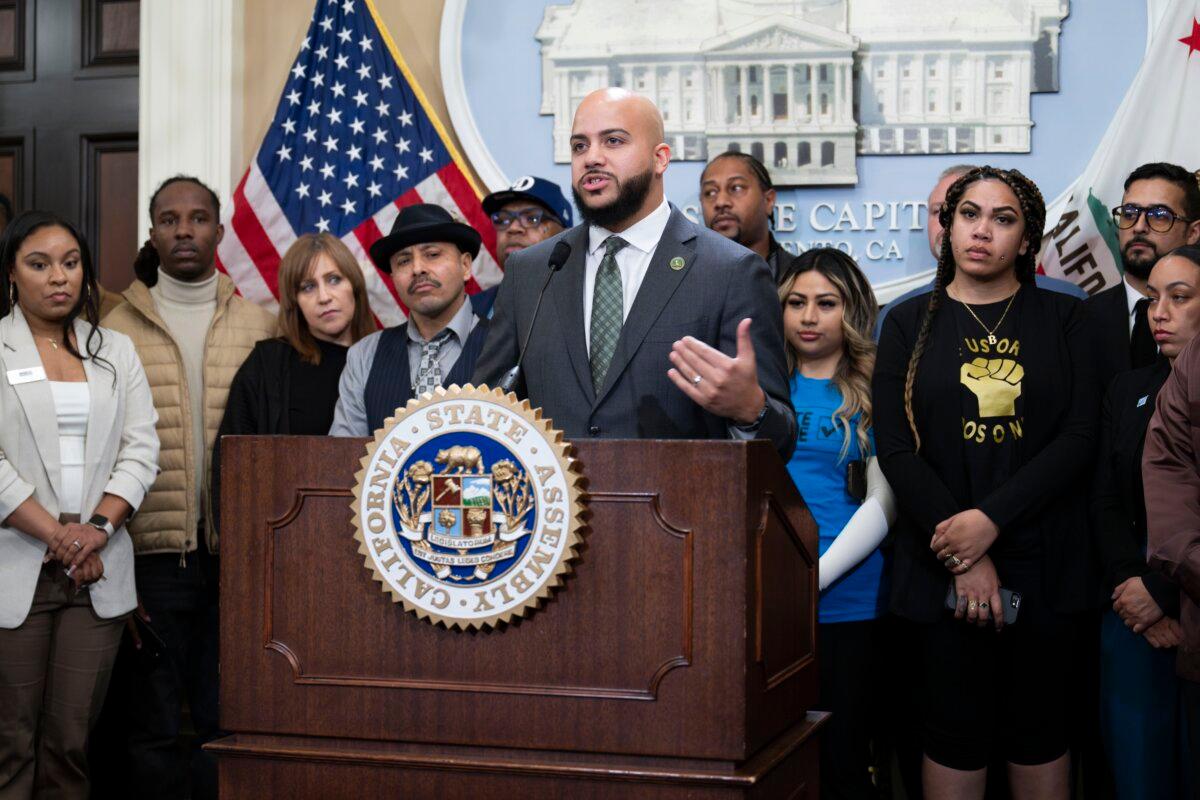
“By allowing institutions to consider an applicant’s lineage as a factor in admissions decisions, the bill aims to increase institutional access for students who research has shown still experience the greatest educational attainment and achievement disadvantages,” Bryan said in a statement to the Legislature.
Under the California law, qualified applicants will be those who can establish direct lineage to a person who, before 1900, was subjected to American chattel slavery, which could be proved by showing the enslaved person was freed through legal or extralegal means, was classified as a fugitive from bondage, was deemed contraband, or rendered military or civic service while subject to restrictions that applied to slaves.


California entered the Union as a free, nonslavery state in 1850.
The bill does not specify what documents would be required as proof of lineage. California State University would be tasked with establishing a process by the 2026-2027 academic year. It was not clear if that process would also apply to the University of California system or be subject to further review.
Legislative analysts say the bill could cost the universities tens of thousands of dollars each year to verify descendants of slavery and update admissions applications.
Bryan also said the bill’s focus on lineage rather than race means it does not violate Proposition 209, a constitutional amendment passed by California voters in 1996 that eliminated the consideration of race in public education admissions.
Carlsbad Citizens for Community Oversight, an organization that advocates for freedom and higher standards for public officials, opposed the measure on constitutional grounds.
“The California Constitution prohibits discrimination against, or granting preferential treatment to, any individual or group on the basis of race, sex, color, ethnicity, or national origin in the operation of public employment, public education, or public contracting,” the group told the Legislature. “We should not start a practice of preferential treatment based on immutable characteristics but return to merit based college admittance.”
The University of California Student Association supported the bill, claiming that it would help restore justice.
Higher education is “out of reach” for many students because of factors out of their control, and these obstacles are “more pronounced for Black students,” the association said.
Since Prop. 209 passed, there have been various attempts to either repeal or reduce its scope.
In 2023, the U.S. Supreme Court determined that Harvard College and the University of North Carolina violated the equal protection clause of the 14th Amendment by considering race as a criterion in admissions decisions.