Californians are likely to pay more at the gas pumps in July because of increases in the state excise tax and fuel emission fees. But how much more exactly?
Excise Tax Increase
Effective July 1, the state excise tax on a gallon of gasoline will increase by 1.6 cents, to 61.2 cents from the current 59.6 cents. The California Department of Tax and Fee Administration (CDTFA) announced the increase in early June.The state excise tax is separate from the sales tax, the federal excise tax, and other fees, including those from climate programs. The federal excise tax has been 18.4 cents since 1993 across all states.
The state excise tax is adjusted annually based on the California Consumer Price Index to account for inflation, as mandated by the Road Repair and Accountability Act passed in 2017, which also increased the excise tax by 12 cents that year.
Fuel Emissions Fees
The cost associated with fuel emission regulations is a dynamic pass-through to consumers and does not have a fixed amount.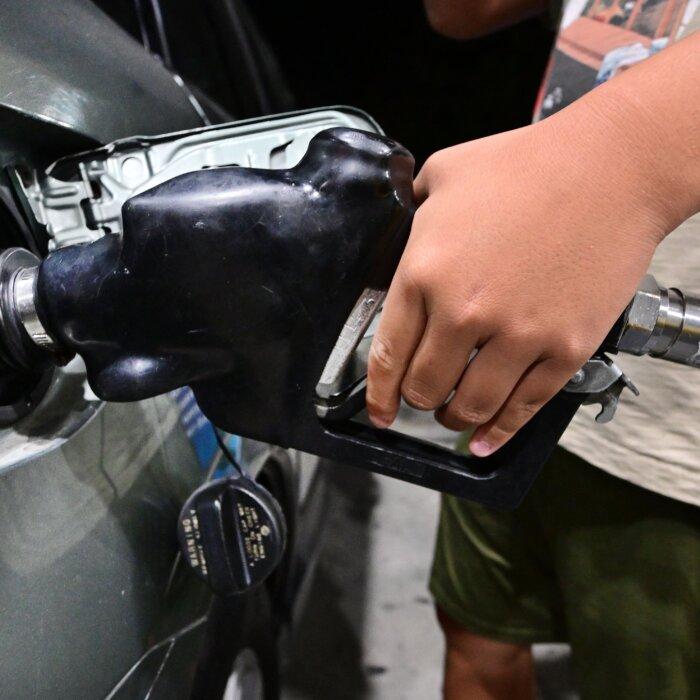
An increase is looming when stricter fuel emission standards set by the state’s air quality regulators go into effect.
California Air Resources Board (CARB) passed its Low Carbon Fuel Standards (LCFS) amendments on Nov. 8, 2024, setting more aggressive targets to reduce greenhouse gas emissions of the state’s transportation sector, by 30 percent by 2030 and 90 percent by 2045, against the 2010 baseline.
A Few Cents or a Half Dollar?
In the Standardized Regulatory Impact Assessment (SRIA) report released in September 2023 to assess the economic effects of the LCFS amendments, CARB wrote that should the amendments be implemented in 2024, “they are projected to potentially increase the price of gasoline by an average of $0.37 per gallon” in 2025.The agency then put out an estimate of “$0.10 LCFS cost pass through per gallon” in a Feb. 26 statement, attributing the “latest analysis” to “third party commodities markets experts.”
“These are upper-bound estimates of program impacts and depend on LCFS credit prices,” wrote Danny Cullenward, report author and senior fellow of the Kleinman Center.
LCFS credit is a part of the market-based regulation mechanism implemented by CARB to reduce fuel emissions. Regulated parties need to buy credits to offset emissions that exceed target limits, and the costs could be passed on to consumers.
Cullenward said a very high LCFS credit price “has occurred in the past.”
If LCFS credit prices increase to $100 per credit, “then retail gasoline price impacts could be $0.26 per gallon in the near term,” Cullenward wrote.
LCFS Credit Prices, Gas Prices
LCFS credits and deficits are parts of the market-based regulation mechanism to cap fuel emissions.Transportation fuels that have lower emissions than the benchmark level set by the CARB will generate credits, and those above the benchmark level will generate deficits.
One LCFS credit is equivalent to one metric ton of avoided greenhouse gas emissions.
Regulated parties who generate deficits—often producers and importers of fossil fuels—must purchase credits to balance out their deficits.
And that cost could be passed through to consumers at the pumps. The higher the LCFS credit price, presumably the bigger the effect on the gas price.
“It’s extremely unlikely” for the LCFS credit price to reach the approximately $270 maximum level allowed under the regulation, Colin Murphy, co-director of the Low Carbon Fuel Policy Research Initiative at the University of California–Davis, told The Epoch Times.
Murphy said some of the price increase estimates were based on models using parameters including LCFS credit price and emission targets, but these estimates “are not credible because there is no evidence suggesting that credit prices will rise to anywhere near the maximum in the foreseeable future.”
The credit price “has been low for the last three or four years,” Murphy said, because “the market has been very oversupplied with credits” because of various factors including climate goal setting, COVID-19, unexpected rapid growth in renewable diesel production, and related federal policies.
He said his research models indicated that credit prices would remain low through 2030 or beyond.
“It would take two or three very major shifts in the nature of the alternative fuels market, all happening simultaneously, to get to the point where you would have a high credit price in 2030,” he said. “So it’s not impossible, but it’s extremely unlikely.”Murphy’s prediction, which he said is based on his “expert judgment” but not models, would be 17–23 cents per gallon after LCFS amendments take effect, up from the 2024 level of 8–14 cents per gallon.
LCFS amendments are “going to have an impact on gas prices,” Murphy said.
Updated LCFS to Take Effect, CARB Says
CARB’s initial proposal of the Low Carbon Fuel Standards amendments—including more aggressive emissions targets—was rejected on Feb. 18 by the Office of Administrative Law (OAL), which said the proposal “failed the clarity standard” and cited “incorrect procedure.”CARB resubmitted the amendments to the OAL on May 16, 2025.